Upstate Medical University researcher Anna Stewart Ibarra, Ph.D., M.P.A., and her colleagues have created a mathematical model that can serve as a guide to make monthly predictions on when people are at greatest risk for contracting mosquito-borne viruses, such as dengue, Zika and chikungunya, due to climate conditions. This model can be used as a tool to create early warning systems to help halt the spread of these potentially deadly viruses.
London researcher Rachel Lowe, Ph.D., led the development of the model that is based on 2016 climate conditions when El Nino was present in the urban coastal city of Machala, Ecuador, an area where these mosquito-borne viruses are most prevalent.
“Over the years, our research has consistently found that unusually high rainfall and minimum temperatures were associated with mosquito-transmitted viral diseases in epidemic prone areas like Ecuador,” said Stewart Ibarra, assistant professor of medicine at Upstate and director of the Latin America Research Program at Upstate’s Center for Global Health & Translational Science. She is an internationally recognized expert in the ecology of infectious diseases.
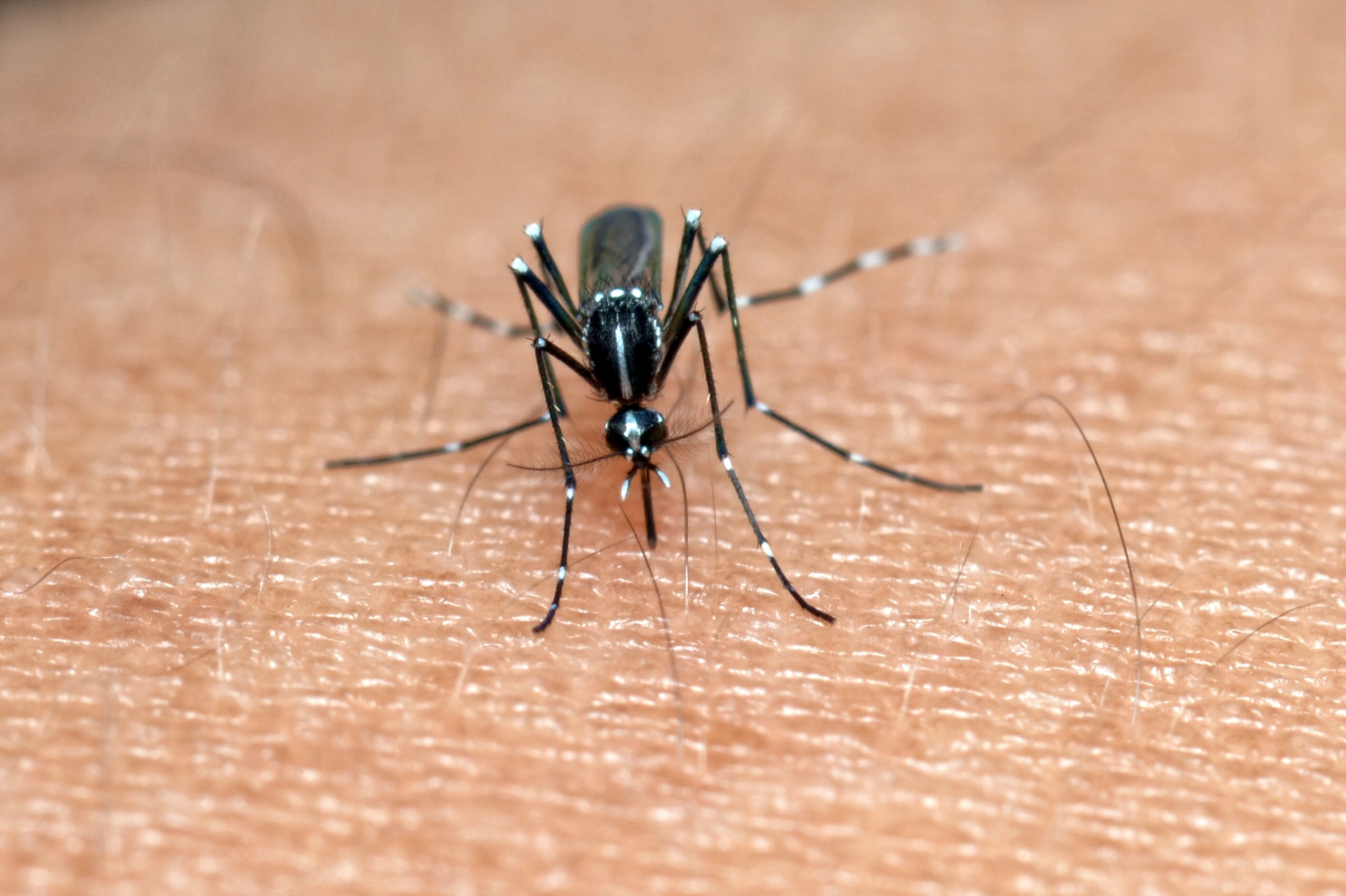
The team used real-time seasonal rainfall, temperature and El Niño forecasts, issued at the start of the year, combined with data from active surveillance studies, in a probabilistic model of dengue epidemics to produce robust dengue risk estimates for the entire year. Stewart Ibarra said that because dengue is transmitted by the same mosquito species, Aedes aegypti, this model should also be explored as a tool to predict outbreaks of Zika and chikungunya.
“We correctly forecast the peak in dengue incidence to occur three months earlier than expected in March 2016, with a 90 percent chance of exceeding the mean dengue incidence for the previous five years,” said Lowe, Stewart Ibarra’s colleague who is the lead author of an article on the study that appeared in the July 2017 issue of Lancet Planetary Health. Lowe is a Royal Society Dorothy Hodgkin Fellow and assistant professor at the London School of Hygiene & Tropical Medicine and the Barcelona Institute for Global Health.
Lowe adds that this peak in dengue closely followed extreme flooding in the city, which was successfully forecast several months in advance by the climate models.
“Our work provides insights into the complex climate factors that trigger outbreaks of dengue, Zika and chikungunya, contributing to efforts to develop an early warning system for these viruses,” said Stewart Ibarra.
Lowe says that the study also demonstrates the potential value of incorporating climate information in the public health decision-making process not only in Ecuador but also in any epidemic-prone region, impacted by El Nino events.
The research team is consulting currently with the Caribbean Institute of Meteorology and Hydrology (funded by USAID) to develop similar models for the Caribbean region. Stewart Ibarra says that mathematical models such as this one can be used as a tool to support public health decision makers anywhere where Zika, dengue and chikungunya viruses can occur.
The breakthrough of this model comes on the heels of two other successful mathematical models created by Stewart Ibarra and other researchers. These studies revealed the temperatures that are required for these mosquito-borne viruses to proliferate. The studies found that transmission of dengue, and other arboviruses by Aedes aegypti and Aedes albopictus mosquitoes, has been found to occur between 18–34°C (64 to 93°F) with maximal transmission in the range of 26–29°C (78 to 84°F).
In a study led by Angel Muñoz, Ph.D., at Princeton University, researchers also found that above-normal suitable conditions for the occurrence of the Zika epidemic at the beginning of 2015 could have been successfully predicted at least one month in advance for several Zika hotspots, and in particular for Northeast Brazil: the heart of the epidemic. An article on the study appeared July 12 in Frontiers in Microbiology.
Combined, these models give public health and governmental officials vital climate information needed to create early warning systems—systems that can alert the public to the risk for disease and allow public health officials to mobilize resources and enact mosquito control programs and surveillance ahead of peak season.
Stewart Ibarra and her colleagues use a social-ecological systems (SES) approach to conduct their research. SES is a collaborative approach by researchers of varying disciplines that leads to new information that is necessary for the development of effective policies, technologies and management strategies to fight the spread of mosquito-borne viruses.
Dengue, Zika and chikungunya are mosquito-borne viral illnesses that are leading causes of illness in tropical and subtropical regions. Because there are no vaccines or cures for these viruses there is an increased urgency of those in the public health sector to identify alternative strategies to manage the disease, of which an early warning system is included.