Research & Development World

  • R&D World Home
  • Topics
    • Aerospace
    • Automotive
    • Biotech
    • Careers
    • Chemistry
    • Environment
    • Energy
    • Life Science
    • Material Science
    • R&D Management
    • Physics
  • Technology
    • 3D Printing
    • A.I./Robotics
    • Software
    • Battery Technology
    • Controlled Environments
      • Cleanrooms
      • Graphene
      • Lasers
      • Regulations/Standards
      • Sensors
    • Imaging
    • Nanotechnology
    • Scientific Computing
      • Big Data
      • HPC/Supercomputing
      • Informatics
      • Security
    • Semiconductors
  • R&D Market Pulse
  • R&D 100
    • 2025 R&D 100 Award Winners
    • 2025 Professional Award Winners
    • 2025 Special Recognition Winners
    • R&D 100 Awards Event
    • R&D 100 Submissions
    • Winner Archive
  • Resources
    • Research Reports
    • Digital Issues
    • Educational Assets
    • R&D Index
    • Subscribe
    • Video
    • Webinars
    • Content submission guidelines for R&D World
  • Global Funding Forecast
  • Top Labs
  • Advertise
  • SUBSCRIBE

Defying Graphene’s Achilles Heel

By R&D Editors | January 9, 2015

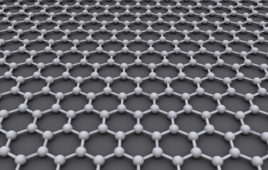
At just one atom thick, graphene is the thinnest substance capable of conducting electricity.A resilience to extreme conditions by the most transparent, lightweight and flexible material for conducting electricity could help revolutionize the electronic industry, according to a new study.

Researchers from the University of Exeter have discovered that GraphExeter – a material adapted from the ‘wonder material’ graphene – can withstand prolonged exposure to both high temperature and humidity.

The research showed that the material could withstand relative humidly of up to 100 percent at room temperature for 25 days, as well as temperatures of up to 150C (302F) – or as high as 620C (1148F) in vacuum.

The previously unknown durability to extreme conditions position GraphExeter as a viable and attractive replacement to indium tin oxide (ITO), the main conductive material currently used in electronics, such as ‘smart’ mirrors or windows, or even solar panels. The research also suggests that GraphExeter could extend the lifetime of displays such as TV screens located in highly humid environments, including kitchens.

These research findings were published in the respected scientific journal, Scientific Reports, on Jan. 8.

Lead researcher, University of Exeter engineer Dr. Monica Craciun, says, “This is an exciting development in our journey to help GraphExeter revolutionize the electronics industry.

“By demonstrating its stability to being exposed to both high temperatures and humidity, we have shown that it is a practical and realistic alternative to ITO. This is particularly exciting for the solar panel industry, where the ability to withstand all weathers is crucial.”

Dr. Saverio Russo, also from the University of Exeter, adds, “The superior stability of GraphExeter as compared to graphene was unexpected since the molecules used to make GraphExeter (that is FeCl3) simply melt in air at room temperature.

“Having a metallic conductor stable at temperatures above 600C, that is also optically transparent and flexible, can truly enable novel technologies for space applications and harsh environments such as nuclear power centrals.”

At just one atom thick, graphene is the thinnest substance capable of conducting electricity. It is very flexible and is one of the strongest known materials. The race has been on for scientists and engineers to adapt graphene for flexible electronics. This has been a challenge because of its sheet resistance, which limits its conductivity.

In 2012 the teams of Dr. Craciun and Professor Russo, from the University of Exeter’s Centre for Graphene Science, discovered that sandwiched molecules of ferric chloride between two graphene layers make a whole new system that is the best known transparent material able to conduct electricity. The same team have now discovered that GraphExeter is also more stable than many transparent conductors commonly used by, for example, the display industry.

Release Date: January 8, 2015
Source: University of Exeter 
Related Articles Read More >

The emerging materials shaping next-generation semiconductor electronics
24 R&D trends that redefined 2024
Graphene-based flowmeter sensor measures nano-rate fluid flows, Part 3: The sensor
Graphene-based flowmeter sensor measures nano-rate fluid flows, Part 2: The graphene context
rd newsletter
EXPAND YOUR KNOWLEDGE AND STAY CONNECTED
Get the latest info on technologies, trends, and strategies in Research & Development.
RD 25 Power Index

R&D World Digital Issues

Fall 2024 issue

Browse the most current issue of R&D World and back issues in an easy to use high quality format. Clip, share and download with the leading R&D magazine today.

Research & Development World
  • Subscribe to R&D World Magazine
  • Sign up for R&D World’s newsletter
  • Contact Us
  • About Us
  • Drug Discovery & Development
  • Pharmaceutical Processing
  • Global Funding Forecast

Copyright © 2025 WTWH Media LLC. All Rights Reserved. The material on this site may not be reproduced, distributed, transmitted, cached or otherwise used, except with the prior written permission of WTWH Media
Privacy Policy | Advertising | About Us

Search R&D World

  • R&D World Home
  • Topics
    • Aerospace
    • Automotive
    • Biotech
    • Careers
    • Chemistry
    • Environment
    • Energy
    • Life Science
    • Material Science
    • R&D Management
    • Physics
  • Technology
    • 3D Printing
    • A.I./Robotics
    • Software
    • Battery Technology
    • Controlled Environments
      • Cleanrooms
      • Graphene
      • Lasers
      • Regulations/Standards
      • Sensors
    • Imaging
    • Nanotechnology
    • Scientific Computing
      • Big Data
      • HPC/Supercomputing
      • Informatics
      • Security
    • Semiconductors
  • R&D Market Pulse
  • R&D 100
    • 2025 R&D 100 Award Winners
    • 2025 Professional Award Winners
    • 2025 Special Recognition Winners
    • R&D 100 Awards Event
    • R&D 100 Submissions
    • Winner Archive
  • Resources
    • Research Reports
    • Digital Issues
    • Educational Assets
    • R&D Index
    • Subscribe
    • Video
    • Webinars
    • Content submission guidelines for R&D World
  • Global Funding Forecast
  • Top Labs
  • Advertise
  • SUBSCRIBE