Research & Development World

  • R&D World Home
  • Topics
    • Aerospace
    • Automotive
    • Biotech
    • Careers
    • Chemistry
    • Environment
    • Energy
    • Life Science
    • Material Science
    • R&D Management
    • Physics
  • Technology
    • 3D Printing
    • A.I./Robotics
    • Software
    • Battery Technology
    • Controlled Environments
      • Cleanrooms
      • Graphene
      • Lasers
      • Regulations/Standards
      • Sensors
    • Imaging
    • Nanotechnology
    • Scientific Computing
      • Big Data
      • HPC/Supercomputing
      • Informatics
      • Security
    • Semiconductors
  • R&D Market Pulse
  • R&D 100
    • 2025 R&D 100 Award Winners
    • 2025 Professional Award Winners
    • 2025 Special Recognition Winners
    • R&D 100 Awards Event
    • R&D 100 Submissions
    • Winner Archive
  • Resources
    • Research Reports
    • Digital Issues
    • Educational Assets
    • R&D Index
    • Subscribe
    • Video
    • Webinars
    • Content submission guidelines for R&D World
  • Global Funding Forecast
  • Top Labs
  • Advertise
  • SUBSCRIBE

Discovery of ‘Monster Planet’ Challenges Formation Theory

By Kenny Walter | October 31, 2017

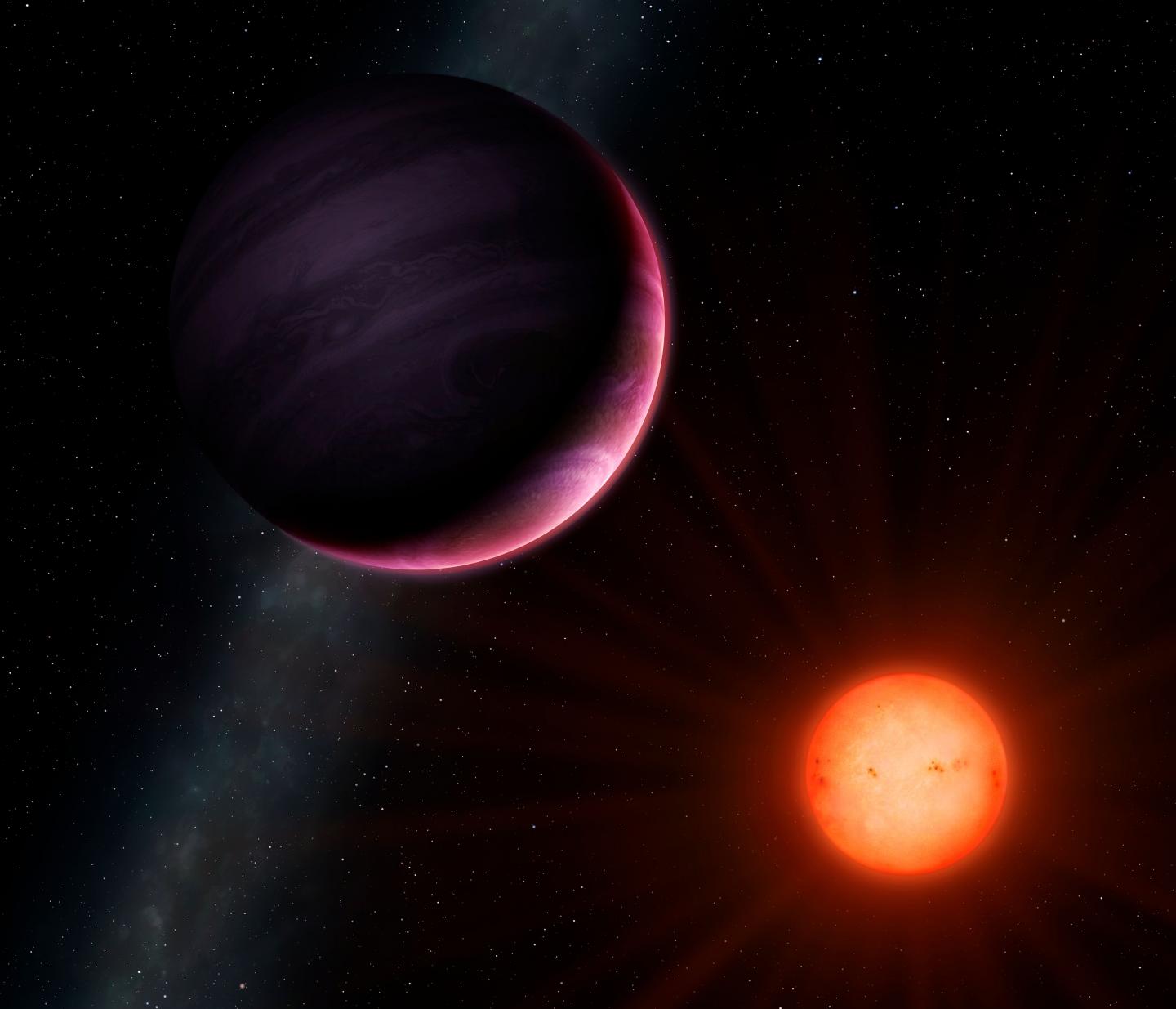
This is an artist’s impression of the cool red star and gas-giant planet NGTS-1b against the Milky Way. Credit University of Warwick/Mark Garlick

A newly discovered giant planet orbiting around a small star has researchers rethinking the planet formation theory.

The discovery of NGTS-1b—a giant gas planet—challenges theories of planet formation, which states that a planet of this size could not be formed around such a small star because small stars cannot gather enough material together to form Jupiter-sized planets.

“The discovery of NGTS-1b was a complete surprise to us—such massive planets were not thought to exist around such small stars—importantly, our challenge now is to find out how common these types of planets are in the Galaxy and with the new Next-Generation Transit Survey facility we are well-placed to do just that,” Daniel Bayliss, Ph.D., a professor from the University of Warwick and lead author of the study.

The planet is considered a ‘hot Jupiter,’ a class of planets that are at least as large as the original Jupiter, but with around 20 percent less mass.

NGTS-1b is very close to its star—just 3 percent of the distance between Earth and the Sun.

However, the host star is small with a radius and mass about half of that of the Sun.

“Despite being a monster of a planet, NGTS-1b was difficult to find because its parent star is so small and faint,” professor Peter Wheatley from the University of Warwick, said in a statement. “Small stars like this red M-dwarf are actually the most common in the Universe, so it is possible that there are many of these giant planets waiting to found.”

The discovery was made by continually monitoring patches of the night sky over several months with the researchers detecting red light from the star with innovative red-sensitive cameras. The researchers discovered dips in the light from the star every 2.6 days, implying that a planet was orbiting and periodically blocking the starlight.

They were able to use this data to track the planet’s orbit and calculate the size, position and mass of NGTS-1b by measuring the radial velocity of the star.

They also used this method to measure how much the star ‘wobbles’ due to the gravitational tug from the planet, the best way to measure the size of the nearby planet.


Related Articles Read More >

NASA R&D 100 Winner enables high-speed data transfer from space
The Milky Way is glowing: these scientists think dark matter may be the cause
Reusable rocket startup raises $510 million
2025 R&D layoffs tracker: hardware and chips lead the year’s biggest cuts while biopharma pares pipelines
rd newsletter
EXPAND YOUR KNOWLEDGE AND STAY CONNECTED
Get the latest info on technologies, trends, and strategies in Research & Development.
RD 25 Power Index

R&D World Digital Issues

Fall 2025 issue

Browse the most current issue of R&D World and back issues in an easy to use high quality format. Clip, share and download with the leading R&D magazine today.

Research & Development World
  • Subscribe to R&D World Magazine
  • Sign up for R&D World’s newsletter
  • Contact Us
  • About Us
  • Drug Discovery & Development
  • Pharmaceutical Processing
  • Global Funding Forecast

Copyright © 2025 WTWH Media LLC. All Rights Reserved. The material on this site may not be reproduced, distributed, transmitted, cached or otherwise used, except with the prior written permission of WTWH Media
Privacy Policy | Advertising | About Us

Search R&D World

  • R&D World Home
  • Topics
    • Aerospace
    • Automotive
    • Biotech
    • Careers
    • Chemistry
    • Environment
    • Energy
    • Life Science
    • Material Science
    • R&D Management
    • Physics
  • Technology
    • 3D Printing
    • A.I./Robotics
    • Software
    • Battery Technology
    • Controlled Environments
      • Cleanrooms
      • Graphene
      • Lasers
      • Regulations/Standards
      • Sensors
    • Imaging
    • Nanotechnology
    • Scientific Computing
      • Big Data
      • HPC/Supercomputing
      • Informatics
      • Security
    • Semiconductors
  • R&D Market Pulse
  • R&D 100
    • 2025 R&D 100 Award Winners
    • 2025 Professional Award Winners
    • 2025 Special Recognition Winners
    • R&D 100 Awards Event
    • R&D 100 Submissions
    • Winner Archive
  • Resources
    • Research Reports
    • Digital Issues
    • Educational Assets
    • R&D Index
    • Subscribe
    • Video
    • Webinars
    • Content submission guidelines for R&D World
  • Global Funding Forecast
  • Top Labs
  • Advertise
  • SUBSCRIBE