
Research & Development World

  • R&D World Home
  • Topics
    • Aerospace
    • Automotive
    • Biotech
    • Careers
    • Chemistry
    • Environment
    • Energy
    • Life Science
    • Material Science
    • R&D Management
    • Physics
  • Technology
    • 3D Printing
    • A.I./Robotics
    • Software
    • Battery Technology
    • Controlled Environments
      • Cleanrooms
      • Graphene
      • Lasers
      • Regulations/Standards
      • Sensors
    • Imaging
    • Nanotechnology
    • Scientific Computing
      • Big Data
      • HPC/Supercomputing
      • Informatics
      • Security
    • Semiconductors
  • R&D Market Pulse
  • R&D 100
    • 2025 R&D 100 Award Winners
    • 2025 Professional Award Winners
    • 2025 Special Recognition Winners
    • R&D 100 Awards Event
    • R&D 100 Submissions
    • Winner Archive
  • Resources
    • Research Reports
    • Digital Issues
    • Educational Assets
    • R&D Index
    • Subscribe
    • Video
    • Webinars
    • Content submission guidelines for R&D World
  • Global Funding Forecast
  • Top Labs
  • Advertise
  • SUBSCRIBE

How to Improve Data Management in the Supercomputers of the Future

By UC3M | March 3, 2017

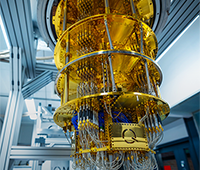
How to improve data management in the supercomputers of the future. Source: UC3M

In recent decades, many scientific discoveries have depended on the analysis of an enormous volume of data, which is done essentially through computational simulations performed on a large scale in supercomputers. This type of machine is used for the study of climate models, the development of new materials, research into the origin of the universe, the study of the human genome and new applications in bioengineering.

At present, as an ever-increasing amount of information is collected and stored, scientific data management faces a problem: the software that manages the latest generation of supercomputers was not designed for the scalability requirements that are expected in coming years. In fact, in less than a decade, these infrastructures are going to be two orders of magnitude faster than current supercomputers.

“Today, these applications are encountering big problems of performance and scalability due to the exponential increase of data as a result of better instruments, the growing ubiquity of sensors and greater connectivity between devices,” explained professor Florin Isaila, from the group ARCOS in the UC3M Department of Computer Science. “These days, a radical redesigning of the computational infrastructures and management software is necessary to adapt them to the new model of science, which is based on the massive processing of data.”

The objective of the CLARISSE project, whose acronym stands for “Cross-Layer Abstractions and Run-time for I/O Software Stack of Extreme-scale systems,” is just that: to increase the performance, scalability, programmability and robustness of the data management of scientific applications with the goal of offering support to the design of next-generation supercomputers. To this end, the program, coordinated by UC3M, is funded by the European Union’s Seventh Framework Programme (FP7/2007-2013, under the agreement of grant number 328582), along with the collaboration of the Argonne National Laboratory, one of the world leaders in the research and development of systems software for large-scale supercomputers.

Historically, data management software has been developed in layers with little coordination in the global management of resources. “Nowadays, this lack of coordination is one of the biggest obstacles to increasing the scalability of current systems. In this regard, in CLARISSE, we research solutions to these problems through the design of new mechanisms for coordinating the data management of the different layers,” said professor Isaila.

Jesús Carretero, the project’s main researcher, UC3M full professor and head of ARCOS, explained, “At present, ARCOS is actively involved in several initiatives around the world to remodel the management software of future supercomputers, including the coordination of the CLARISSE project and the research collaboration network NESUS. The resulting synergies of these efforts are going to contribute substantially to accelerating scientific discoveries in the coming decades.”

Related Articles Read More >

Sandia unveils Spectra, a reconfigurable supercomputer for nuclear stockpile simulations
Maryland set for first subsea internet cable: AWS’s 320+ Tbps “Fastnet” to Ireland
Microsoft’s 4D geometric codes slash quantum errors by 1,000x
Berkeley Lab’s Dell and NVIDIA-powered ‘Doudna’ supercomputer to enable real-time data access for 11,000 researchers
rd newsletter
EXPAND YOUR KNOWLEDGE AND STAY CONNECTED
Get the latest info on technologies, trends, and strategies in Research & Development.
RD 25 Power Index

R&D World Digital Issues

Fall 2025 issue

Browse the most current issue of R&D World and back issues in an easy to use high quality format. Clip, share and download with the leading R&D magazine today.

R&D 100 Awards
Research & Development World
  • Subscribe to R&D World Magazine
  • Sign up for R&D World’s newsletter
  • Contact Us
  • About Us
  • Drug Discovery & Development
  • Pharmaceutical Processing
  • Global Funding Forecast

Copyright © 2026 WTWH Media LLC. All Rights Reserved. The material on this site may not be reproduced, distributed, transmitted, cached or otherwise used, except with the prior written permission of WTWH Media
Privacy Policy | Advertising | About Us

Search R&D World

  • R&D World Home
  • Topics
    • Aerospace
    • Automotive
    • Biotech
    • Careers
    • Chemistry
    • Environment
    • Energy
    • Life Science
    • Material Science
    • R&D Management
    • Physics
  • Technology
    • 3D Printing
    • A.I./Robotics
    • Software
    • Battery Technology
    • Controlled Environments
      • Cleanrooms
      • Graphene
      • Lasers
      • Regulations/Standards
      • Sensors
    • Imaging
    • Nanotechnology
    • Scientific Computing
      • Big Data
      • HPC/Supercomputing
      • Informatics
      • Security
    • Semiconductors
  • R&D Market Pulse
  • R&D 100
    • 2025 R&D 100 Award Winners
    • 2025 Professional Award Winners
    • 2025 Special Recognition Winners
    • R&D 100 Awards Event
    • R&D 100 Submissions
    • Winner Archive
  • Resources
    • Research Reports
    • Digital Issues
    • Educational Assets
    • R&D Index
    • Subscribe
    • Video
    • Webinars
    • Content submission guidelines for R&D World
  • Global Funding Forecast
  • Top Labs
  • Advertise
  • SUBSCRIBE