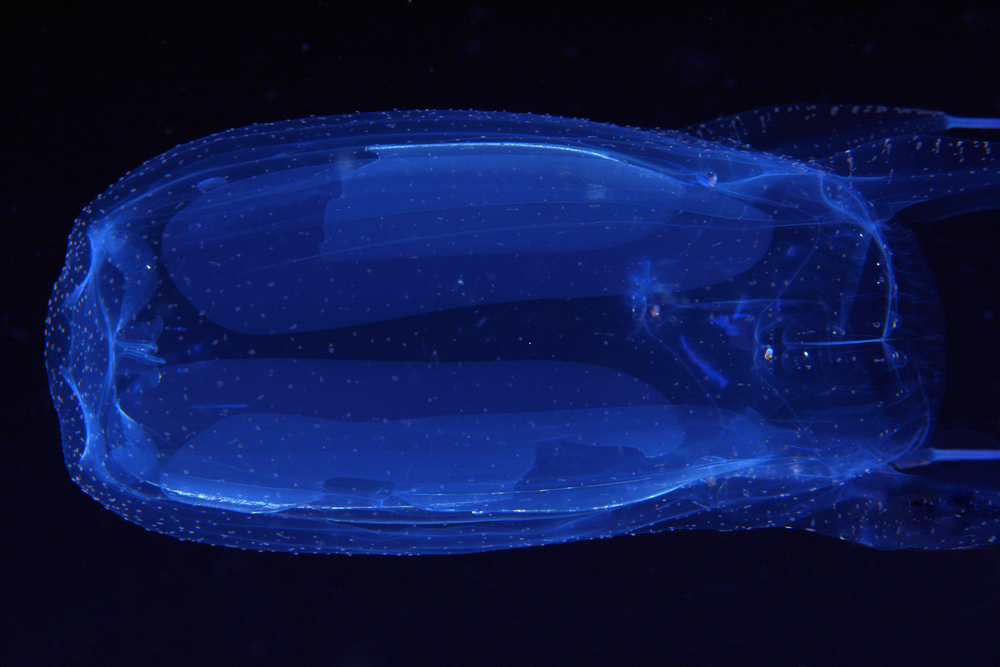
Some of the common remedies for jellyfish stings might actually be making the sting worse, according to new research.
Researchers at the University of Hawai’i-Mānoa have investigated whether commonly recommended first aid actions including rinsing with seawater or scraping away tentacles lessen the severity of stings from two dangerous species of box jellyfish and revealed that some of these common recommendations actually can worsen stings.
“Anyone who Googles ‘how to treat a jellyfish sting’ will encounter authoritative web articles claiming the best thing to do is rinse the area with seawater, scrape away any remaining tentacles, and then treat the sting with ice,” Angel Yanagihara, Ph.D., lead author of the paper and assistant research professor at the UHM Pacific Biosciences Research Center (PBRC) and John A. Burns School of Medicine (JABSOM), said in a statement.
“We put those methods to the test in the lab and found they actually make stings much, much worse.”
Box jellyfish are among the deadliest animals in the ocean, responsible for more deaths every year than sharks. Mild stings can cause severe pain and leave scars.
The research team looked at the best ways to respond to stings from the Hawaiian box jelly Alatina alata in Hawaii and the Australian box jelly Chironex fleckeri. The researchers examined how different ways of removing tentacles—rinsing with vinegar or seawater, scraping with a credit card or simply plucking them off—affected the amount of venom injected during a sting using a human tissue model designed by Yanagihara.
They also examined whether treating with ice packs or hot packs reduced the damage done by the venom.
The experiments showed that some of the more commonly recommended actions dramatically increased the severity of the stings.
“Less than one percent of stinging cells on a tentacle actually fire when you’re first stung,” Christie Wilcox, Ph.D., a postdoctoral fellow at JABSOM, said in a statement. “So anything you do that moves the tentacles or adherent stinging cell capsules around has the potential to increase the amount of venom injected into you by many fold.”
What to do instead
Instead of rinsing with seawater or scraping, rinsing with vinegar—which irreversibly prevents the stinging cells from firing—or even simply plucking tentacles off with tweezers led to less venom injection.
After the sting, applying heat actively decreased venom activity, while applying ice not only didn’t help but for stings from the Hawaiian box jelly it actually enhanced the venom’s activity to make stings cause more than twice the damage.
“Box jellies are incredibly dangerous animals. The more venom they inject, the more likely a victim is to suffer severe, even life threatening symptoms,” Yanagihara said. “The increases in venom injection and activity we saw in our study from methods like scraping and applying ice could mean the difference between life and death in a serious box jelly sting.”
Wilcox added that the internet is often misleading regarding the best remedies for stings.
“It’s all too easy to find bad advice on treating jelly stings on the internet,” Wilcox said. “Even in the peer-reviewed literature, there are a lot of examples of recommendations that are made in passing in discussion sections without any direct evidence to back them up, and then those just keep getting repeated and cited over and over even though they’re not based on rigorous, empirical scientific evidence.”
The researchers expect the findings will prompt online medical sites, government agencies and the broader medical community to re-evaluate the advice they provide on treating jellyfish stings.
The study was published in Toxins.