An enhanced battery technology that can potentially reduce the time it takes to charge cell phones, electric vehicles, and other battery-powered devices from hours to minutes is the subject of a commercial license agreement between Battelle and Vorbeck Materials Corp. of Jessup, Md. Battelle operates the U.S. Department of Energy (DOE)’s Pacific Northwest National Laboratory (PNNL) in Richland, Wash.
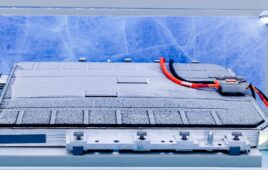
The agreement will allow Vorbeck to bring lithium batteries incorporating Vor-X graphene technology to market for use in consumer portable electronic and medical devices, tools, and electric vehicles. Lithium-ion batteries are rechargeable and are widely used in electronic devices such as laptops and smartphones, and to power electric cars and trucks.
“Today, a typical cell phone battery takes between two and five hours to fully recharge, and an electric vehicle has to be plugged in most of the night to recharge,” explains John Lettow, president of Vorbeck Materials. “The pioneering work done by Vorbeck, Princeton University, and PNNL is leading to the development of batteries that recharge quickly, reducing the time it takes to charge a smartphone to minutes and an electric vehicle to just a couple of hours.”
Lettow notes the research effort also could lead to the development of batteries that are more stable, have a longer life and store larger amounts of energy.
“We are very pleased to add this substantial portfolio of graphene-based battery technologies, developed with PNNL and Princeton, to our already very strong graphene patent portfolios in conductive inks, printed electronics, composite materials, and energy storage,” adds Lettow.
“This license is the culmination of a substantial investment of laboratory-directed research and development funds, innovative work by our researchers and a proactive patenting strategy recently deployed at PNNL,” says Cheryl Cejka, the national laboratory’s director of technology commercialization. “PNNL is a leader in linking research to real-world impact, so we are thrilled to see a company like Vorbeck bring our technology to US consumers.”
Electronics and auto manufacturers would like to develop the next generation of batteries using low-cost materials such as titanium dioxide to replace the more expensive materials used today. But titanium dioxide on its own doesn’t perform well enough to serve as a replacement.
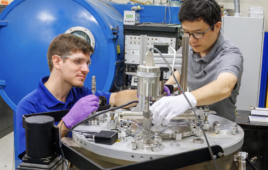
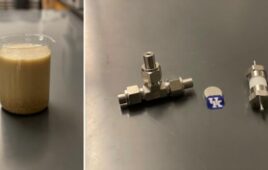
Recently, PNNL researchers collaborated with Vorbeck to develop a method for building tiny titanium oxide and carbon structures and then demonstrated that small quantities of Vor-X graphene—a good electronic conductor made from ultra-thin sheets of carbon atoms—can dramatically improve the performance of the batteries, especially with respect to how rapidly the batteries can be charged.
Structural analysis studies of the material were conducted with scientists at EMSL, the Environmental Molecular Sciences Laboratory, a DOE national user facility located at PNNL. When they compared how well the new combination of electrode materials charged and discharged electric current, the electrodes containing graphene outperformed the standard titanium dioxide by up to three times.
Lettow notes the Vorbeck-PNNL team recently received a grant from the Advanced Research Projects Agency-Energy, or ARPA-E, to develop advanced battery chemistries, and has contracts with major manufacturers for graphene-based printed electronics and battery systems. “As a result, Vorbeck anticipates continued breakthroughs, new patents, and rapid commercialization of the new technology in consumer goods,” he says. “Prototypes of Vorbeck’s battery technologies were already on display earlier this month at the 2013 Consumer Electronics Show in Las Vegas.”