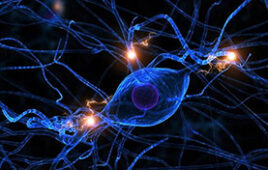
One of the most devastating forms of trauma to the human body is a spinal cord injury, representing a serious clinical problem around the globe. In addition to the direct damage to nerve fibers, subsequent problems like the overproduction of free radicals (active forms of oxygen) and inflammation also pose serious risk.
Spinal cord injuries, strokes, and cardiac arrest are caused by impacts, ruptured blood vessels, and tissue necrosis. When blood arteries contract or become clogged inside an organ’s adjacent tissues, this leads to hypoxia, a pathological process linked with oxygen shortages. This factor blocks the final link of the respiratory chain at the cellular level and creates an excessive number of so-called free radicals or active forms of oxygen. They, in turn, destroy cellular membranes and initiate a sequence of reactions that damage and destroy body cells and tissues. These complications damage the spinal cord still further and kill neurons, making the clinical picture even more complicated.
“An international team of scientists from universities from Russia and the U.S. organized by Maxim Abakumov, the head of the NUST MISIS Biomedical Nanomaterials Laboratory, has managed to find a solution to the problem of the pathological formation of free radicals in cases of spinal injuries or strokes. An innovative therapeutic complex based on synthesized nanoparticle anti-oxidants will help to create an effective rehabilitation system. The research results were recently published in the Journal of Controlled Release,” says Alevtina Chernikova, Rector of NUST MISIS.
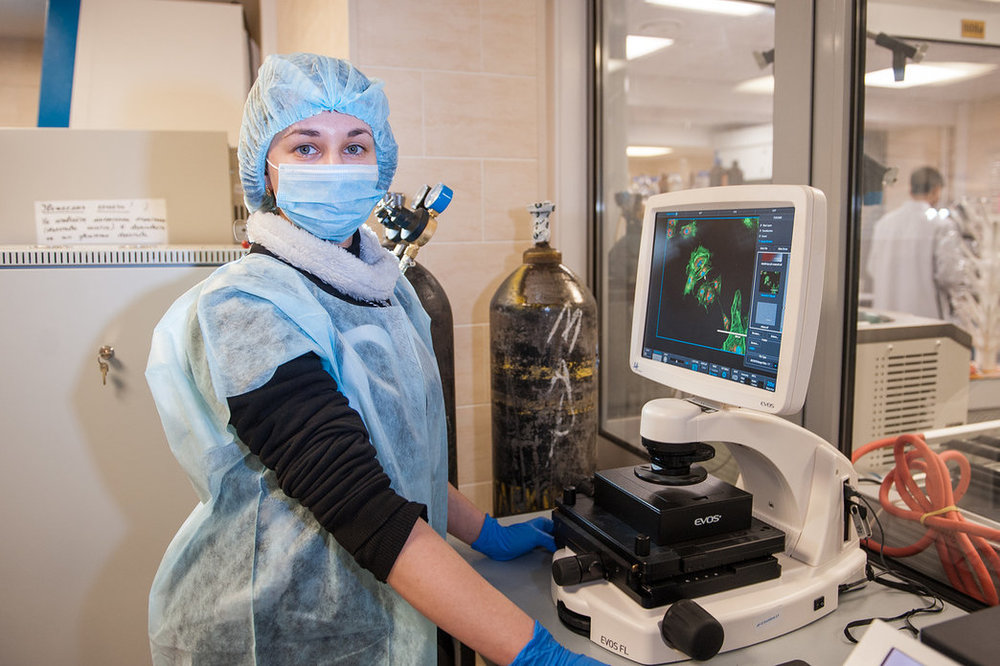
Image: National University of Science and Technology MISiS
A special ferment/anti-oxidant called superoxide dismutase (SOD1) acts as an effective agent which naturally absorbs free radicals. If delivered quickly enough to a damaged organ, this substance can mitigate the stressful oxidization process caused by an excessive number of free radicals and hence stop the process of tissues being destructed. However, this ferment remains unstable inside the bloodstream during intravenous injections; it disintegrates quickly and fails to neutralize free radicals on time.
“In order to create a stable therapeutic complex based on the SOD1 substance, we developed catalytically active forms of superoxide dismutase, or nanozymes. For example, we obtained the SOD1 poly-ion complex for the first time in history. This complex features additional poly (amino acid) block co-polymers and PEG/poly-glutamine acid acting as a surface cover,” said Maxim Abakumov, project coauthor, Head of NUST MISIS’ Biomedical Nanomaterials Laboratory.
This made it possible to obtain a porous polymer capsule measuring between 40-50 nanometers with a ferment molecule. This capsule acts as a reusable trap that not only absorbs but also neutralizes free radicals.
“We developed nanozymes with high fermentative activity levels that can preserve and protect SOD1 compounds in physiological conditions. This increases the circulation time of active SOD1 compounds inside the bloodstream, as compared to free SOD1 molecules. The substance’s half-life increased from six to 60 minutes,” Abakumov adds.
A research team headed by the University of North Carolina Professor Alexander Kabanov obtained encouraging laboratory results during the substance’s experimental tests. A single intravenous nanozymes injection containing 5,000 equivalent SOD1 units per one kilogram of body weight sped up the restoration of kinetic functions in rats with moderate spinal cord injuries. Swelling/edema was reduced, the spinal cord contracted, and post-traumatic cysts formed.
The successful testing of the SOD1 ferment’s nanozymes on rodents proves that the substance can effectively eliminate free radicals, reduce swelling as well as edema levels and more quickly rehabilitate patients after spinal cord injuries, strokes or cardiac arrest. Team members are set to launch pre-clinical tests in the near future.