Research & Development World

  • R&D World Home
  • Topics
    • Aerospace
    • Automotive
    • Biotech
    • Careers
    • Chemistry
    • Environment
    • Energy
    • Life Science
    • Material Science
    • R&D Management
    • Physics
  • Technology
    • 3D Printing
    • A.I./Robotics
    • Software
    • Battery Technology
    • Controlled Environments
      • Cleanrooms
      • Graphene
      • Lasers
      • Regulations/Standards
      • Sensors
    • Imaging
    • Nanotechnology
    • Scientific Computing
      • Big Data
      • HPC/Supercomputing
      • Informatics
      • Security
    • Semiconductors
  • R&D Market Pulse
  • R&D 100
    • 2025 R&D 100 Award Winners
    • 2025 Professional Award Winners
    • 2025 Special Recognition Winners
    • R&D 100 Awards Event
    • R&D 100 Submissions
    • Winner Archive
  • Resources
    • Research Reports
    • Digital Issues
    • Educational Assets
    • R&D Index
    • Subscribe
    • Video
    • Webinars
    • Content submission guidelines for R&D World
  • Global Funding Forecast
  • Top Labs
  • Advertise
  • SUBSCRIBE

Nanotube System Identifies Cosmetic Pollutants in Seawater

By University of Córdoba | May 30, 2018

A University of Córdoba research group has designed a method that detects the presence of pollutants in seawater in a faster and more efficient way, as well as at very low concentrations.

Specifically, the team from Córdoba, in partnership with the University of the Balearic Islands, focused on several substances used as preservatives in soap, lotion, and deodorant, which end up in the sea. Concerns about parabens and triclosan have been voiced from different sectors, and the European Commission has been monitoring these substances and limited their use.

Parabens and triclosan keep bacteria and fungi from damaging shampoo and toothpaste, but they become a real problem once they get to the sea, where they affect the marine ecosystem. Identifying their presence contributes to the design of measures that correct their effects. This is the idea behind the work on the system designed by the University of Córdoba.

The key to this new method based on nanotechnology is the system known as “Lab-on-Valve,” used by the scientific community for sample analysis. More specifically, the research team led by Analytical Chemistry Professor Marisol Cárdenas has added carbon-coated titanium dioxide nanotubes to this system. To date, the use of nanomaterials in the Lab-on-Valve system was not possible before due to their tendency to aggregate in aqueous media. In this case, the University of Córdoba research group was able to synthesize nanoparticles compatible with the Lab-on-Valve system due to their easy dispersion.

The new system was recently described in the journal Analytical Chemistry (“Lab-on-a-Valve Mesofluidic Platform for On-Chip Handling of Carbon-Coated Titanium Dioxide Nanotubes in a Disposable Microsolid Phase-Extraction Mode”).

The study’s primary author, University of Córdoba researcher María Teresa García Valverde, explains that “the combination of the Lab-on-valve system, titanium nanotubes modified with amorphous carbon as phase extraction and the measuring tool connected to the system, allows for quantifying parabens and triclosan at very low concentrations.”

For the most part, these pollutants come from personal hygiene products such as soap, sunscreen, toothpaste and other toiletries. All of them have very negative effects on the environment.

García explains that with the Lab-on-Valve system, the nanotubes are manipulated automatically, which reduces errors in measurement and “their nanometric size makes them more efficient than other adsorbent solid materials on the market.” She adds, “This method is faster, more practical, and more efficient.”

Source: University of Córdoba

Related Articles Read More >

R&D 100 winner LLNL achieves 1,000x speed boost in 3D nanofabrication
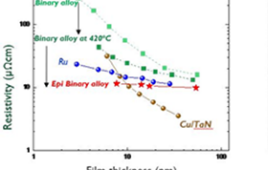
CEA-Leti achieves 400°C CMOS fabrication milestone for 3D chip stacking
The 2025 R&D 100 Finalists are here
New nanotechnology method increases microalgae biofuel yield by 300%
rd newsletter
EXPAND YOUR KNOWLEDGE AND STAY CONNECTED
Get the latest info on technologies, trends, and strategies in Research & Development.
RD 25 Power Index

R&D World Digital Issues

Fall 2025 issue

Browse the most current issue of R&D World and back issues in an easy to use high quality format. Clip, share and download with the leading R&D magazine today.

R&D 100 Awards
Research & Development World
  • Subscribe to R&D World Magazine
  • Sign up for R&D World’s newsletter
  • Contact Us
  • About Us
  • Drug Discovery & Development
  • Pharmaceutical Processing
  • Global Funding Forecast

Copyright © 2026 WTWH Media LLC. All Rights Reserved. The material on this site may not be reproduced, distributed, transmitted, cached or otherwise used, except with the prior written permission of WTWH Media
Privacy Policy | Advertising | About Us

Search R&D World

  • R&D World Home
  • Topics
    • Aerospace
    • Automotive
    • Biotech
    • Careers
    • Chemistry
    • Environment
    • Energy
    • Life Science
    • Material Science
    • R&D Management
    • Physics
  • Technology
    • 3D Printing
    • A.I./Robotics
    • Software
    • Battery Technology
    • Controlled Environments
      • Cleanrooms
      • Graphene
      • Lasers
      • Regulations/Standards
      • Sensors
    • Imaging
    • Nanotechnology
    • Scientific Computing
      • Big Data
      • HPC/Supercomputing
      • Informatics
      • Security
    • Semiconductors
  • R&D Market Pulse
  • R&D 100
    • 2025 R&D 100 Award Winners
    • 2025 Professional Award Winners
    • 2025 Special Recognition Winners
    • R&D 100 Awards Event
    • R&D 100 Submissions
    • Winner Archive
  • Resources
    • Research Reports
    • Digital Issues
    • Educational Assets
    • R&D Index
    • Subscribe
    • Video
    • Webinars
    • Content submission guidelines for R&D World
  • Global Funding Forecast
  • Top Labs
  • Advertise
  • SUBSCRIBE