Research & Development World

  • R&D World Home
  • Topics
    • Aerospace
    • Automotive
    • Biotech
    • Careers
    • Chemistry
    • Environment
    • Energy
    • Life Science
    • Material Science
    • R&D Management
    • Physics
  • Technology
    • 3D Printing
    • A.I./Robotics
    • Software
    • Battery Technology
    • Controlled Environments
      • Cleanrooms
      • Graphene
      • Lasers
      • Regulations/Standards
      • Sensors
    • Imaging
    • Nanotechnology
    • Scientific Computing
      • Big Data
      • HPC/Supercomputing
      • Informatics
      • Security
    • Semiconductors
  • R&D Market Pulse
  • R&D 100
    • 2025 R&D 100 Award Winners
    • 2025 Professional Award Winners
    • 2025 Special Recognition Winners
    • R&D 100 Awards Event
    • R&D 100 Submissions
    • Winner Archive
  • Resources
    • Research Reports
    • Digital Issues
    • Educational Assets
    • R&D Index
    • Subscribe
    • Video
    • Webinars
    • Content submission guidelines for R&D World
  • Global Funding Forecast
  • Top Labs
  • Advertise
  • SUBSCRIBE

Next Wave of Solar Cells Are Transparent

By Kenny Walter | October 23, 2017

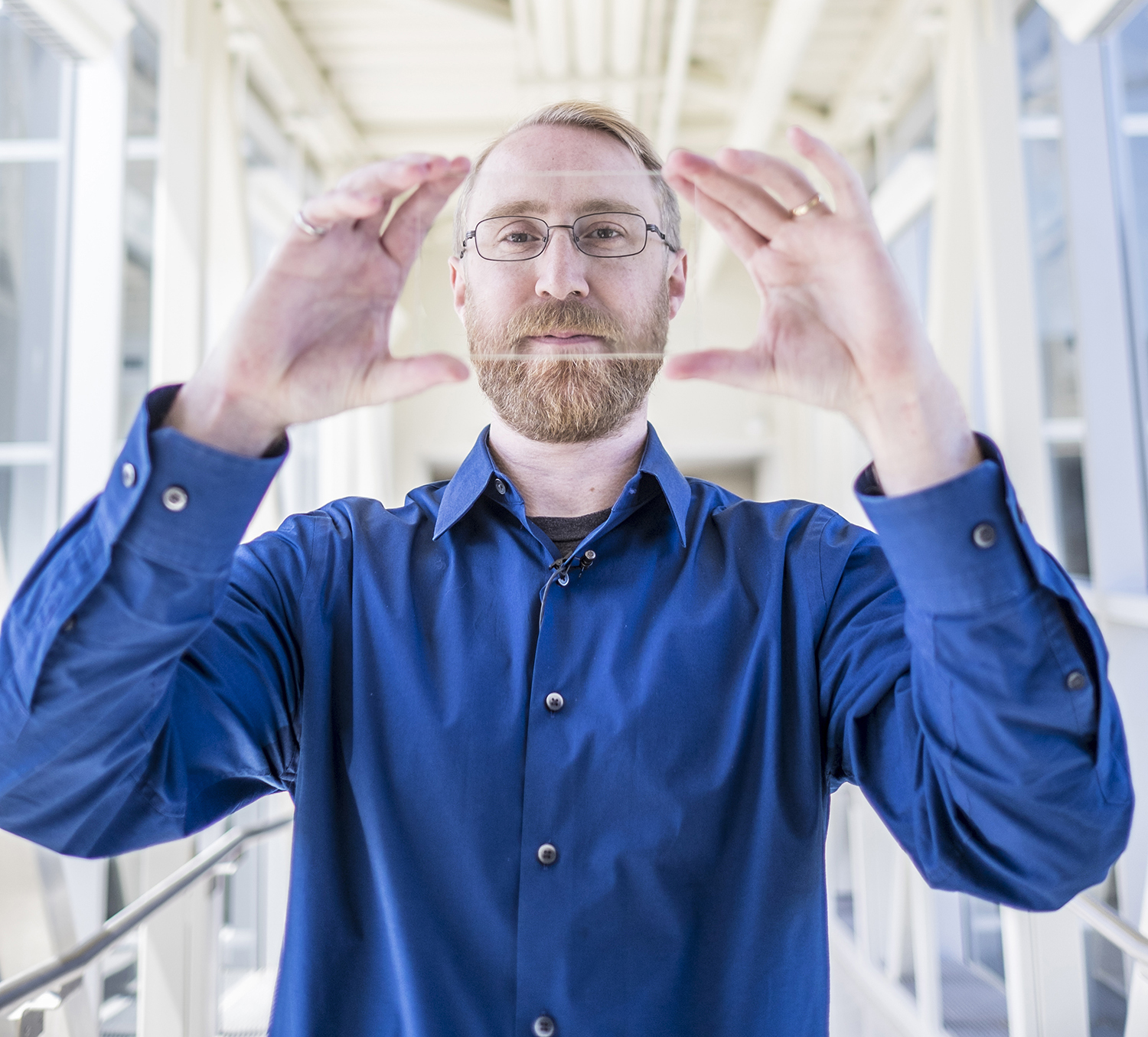
Highly transparent solar cells represent the wave of the future for new solar applications,” said Richard Lunt, the Johansen Crosby Endowed Associate Professor of Chemical Engineering and Materials Science at MSU. Photo by Kurt Stepnitz

The windows of buildings, homes and cars might be the perfect place for transparent solar materials that can supplement the energy produced by the bulkier rooftop units.

Researchers from Michigan State University (MSU) have created the transparent materials that could be applied to windows, utilizing a massive source of untapped energy to cut down on the use of fossil fuels.

The researchers developed a transparent luminescent solar concentrator that creates solar energy when placed on a window without disrupting the view. The material is thin and plastic-like and can be used on buildings, car windows, cell phones or other devices with a clear surface.

“Highly transparent solar cells represent the wave of the future for new solar applications,” Richard Lunt, the Johansen Crosby Endowed Associate Professor of Chemical Engineering and Materials Science at MSU, said in a statement. “We analyzed their potential and show that by harvesting only invisible light, these devices can provide a similar electricity-generation potential as rooftop solar while providing additional functionality to enhance the efficiency of buildings, automobiles and mobile electronics.”

The system uses organic molecules that absorbs invisible wavelengths of sunlight.

According to Lunt, the materials can be tuned to pick up just the ultraviolet and the near-infrared wavelengths that then convert the energy into electricity.

The researchers estimated that there are between 5 billion and 7 billion square meters of glass surfaces in the U.S and transparent solar technologies have the potential of supplying about 40 percent of energy demand in the U.S.—approximately the same potential as rooftop solar units.

“The complimentary deployment of both technologies could get us close to 100 percent of our demand if we also improve energy storage,” Lunt said.

Highly transparent solar applications are recording efficiencies above 5 percent, according to Lunt, while traditional solar panels typically are about 15 to 18 percent efficient. The researchers believe the transparent units could potentially get close to the efficiency of their opaque counterparts.

“That is what we are working towards,” he said. “Traditional solar applications have been actively researched for over five decades, yet we have only been working on these highly transparent solar cells for about five years.

“Ultimately, this technology offers a promising route to inexpensive, widespread solar adoption on small and large surfaces that were previously inaccessible,” Lunt added.

Related Articles Read More >

Nuclear research stalls just as AI-driven power demand surges
Solving the EV charger problem with streetlights
R&D 100 Finalist: Sandia’s griDNA gives the grid a sixth sense at the edge
2025 R&D layoffs tracker: hardware and chips lead the year’s biggest cuts while biopharma pares pipelines
rd newsletter
EXPAND YOUR KNOWLEDGE AND STAY CONNECTED
Get the latest info on technologies, trends, and strategies in Research & Development.
RD 25 Power Index

R&D World Digital Issues

Fall 2024 issue

Browse the most current issue of R&D World and back issues in an easy to use high quality format. Clip, share and download with the leading R&D magazine today.

Research & Development World
  • Subscribe to R&D World Magazine
  • Sign up for R&D World’s newsletter
  • Contact Us
  • About Us
  • Drug Discovery & Development
  • Pharmaceutical Processing
  • Global Funding Forecast

Copyright © 2025 WTWH Media LLC. All Rights Reserved. The material on this site may not be reproduced, distributed, transmitted, cached or otherwise used, except with the prior written permission of WTWH Media
Privacy Policy | Advertising | About Us

Search R&D World

  • R&D World Home
  • Topics
    • Aerospace
    • Automotive
    • Biotech
    • Careers
    • Chemistry
    • Environment
    • Energy
    • Life Science
    • Material Science
    • R&D Management
    • Physics
  • Technology
    • 3D Printing
    • A.I./Robotics
    • Software
    • Battery Technology
    • Controlled Environments
      • Cleanrooms
      • Graphene
      • Lasers
      • Regulations/Standards
      • Sensors
    • Imaging
    • Nanotechnology
    • Scientific Computing
      • Big Data
      • HPC/Supercomputing
      • Informatics
      • Security
    • Semiconductors
  • R&D Market Pulse
  • R&D 100
    • 2025 R&D 100 Award Winners
    • 2025 Professional Award Winners
    • 2025 Special Recognition Winners
    • R&D 100 Awards Event
    • R&D 100 Submissions
    • Winner Archive
  • Resources
    • Research Reports
    • Digital Issues
    • Educational Assets
    • R&D Index
    • Subscribe
    • Video
    • Webinars
    • Content submission guidelines for R&D World
  • Global Funding Forecast
  • Top Labs
  • Advertise
  • SUBSCRIBE