Research & Development World

  • R&D World Home
  • Topics
    • Aerospace
    • Automotive
    • Biotech
    • Careers
    • Chemistry
    • Environment
    • Energy
    • Life Science
    • Material Science
    • R&D Management
    • Physics
  • Technology
    • 3D Printing
    • A.I./Robotics
    • Software
    • Battery Technology
    • Controlled Environments
      • Cleanrooms
      • Graphene
      • Lasers
      • Regulations/Standards
      • Sensors
    • Imaging
    • Nanotechnology
    • Scientific Computing
      • Big Data
      • HPC/Supercomputing
      • Informatics
      • Security
    • Semiconductors
  • R&D Market Pulse
  • R&D 100
    • 2025 R&D 100 Award Winners
    • 2025 Professional Award Winners
    • 2025 Special Recognition Winners
    • R&D 100 Awards Event
    • R&D 100 Submissions
    • Winner Archive
  • Resources
    • Research Reports
    • Digital Issues
    • Educational Assets
    • R&D Index
    • Subscribe
    • Video
    • Webinars
    • Content submission guidelines for R&D World
  • Global Funding Forecast
  • Top Labs
  • Advertise
  • SUBSCRIBE

Oddly Shaped Immune Cells Cause Fibrosis

By Osaka University | December 22, 2016

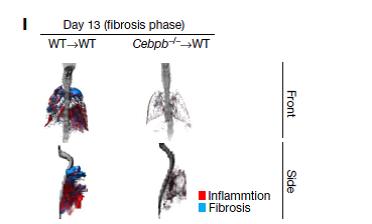
MRI analysis: A lack of SatM resulted in resistance to fibrosis. Source: Osaka University

Scientists at the Immunology Frontier Research Center (IFReC) at Osaka University, Japan, report a new group of monocytes they call SatM. Studies in mice show that SatM may be responsible for causing fibrosis and creates a new drug target for an ailment that has little effective therapies.

Fibrosis is a form of scarring that could if uncontrolled cause deleterious thickening of tissues. Although it is known that fibrosis is caused by an activated immune system, which specific cells are responsible continuous to elude researchers.

Scientists at IFReC may have found this subgroup, as they report in Nature a class of monocyte cells with strange morphology. “The cells had a bi-lobed segmented nuclear shape and many cytoplasmic granules. We therefore called them ‘Segregated nucleus atypical monocytes (SatM)'”, said IFReC Professor Shizuo Akira.

To identify this subgroup, the researchers looked at immune cell subpopulations that predominantly appeared in fibrosis. “These cells were regulated by C/EBPβ,” observed Akira.

Detailed examination of immune cells showed that the C/EBPβ mutant mice, unlike normal mice, produced no SatM, whereas no other observed immune cell population was changed. The mice were also significantly more resistant to fibrosis. On the other hand, when the mutant mice were exposed to SatM, their susceptibility to fibrosis rose.

Although Dr. Akira, Dr. Satoh and his colleagues describe SatM as a subset of monocytes, SatM showed characteristics that suggested they were hybrids of different immune cells. According to Akira, gene analysis found SatM “showed granulocyte markers, but SatM are definitely not granulocytes. These cell type is one of monocyte.”

Additional study found the progenitor cells responsible for producing SatM. Adoptive transfer of these progenitors into mutant mice unable to produce SatM resulted in a SatM population, and C/EBPβ was found to be essential for maintaining the progenitors.

The ability to isolate cells specifically related to fibrosis gives hope for new therapies.

“Decades of research have shown that immune cells are extremely diverse,” said Akira. “Clear definitions of the subpopulations are essential for properly diagnosing and treating diseases. Our discovery of SatM should improve therapeutic strategies against fibrosis.”

Related Articles Read More >

How Prelude and QDX are using quantum chemistry to discover cancer treatments
US political drama is pushing life sciences talent toward Switzerland, Basel leader says
Thermo Fisher targets early-stage CGT bottlenecks with new Philadelphia hub
AUTOMA+ 2025 brings global pharma expertise to Austria
rd newsletter
EXPAND YOUR KNOWLEDGE AND STAY CONNECTED
Get the latest info on technologies, trends, and strategies in Research & Development.
RD 25 Power Index

R&D World Digital Issues

Fall 2025 issue

Browse the most current issue of R&D World and back issues in an easy to use high quality format. Clip, share and download with the leading R&D magazine today.

Research & Development World
  • Subscribe to R&D World Magazine
  • Sign up for R&D World’s newsletter
  • Contact Us
  • About Us
  • Drug Discovery & Development
  • Pharmaceutical Processing
  • Global Funding Forecast

Copyright © 2025 WTWH Media LLC. All Rights Reserved. The material on this site may not be reproduced, distributed, transmitted, cached or otherwise used, except with the prior written permission of WTWH Media
Privacy Policy | Advertising | About Us

Search R&D World

  • R&D World Home
  • Topics
    • Aerospace
    • Automotive
    • Biotech
    • Careers
    • Chemistry
    • Environment
    • Energy
    • Life Science
    • Material Science
    • R&D Management
    • Physics
  • Technology
    • 3D Printing
    • A.I./Robotics
    • Software
    • Battery Technology
    • Controlled Environments
      • Cleanrooms
      • Graphene
      • Lasers
      • Regulations/Standards
      • Sensors
    • Imaging
    • Nanotechnology
    • Scientific Computing
      • Big Data
      • HPC/Supercomputing
      • Informatics
      • Security
    • Semiconductors
  • R&D Market Pulse
  • R&D 100
    • 2025 R&D 100 Award Winners
    • 2025 Professional Award Winners
    • 2025 Special Recognition Winners
    • R&D 100 Awards Event
    • R&D 100 Submissions
    • Winner Archive
  • Resources
    • Research Reports
    • Digital Issues
    • Educational Assets
    • R&D Index
    • Subscribe
    • Video
    • Webinars
    • Content submission guidelines for R&D World
  • Global Funding Forecast
  • Top Labs
  • Advertise
  • SUBSCRIBE