Research & Development World

  • R&D World Home
  • Topics
    • Aerospace
    • Automotive
    • Biotech
    • Careers
    • Chemistry
    • Environment
    • Energy
    • Life Science
    • Material Science
    • R&D Management
    • Physics
  • Technology
    • 3D Printing
    • A.I./Robotics
    • Software
    • Battery Technology
    • Controlled Environments
      • Cleanrooms
      • Graphene
      • Lasers
      • Regulations/Standards
      • Sensors
    • Imaging
    • Nanotechnology
    • Scientific Computing
      • Big Data
      • HPC/Supercomputing
      • Informatics
      • Security
    • Semiconductors
  • R&D Market Pulse
  • R&D 100
    • 2025 R&D 100 Award Winners
    • 2025 Professional Award Winners
    • 2025 Special Recognition Winners
    • R&D 100 Awards Event
    • R&D 100 Submissions
    • Winner Archive
  • Resources
    • Research Reports
    • Digital Issues
    • Educational Assets
    • R&D Index
    • Subscribe
    • Video
    • Webinars
    • Content submission guidelines for R&D World
  • Global Funding Forecast
  • Top Labs
  • Advertise
  • SUBSCRIBE

Sensor Quickly Sniffs Out Bacterial Infections

By Laura Castañón, Northeastern University | October 22, 2018

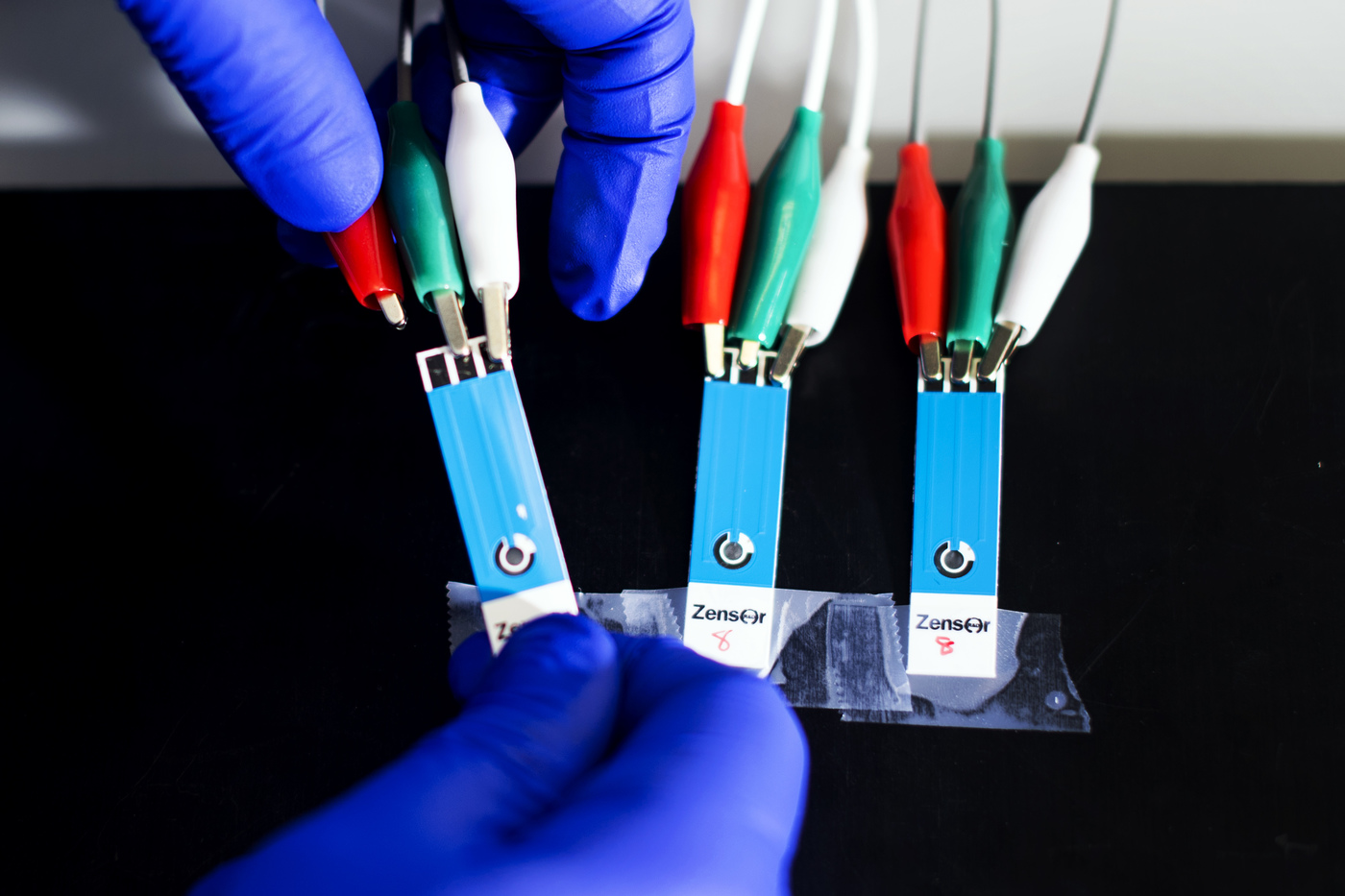
Image: Adam Glanzman/Northeastern University

Want to know which bacteria are making your dog or cat sick? Northeastern University professor Edgar Goluch has started a company to get that answer in minutes, instead of days.

When doctors suspect a bacterial infection, they often take a sample of the patient’s blood, urine, or mucus and send it to a lab. There, the bacteria in the sample are allowed reproduce until there are enough of them to identify.

Goluch, who is an associate professor of chemical engineering, builds sensors to identify bacteria by the specific chemicals they produce. This can be done in minutes, and doesn’t require a sample be sent to the lab.

It would allow doctors to prescribe the right antibiotics immediately, and potentially help to cut back on the overuse of antibiotics, Goluch says.

With the help of Northeastern’s resources for new entrepreneurs, including IDEA, the university’s student-run business accelerator, Goluch has been able to turn his technology into a company called QSM Diagnostics.

The company’s first product, a sensor that is capable of identifying the bacteria in urinary tract infections in dogs and cats, will likely be on the market in 2019.

“There’s a huge need there,” Goluch says. “There’s actually far less being developed for animals than there is for humans.”

That’s one of the lessons that Goluch learned from working with mentors from Northeastern’s Health Science Entrepreneurs and Resources for Engineering Ventures programs: There has to be a market for your product.

“As researchers, we’re trained to discover new things,” says Goluch, who received funding from IDEA to develop a prototype.

“But to make a business you need to know what you’re going to use it for. The application and the need have to be there.”

Goluch didn’t set out to start a company. He was working on sensor technology when he learned of a group of chemical compounds produced by different bacteria. Bacteria use these molecules, called quorum-sensing molecules, to signal to each other.

“They help the bacterial species coordinate their activities,” Goluch says. “They basically use this chemical language to communicate with each other.”

Each type of bacteria speaks its own unique “language.” Goluch originally planned to use his sensors to learn more about the bacteria by tracking these chemicals. But more commercial uses quickly became clear.

“It’s a molecule that is produced in high quantities and it’s very unique. It seems like the perfect biomarker for a diagnostic test,” he says.

In 2014, Goluch founded QSM Diagnostics (the acronym stands for quorum-sensing molecules) to develop his lab discovery into a usable product. The company recently drew the interest of a venture capital firm, which provided funds and access to a team of engineers to help develop the product.

While the company’s first product is for the veterinary market, Goluch expects to develop technology for human use in the future.

“The sensor is going to work the same way,” he says.

“A fair number of the bacteria that cause infections in humans cause infections in animals. They go back and forth.”

“If you can detect it in animals, it will work well in humans as well.”

Source: Northeastern University
Related Articles Read More >

R&D 100 winner flags even unknown fentanyl analogs
New nanopore sensor paves the way for fast, accurate, low-cost DNA sequencing
IoT
Sensor data, reimagined: When 90% less data can fuel 100x gains in efficiency in AI projects
Sandia Labs joins with other institutions to tackle AI energy challenges with microelectronics research
rd newsletter
EXPAND YOUR KNOWLEDGE AND STAY CONNECTED
Get the latest info on technologies, trends, and strategies in Research & Development.
RD 25 Power Index

R&D World Digital Issues

Fall 2025 issue

Browse the most current issue of R&D World and back issues in an easy to use high quality format. Clip, share and download with the leading R&D magazine today.

R&D 100 Awards
Research & Development World
  • Subscribe to R&D World Magazine
  • Sign up for R&D World’s newsletter
  • Contact Us
  • About Us
  • Drug Discovery & Development
  • Pharmaceutical Processing
  • Global Funding Forecast

Copyright © 2026 WTWH Media LLC. All Rights Reserved. The material on this site may not be reproduced, distributed, transmitted, cached or otherwise used, except with the prior written permission of WTWH Media
Privacy Policy | Advertising | About Us

Search R&D World

  • R&D World Home
  • Topics
    • Aerospace
    • Automotive
    • Biotech
    • Careers
    • Chemistry
    • Environment
    • Energy
    • Life Science
    • Material Science
    • R&D Management
    • Physics
  • Technology
    • 3D Printing
    • A.I./Robotics
    • Software
    • Battery Technology
    • Controlled Environments
      • Cleanrooms
      • Graphene
      • Lasers
      • Regulations/Standards
      • Sensors
    • Imaging
    • Nanotechnology
    • Scientific Computing
      • Big Data
      • HPC/Supercomputing
      • Informatics
      • Security
    • Semiconductors
  • R&D Market Pulse
  • R&D 100
    • 2025 R&D 100 Award Winners
    • 2025 Professional Award Winners
    • 2025 Special Recognition Winners
    • R&D 100 Awards Event
    • R&D 100 Submissions
    • Winner Archive
  • Resources
    • Research Reports
    • Digital Issues
    • Educational Assets
    • R&D Index
    • Subscribe
    • Video
    • Webinars
    • Content submission guidelines for R&D World
  • Global Funding Forecast
  • Top Labs
  • Advertise
  • SUBSCRIBE