Research & Development World

  • R&D World Home
  • Topics
    • Aerospace
    • Automotive
    • Biotech
    • Careers
    • Chemistry
    • Environment
    • Energy
    • Life Science
    • Material Science
    • R&D Management
    • Physics
  • Technology
    • 3D Printing
    • A.I./Robotics
    • Software
    • Battery Technology
    • Controlled Environments
      • Cleanrooms
      • Graphene
      • Lasers
      • Regulations/Standards
      • Sensors
    • Imaging
    • Nanotechnology
    • Scientific Computing
      • Big Data
      • HPC/Supercomputing
      • Informatics
      • Security
    • Semiconductors
  • R&D Market Pulse
  • R&D 100
    • 2025 R&D 100 Award Winners
    • 2025 Professional Award Winners
    • 2025 Special Recognition Winners
    • R&D 100 Awards Event
    • R&D 100 Submissions
    • Winner Archive
  • Resources
    • Research Reports
    • Digital Issues
    • Educational Assets
    • R&D Index
    • Subscribe
    • Video
    • Webinars
    • Content submission guidelines for R&D World
  • Global Funding Forecast
  • Top Labs
  • Advertise
  • SUBSCRIBE

Smart Devices Could Soon Tap Their Owners as a Battery Source

By University of Surrey | September 27, 2018

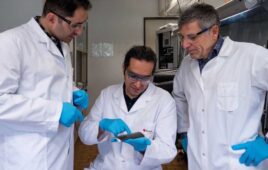
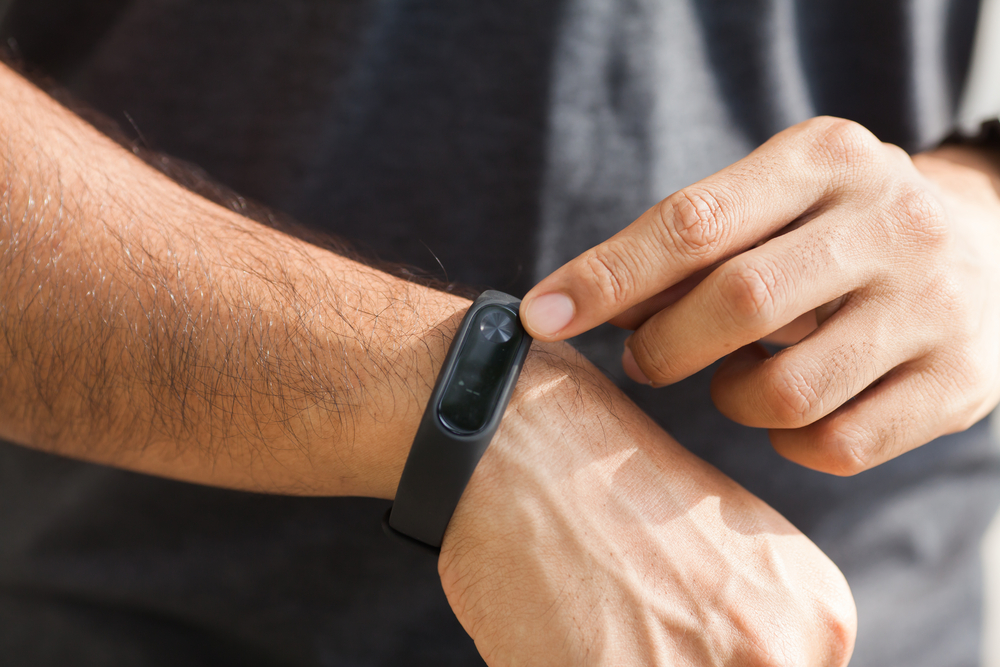
The world is edging closer to a reality where smart devices are able to use their owners as an energy resource, say experts from the University of Surrey.

In a study published by the Advanced Energy Materials journal, scientists from Surrey’s Advanced Technology Institute (ATI) detail an innovative solution for powering the next generation of electronic devices by using Triboelectric Nanogenerators (TENGs). Along with human movements, TENGs can capture energy from common energy sources such as wind, wave, and machine vibration.

A TENG is an energy harvesting device that uses the contact between two or more (hybrid, organic or inorganic) materials to produce an electric current.

Researchers from the ATI have provided a step-by-step guide on how to construct the most efficient energy harvesters. The study introduces a “TENG power transfer equation” and “TENG impedance plots”, tools which can help improve the design for power output of TENGs.

Professor Ravi Silva, Director of the ATI, said: “A world where energy is free and renewable is a cause that we are extremely passionate about here at the ATI (and the University of Surrey) – TENGs could play a major role in making this dream a reality. TENGs are ideal for powering wearables, internet of things devices and self-powered electronic applications. This research puts the ATI in a world leading position for designing optimized energy harvesters.”

Ishara Dharmasena, PhD student and lead scientist on the project, said: “I am extremely excited with this new study which redefines the way we understand energy harvesting. The new tools developed here will help researchers all over the world to exploit the true potential of triboelectric nanogenerators, and to design optimised energy harvesting units for custom applications.”


Related Articles Read More >

California microgrid pilots EV integration model for wildfire-prone regions
Solving the EV charger problem with streetlights
New scalable supercapacitors store more energy using graphene
Probiotics power a bioresorbable battery that can run from 4 to 100+ minutes
rd newsletter
EXPAND YOUR KNOWLEDGE AND STAY CONNECTED
Get the latest info on technologies, trends, and strategies in Research & Development.
RD 25 Power Index

R&D World Digital Issues

Fall 2025 issue

Browse the most current issue of R&D World and back issues in an easy to use high quality format. Clip, share and download with the leading R&D magazine today.

Research & Development World
  • Subscribe to R&D World Magazine
  • Sign up for R&D World’s newsletter
  • Contact Us
  • About Us
  • Drug Discovery & Development
  • Pharmaceutical Processing
  • Global Funding Forecast

Copyright © 2025 WTWH Media LLC. All Rights Reserved. The material on this site may not be reproduced, distributed, transmitted, cached or otherwise used, except with the prior written permission of WTWH Media
Privacy Policy | Advertising | About Us

Search R&D World

  • R&D World Home
  • Topics
    • Aerospace
    • Automotive
    • Biotech
    • Careers
    • Chemistry
    • Environment
    • Energy
    • Life Science
    • Material Science
    • R&D Management
    • Physics
  • Technology
    • 3D Printing
    • A.I./Robotics
    • Software
    • Battery Technology
    • Controlled Environments
      • Cleanrooms
      • Graphene
      • Lasers
      • Regulations/Standards
      • Sensors
    • Imaging
    • Nanotechnology
    • Scientific Computing
      • Big Data
      • HPC/Supercomputing
      • Informatics
      • Security
    • Semiconductors
  • R&D Market Pulse
  • R&D 100
    • 2025 R&D 100 Award Winners
    • 2025 Professional Award Winners
    • 2025 Special Recognition Winners
    • R&D 100 Awards Event
    • R&D 100 Submissions
    • Winner Archive
  • Resources
    • Research Reports
    • Digital Issues
    • Educational Assets
    • R&D Index
    • Subscribe
    • Video
    • Webinars
    • Content submission guidelines for R&D World
  • Global Funding Forecast
  • Top Labs
  • Advertise
  • SUBSCRIBE