Research & Development World

  • R&D World Home
  • Topics
    • Aerospace
    • Automotive
    • Biotech
    • Careers
    • Chemistry
    • Environment
    • Energy
    • Life Science
    • Material Science
    • R&D Management
    • Physics
  • Technology
    • 3D Printing
    • A.I./Robotics
    • Software
    • Battery Technology
    • Controlled Environments
      • Cleanrooms
      • Graphene
      • Lasers
      • Regulations/Standards
      • Sensors
    • Imaging
    • Nanotechnology
    • Scientific Computing
      • Big Data
      • HPC/Supercomputing
      • Informatics
      • Security
    • Semiconductors
  • R&D Market Pulse
  • R&D 100
    • 2025 R&D 100 Award Winners
    • 2025 Professional Award Winners
    • 2025 Special Recognition Winners
    • R&D 100 Awards Event
    • R&D 100 Submissions
    • Winner Archive
  • Resources
    • Research Reports
    • Digital Issues
    • Educational Assets
    • R&D Index
    • Subscribe
    • Video
    • Webinars
    • Content submission guidelines for R&D World
  • Global Funding Forecast
  • Top Labs
  • Advertise
  • SUBSCRIBE

Study: Graphene can multiply the power of light

By R&D Editors | February 25, 2013

Bottles, packaging, furniture, car parts… all made of plastic. Today we find it difficult to imagine our lives without this key material that revolutionized technology over the last century. There is wide-spread optimism in the scientific community that graphene will provide similar paradigm shifting advances in the decades to come. Mobile phones that fold, transparent and flexible solar panels, extra thin computers… the list of potential applications is endless. Scientists, industries and the European Commission are so convinced of the potential of graphene to revolutionize the world economy that they promise an injection of €1.000 million in graphene research.

The most recent discovery published in Nature Physics and made by researchers at the Institute of Photonic Science (ICFO), in collaboration with Massachusetts Institute of Technology, USA, Max Planck Institute for Polymer Research, Germany, and Graphenea S.L. Donostia-San Sebastian, Spain, demonstrate that graphene is able to convert a single photon that it absorbs into multiple electrons that could drive electric current (excited electrons)—a very promising discovery that makes graphene an important alternative material for light detection and harvesting technologies, now based on conventional semiconductors like silicon.

“In most materials, one absorbed photon generates one electron, but in the case of graphene, we have seen that one absorbed photon is able to produce many excited electrons, and therefore generate larger electrical signals” explains Frank Koppens, group leader at ICFO. This feature makes graphene an ideal building block for any device that relies on converting light into electricity. In particular, it enables efficient light detectors and potentially also solar cells that can harvest light energy from the full solar spectrum with lower loss.

The experiment consisted in sending a known number of photons with different energies (different colors) onto a monolayer of graphene.

“We have seen that high energy photons (e.g. violet) are converted into a larger number of excited electrons than low energy photons (e.g. infrared). The observed relation between the photon energy and the number of generated excited electrons shows that graphene converts light into electricity with very high efficiency. Even though it was already speculated that graphene holds potential for light-to-electricity conversion, it now turns out that it is even more suitable than expected!” explains Tielrooij, researcher at ICFO.

Although there are some issues for direct applications, such as graphene’s low absorption, graphene holds the potential to cause radical changes in many technologies that are currently based on conventional semiconductors.

“It was known that graphene is able to absorb a very large spectrum of light colors. However now we know that once the material has absorbed light, the energy conversion efficiency is very high. Our next challenge will be to find ways of extracting the electrical current and enhance the absorption of graphene. Then we will be able to design graphene devices that detect light more efficiently and could potentially even lead to more efficient solar cells,” concludes Koppens.

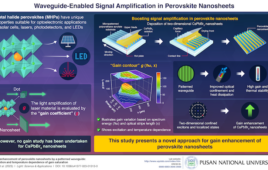
Photo-excitation Cascade and Multiple Carrier Generation in Graphene
Source: ICFO-The Institute of Photonic Sciences

Related Articles Read More >

The 2025 R&D 100 Finalists are here
New nanotechnology method increases microalgae biofuel yield by 300%
New nanopore sensor paves the way for fast, accurate, low-cost DNA sequencing
Floating solar mats clean polluted water — and generate power
rd newsletter
EXPAND YOUR KNOWLEDGE AND STAY CONNECTED
Get the latest info on technologies, trends, and strategies in Research & Development.
RD 25 Power Index

R&D World Digital Issues

Fall 2025 issue

Browse the most current issue of R&D World and back issues in an easy to use high quality format. Clip, share and download with the leading R&D magazine today.

Research & Development World
  • Subscribe to R&D World Magazine
  • Sign up for R&D World’s newsletter
  • Contact Us
  • About Us
  • Drug Discovery & Development
  • Pharmaceutical Processing
  • Global Funding Forecast

Copyright © 2025 WTWH Media LLC. All Rights Reserved. The material on this site may not be reproduced, distributed, transmitted, cached or otherwise used, except with the prior written permission of WTWH Media
Privacy Policy | Advertising | About Us

Search R&D World

  • R&D World Home
  • Topics
    • Aerospace
    • Automotive
    • Biotech
    • Careers
    • Chemistry
    • Environment
    • Energy
    • Life Science
    • Material Science
    • R&D Management
    • Physics
  • Technology
    • 3D Printing
    • A.I./Robotics
    • Software
    • Battery Technology
    • Controlled Environments
      • Cleanrooms
      • Graphene
      • Lasers
      • Regulations/Standards
      • Sensors
    • Imaging
    • Nanotechnology
    • Scientific Computing
      • Big Data
      • HPC/Supercomputing
      • Informatics
      • Security
    • Semiconductors
  • R&D Market Pulse
  • R&D 100
    • 2025 R&D 100 Award Winners
    • 2025 Professional Award Winners
    • 2025 Special Recognition Winners
    • R&D 100 Awards Event
    • R&D 100 Submissions
    • Winner Archive
  • Resources
    • Research Reports
    • Digital Issues
    • Educational Assets
    • R&D Index
    • Subscribe
    • Video
    • Webinars
    • Content submission guidelines for R&D World
  • Global Funding Forecast
  • Top Labs
  • Advertise
  • SUBSCRIBE