Research & Development World

  • R&D World Home
  • Topics
    • Aerospace
    • Automotive
    • Biotech
    • Careers
    • Chemistry
    • Environment
    • Energy
    • Life Science
    • Material Science
    • R&D Management
    • Physics
  • Technology
    • 3D Printing
    • A.I./Robotics
    • Software
    • Battery Technology
    • Controlled Environments
      • Cleanrooms
      • Graphene
      • Lasers
      • Regulations/Standards
      • Sensors
    • Imaging
    • Nanotechnology
    • Scientific Computing
      • Big Data
      • HPC/Supercomputing
      • Informatics
      • Security
    • Semiconductors
  • R&D Market Pulse
  • R&D 100
    • 2025 R&D 100 Award Winners
    • 2025 Professional Award Winners
    • 2025 Special Recognition Winners
    • R&D 100 Awards Event
    • R&D 100 Submissions
    • Winner Archive
  • Resources
    • Research Reports
    • Digital Issues
    • Educational Assets
    • R&D Index
    • Subscribe
    • Video
    • Webinars
    • Content submission guidelines for R&D World
  • Global Funding Forecast
  • Top Labs
  • Advertise
  • SUBSCRIBE

Team assembles first complete map of Antarctic ice flow

By R&D Editors | August 18, 2011

/sites/rdmag.com/files/legacyimages/RD/News/2011/08/AntarcticIceFlow1.jpg

click to enlarge

First complete map of the speed and direction of ice flow in Antarctica, derived from radar interferometric data from the Japan Aerospace Exploration Agency’s ALOS PALSAR, the European Space Agency’s Envisat ASAR and ERS-1/2, and the Canadian Space Agency’s RADARSAT-2 spacecraft. The color-coded satellite data are overlaid on a mosaic of Antarctica created with data from NASA’s Moderate Resolution Imaging Spectroradiometer (MODIS) instrument on NASA’s Terra spacecraft. Pixel spacing is 984 feet (300 meters). The thick black lines delineate major ice divides. Subglacial lakes in Antarctica’s interior are also outlined in black. Thick black lines along the coast indicate ice sheet grounding lines. Image credit: NASA/JPL-Caltech/UCI

NASA-funded
researchers have created the first complete map of the speed and
direction of ice flow in Antarctica. The map, which shows glaciers
flowing thousands of miles from the continent’s deep interior to its
coast, will be critical for tracking future sea-level increases from
climate change. The team created the map using integrated radar
observations from a consortium of international satellites.

“This
is like seeing a map of all the oceans’ currents for the first time.
It’s a game changer for glaciology,” said Eric Rignot of NASA’s Jet
Propulsion Laboratory in Pasadena, Calif., and the University of
California (UC), Irvine. Rignot is lead author of a paper about the ice
flow published online Thursday in Science Express. “We are seeing
amazing flows from the heart of the continent that had never been
described before.”

Rignot
and UC Irvine scientists Jeremie Mouginot and Bernd Scheuchl used
billions of data points captured by European, Japanese and Canadian
satellites to weed out cloud cover, solar glare and land features
masking the glaciers. With the aid of NASA technology, the team
painstakingly pieced together the shape and velocity of glacial
formations, including the previously uncharted East Antarctica, which
comprises 77% of the continent.

Like
viewers of a completed jigsaw puzzle, the scientists were surprised
when they stood back and took in the full picture. They discovered a new
ridge splitting the 5.4 million-square-mile (14
million-square-kilometer) landmass from east to west.

The
team also found unnamed formations moving up to 800 feet (244 meters)
annually across immense plains sloping toward the Antarctic Ocean and in
a different manner than past models of ice migration.

“The
map points out something fundamentally new: that ice moves by slipping
along the ground it rests on,” said Thomas Wagner, NASA’s cryospheric
program scientist in Washington. “That’s critical knowledge for
predicting future sea level rise. It means that if we lose ice at the
coasts from the warming ocean, we open the tap to massive amounts of ice
in the interior.”

The
work was conducted in conjunction with the International Polar Year
(IPY) (2007-2008). Collaborators worked under the IPY Space Task Group,
which included NASA; the European Space Agency (ESA); Canadian Space
Agency (CSA); Japan Aerospace Exploration Agency; the Alaska Satellite
Facility in Fairbanks; and MacDonald, Dettwiler and Associates of
Richmond, British Columbia, Canada. The map builds on partial charts of
Antarctic ice flow created by NASA, CSA and ESA using different
techniques. “To our knowledge, this is the first time that a tightly
knit collaboration of civilian space agencies has worked together to
create such a huge dataset of this type,” said Yves Crevier of CSA. “It
is a dataset of lasting scientific value in assessing the extent and
rate of change in polar regions.”


SOURCE

Related Articles Read More >

LLNL’s multi-ignition wildfire models could help predict and prevent, catastrophic fire events
Scientists release sodium hydroxide into the ocean to combat acidification
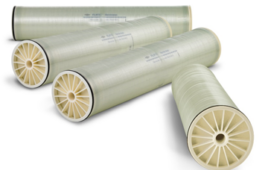
R&D 100 Winner Spotlight: DuPont’s high-salinity wastewater membrane
R&D 100 winner: How one startup is eliminating the century-old ‘dirty step’ in rare earth alloy manufacturing
rd newsletter
EXPAND YOUR KNOWLEDGE AND STAY CONNECTED
Get the latest info on technologies, trends, and strategies in Research & Development.
RD 25 Power Index

R&D World Digital Issues

Fall 2025 issue

Browse the most current issue of R&D World and back issues in an easy to use high quality format. Clip, share and download with the leading R&D magazine today.

R&D 100 Awards
Research & Development World
  • Subscribe to R&D World Magazine
  • Sign up for R&D World’s newsletter
  • Contact Us
  • About Us
  • Drug Discovery & Development
  • Pharmaceutical Processing
  • Global Funding Forecast

Copyright © 2026 WTWH Media LLC. All Rights Reserved. The material on this site may not be reproduced, distributed, transmitted, cached or otherwise used, except with the prior written permission of WTWH Media
Privacy Policy | Advertising | About Us

Search R&D World

  • R&D World Home
  • Topics
    • Aerospace
    • Automotive
    • Biotech
    • Careers
    • Chemistry
    • Environment
    • Energy
    • Life Science
    • Material Science
    • R&D Management
    • Physics
  • Technology
    • 3D Printing
    • A.I./Robotics
    • Software
    • Battery Technology
    • Controlled Environments
      • Cleanrooms
      • Graphene
      • Lasers
      • Regulations/Standards
      • Sensors
    • Imaging
    • Nanotechnology
    • Scientific Computing
      • Big Data
      • HPC/Supercomputing
      • Informatics
      • Security
    • Semiconductors
  • R&D Market Pulse
  • R&D 100
    • 2025 R&D 100 Award Winners
    • 2025 Professional Award Winners
    • 2025 Special Recognition Winners
    • R&D 100 Awards Event
    • R&D 100 Submissions
    • Winner Archive
  • Resources
    • Research Reports
    • Digital Issues
    • Educational Assets
    • R&D Index
    • Subscribe
    • Video
    • Webinars
    • Content submission guidelines for R&D World
  • Global Funding Forecast
  • Top Labs
  • Advertise
  • SUBSCRIBE