Research & Development World

  • R&D World Home
  • Topics
    • Aerospace
    • Automotive
    • Biotech
    • Careers
    • Chemistry
    • Environment
    • Energy
    • Life Science
    • Material Science
    • R&D Management
    • Physics
  • Technology
    • 3D Printing
    • A.I./Robotics
    • Software
    • Battery Technology
    • Controlled Environments
      • Cleanrooms
      • Graphene
      • Lasers
      • Regulations/Standards
      • Sensors
    • Imaging
    • Nanotechnology
    • Scientific Computing
      • Big Data
      • HPC/Supercomputing
      • Informatics
      • Security
    • Semiconductors
  • R&D Market Pulse
  • R&D 100
    • 2026 R&D 100 Award Winners
    • 2026 Professional Award Winners
    • 2026 Special Recognition Winners
    • R&D 100 Awards Event
    • R&D 100 Submissions
    • Winner Archive
  • Resources
    • Research Reports
    • Digital Issues
    • Educational Assets
    • Subscribe
    • Video
    • Webinars
    • PharmSci360
    • Content submission guidelines for R&D World
  • Global Funding Forecast
  • Top Labs
  • Advertise
  • SUBSCRIBE

Sleepy Bacteria Evolve to Resist Antibiotics

By The Hebrew University Of Jerusalem | February 10, 2017

Antibiotic resistance is a major and growing problem worldwide. According to the World Health Organization, antibiotic resistance is rising to dangerously high levels in all parts of the world, and new resistance mechanisms are emerging and spreading globally, threatening our ability to treat common infectious diseases. But how these bacterial resistance mechanisms occur, and whether we can predict their evolution, is far from understood.

Researchers have previously shown that one way bacteria can survive antibiotics is to evolve a “timer” that keeps them dormant for the duration of antibiotic treatment. But the antibiotic kills them when they wake up, so the easy solution is to continue the antibiotic treatment for a longer duration.

Now, in new research published in the prestigious journal Science, researchers at the Hebrew University of Jerusalem report a startling alternative path to the evolution of resistance in bacteria. After evolving a dormancy mechanism, the bacterial population can then evolve resistance 20 times faster than normal. At this point, continuing to administer antibiotics won’t kill the bacteria.

To investigate this evolutionary process, a group of biophysicists, led by Professor Nathalie Balaban and PhD student Irit Levin-Reisman at the Hebrew University’s Racah Institute of Physics, exposed bacterial populations to a daily dose of antibiotics in controlled laboratory conditions, until resistance was established. By tracking the bacteria along the evolutionary process, they found that the lethal antibiotic dosage gave rise to bacteria that were transiently dormant, and were therefore protected from several types of antibiotics that target actively growing bacteria. Once bacteria acquired the ability to go dormant, which is termed “tolerance,” they rapidly acquired mutations to resistance and were able to overcome the antibiotic treatment.

Thus, first the bacteria evolved to “sleep” for most of the antibiotic treatment, and then this “sleeping mode” not only transiently protected them from the lethal action of the drug, but also actually worked as a stepping stone for the later acquisition of resistance factors.

The results indicate that tolerance may play a crucial role in the evolution of resistance in bacterial populations under cyclic exposures to high antibiotic concentrations. The key factors are that tolerance arises rapidly, as a result of the large number of possible mutations that lead to it, and that the combined effect of resistance and tolerance promotes the establishment of a partial resistance mutation on a tolerant background.

These findings may have important implications for the development of new antibiotics, as they suggest that the way to delay the evolution of resistance is by using drugs that can also target the tolerant bacteria.

Unveiling the evolutionary dynamics of antibiotic resistance was made possible by the biophysical approach of the research team. The experiments were performed by a team of physicists, who developed a theoretical model and computer simulations that enabled a deep understanding of the reason behind the fast evolution of resistance that were observed.
Source: The Hebrew University of Jerusalem

Related Articles Read More >

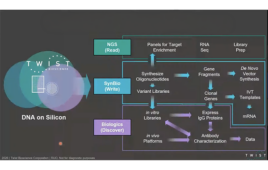
As AI floods drug discovery with designs, Twist uses DNA chips to tackle the wet-lab bottleneck
Interphex 2026 awards honor technologies focused on flexibility, automated workflows and ease of use
What every regulated lab should plan before building a cleanroom
6 essentials for seismic rated cleanrooms
rd newsletter
EXPAND YOUR KNOWLEDGE AND STAY CONNECTED
Get the latest info on technologies, trends, and strategies in Research & Development.

R&D World Digital Issues

Fall 2026 issue

Browse the most current issue of R&D World and back issues in an easy to use high quality format. Clip, share and download with the leading R&D magazine today.

R&D 100 Awards
Research & Development World
  • Subscribe to R&D World Magazine
  • Sign up for R&D World’s newsletter
  • Contact Us
  • About Us
  • Drug Discovery & Development
  • Pharmaceutical Processing
  • Global Funding Forecast

Copyright © 2026 Arrowfly LLC. All Rights Reserved. The material on this site may not be reproduced, distributed, transmitted, cached or otherwise used, except with the prior written permission of Arrowfly
Privacy Policy | Advertising | About Us

Search R&D World

  • R&D World Home
  • Topics
    • Aerospace
    • Automotive
    • Biotech
    • Careers
    • Chemistry
    • Environment
    • Energy
    • Life Science
    • Material Science
    • R&D Management
    • Physics
  • Technology
    • 3D Printing
    • A.I./Robotics
    • Software
    • Battery Technology
    • Controlled Environments
      • Cleanrooms
      • Graphene
      • Lasers
      • Regulations/Standards
      • Sensors
    • Imaging
    • Nanotechnology
    • Scientific Computing
      • Big Data
      • HPC/Supercomputing
      • Informatics
      • Security
    • Semiconductors
  • R&D Market Pulse
  • R&D 100
    • 2026 R&D 100 Award Winners
    • 2026 Professional Award Winners
    • 2026 Special Recognition Winners
    • R&D 100 Awards Event
    • R&D 100 Submissions
    • Winner Archive
  • Resources
    • Research Reports
    • Digital Issues
    • Educational Assets
    • Subscribe
    • Video
    • Webinars
    • PharmSci360
    • Content submission guidelines for R&D World
  • Global Funding Forecast
  • Top Labs
  • Advertise
  • SUBSCRIBE