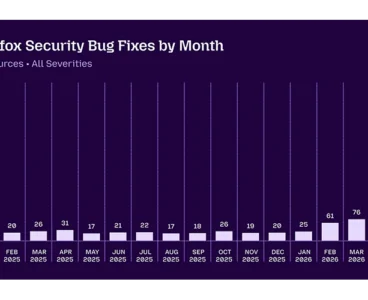
Last April, Firefox patched 31 security vulnerabilities. For most of the year, the number hovered between the teens and the mid-twenties. The numbers began to tick up after, in January 2026, Anthropic partnered with Mozilla and deployed its Claude Opus 4.6 model to scan Firefox over a two-week period. That month, the model discovered 22…
A startup says it found hidden memory behavior in NVIDIA GPUs and is building a security layer around it

Chicago startup Newtonian Standard says it has identified a memory behavior in NVIDIA GPUs that could serve as the foundation for a new kind of hardware-level security. J.P. O’Donnell, the company’s founder and a former Okta engineer, says he spent 18 months characterizing the behavior across NVIDIA Turing, Lovelace and Blackwell GPU architectures. The company…
NTT Research launches Scale Academy with SaltGrain, a zero-trust data security suite
As companies look for ways to let AI systems and outside partners analyze sensitive data without exposing entire files, NTT Research is launching Scale Academy, an internal incubator whose first product is SaltGrain, a zero-trust data security suite built on attribute-based encryption. The launch of SaltGrain comes on the heels of the November debut of…
LabWare advances SaaS LIMS strategy at Pittcon 2026, one year after ASSURE launch
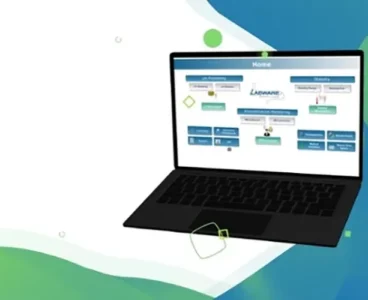
LabWare is at Pittcon 2026 teased the next phase of its SaaS strategy, a year after launching LabWare ASSURE in April 2025 as its food safety and quality LIMS offering. The company’s message in San Antonio: enterprise-grade LIMS doesn’t have to mean 18-month implementations. ASSURE is a fully hosted, pre-configured SaaS LIMS targeting food safety,…
HORIBA releases SDK for third-party control of its spectrometers and detectors
HORIBA has released the EzSpec-SDK, a software development kit that gives developers programmatic control over the company’s spectrometers and detectors from within third-party applications. The SDK supports Python, C++, C# (.NET), and LabVIEW, and HORIBA has published starter code, documentation, and example applications on GitHub. The company says the toolkit is designed to let researchers…
Oak Ridge National Laboratory’s Olivera Kotevska on PRESTO and Her R&D 100 Win

Olivera Kotevska, a research scientist at Oak Ridge National Laboratory, won an R&D 100 Award for PRESTO, a privacy-preserving AI toolkit she led at ORNL’s Computer Science and Mathematics Division. “Being one of the winners is really an honor,” Kotevska said at the 2025 R&D 100 Awards gala. “I still sometimes cannot believe this is…
NASA R&D 100 Winner enables high-speed data transfer from space
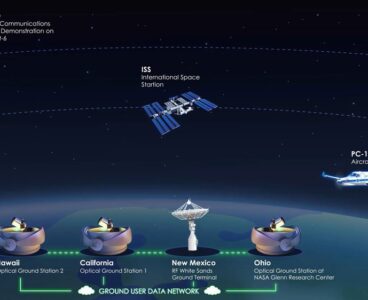
High-Rate Delay-Tolerant Networking (HDTN) is software for streaming and networking communications in space. The software has the potential to enable a solar system internet, allowing space exploration teams to receive data from rovers and other space vehicles and to maintain connections between spacecraft and Earth. The software can transfer data up to 10 times faster…
Lab automation is “vaporizing”: Why the hottest innovation is invisible

[Image from Adobe Stock] Why you should read this report: Lab automation looks hot, but the usual indicators are quiet: patents are flat, vendors report uneven demand, and standard market metrics barely move. This report shows what those signals miss—where recent AI-drug-discovery capital actually landed, why “Lab Automation Engineer” roles increasingly require Python and APIs…
Google on how AI will extend researchers

Asked whether AI will lessen the need for researchers, Google’s head of Research Yossi Matias gave a clear answer. “The only scenario where you would need fewer researchers is if we assume we’ve answered almost all the major questions. I don’t think anyone believes that,” he said at Google’s flagship research conference in Mountain View.…
Kythera Labs’ Wayfinder remasters incomplete medical data for AI analysis

Healthcare data is often incomplete and inconsistent, limiting efforts to improve patient outcomes and operational efficiency. A 2021 report from Sage Growth found that only 20% of healthcare organizations fully trust their data. Because records follow patients across providers with shifting identifiers and coding schemes, the same encounter often appears multiple times or partially, breaking…
Adviser Labs raises $1M to simplify cloud HPC for in AI and scientific computing
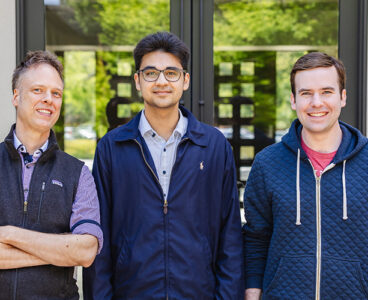
Cloud GPUs are no longer uniformly scarce, though high-end models like Nvidia’s H100 and H200 can still be tight in some regions and at certain providers. A more consistent bottleneck is operational: teams with working models or simulations lose hours to identity management, schedulers, images and cost guardrails. For labs and R&D groups, that means…
R&D World announces 2025 R&D 100 Professional Award Winners

R&D World has announced the winners of the 2025 R&D 100 Professional Awards. The honorees were selected by a panel of 54 prestigious industry experts from around the globe. The list of 2025 winners follows, along with highlights from their nomination letters. These winners will be formally awarded at the R&D 100 Awards Banquet at…
From solar system simulations to SaaS savings, how Codeium’s AI agent empowers non-coders and scientists alike

Could AI agents truly make sophisticated software development accessible to almost anyone? Codeium is betting on it, having attracted hundreds of thousands of users to its agent-native Windsurf IDE. There are opportunities galore in science, from education to automating research workflows. In terms of the former, imagine instructing an AI coding partner to build a…
Aardvark AI forecasts rival supercomputer simulations while using over 99.9% less compute
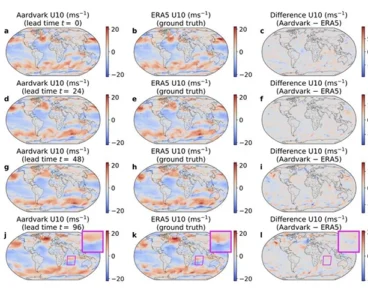
A deep learning system known as Aardvark Weather offers accurate weather forecasts that are orders of magnitude quicker to generate than existing systems. Described in a Nature article (currently posted as a preprint), the system can generate predictions on four NVIDIA A100 GPUs that would otherwise take roughly 1,000 node-hours on a traditional supercomputer system…
Quantum Brilliance, Pawsey integrate room-temp quantum with HPC on NVIDIA GH200
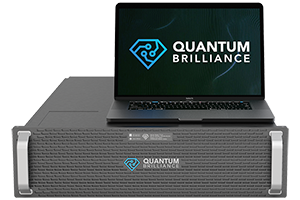
Imagine no longer needing to stand next to a giant supercomputer to dive into quantum research. Thanks to Quantum Brilliance’s virtual Quantum Processing Unit (vQPU), you can now explore quantum computing applications from wherever you are — whether that’s a standard workstation, a remote HPC cluster, or the cloud. This advancement emulates the experience of…
Frontier supercomputer reveals new detail in nuclear structure
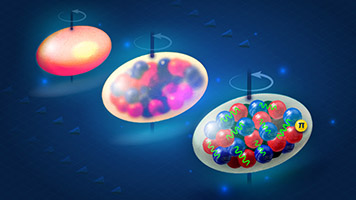
A team of researchers at the Department of Energy’s Oak Ridge National Laboratory has unveiled a new technique to predict nuclear properties with unprecedented precision. By harnessing the Frontier supercomputer, the world’s first exascale system, the scientists modeled how subatomic particles bind and shape an atomic nucleus — work that could open new frontiers in…
BYD and DeepSeek plan to bring “God’s Eye” autonomous driving features to sub-$10k vehicles

The Chinese EV giant BYD is shaking up the automotive market by breaking cost barriers in advanced driver-assistance systems (ADAS). Its new “God’s Eye” technology — known technically as the DiPilot system — brings Level-2 autonomous features as standard equipment on EVs priced under $10,000. While Level 2 autonomy (SAE-defined) requires driver supervision (For context,…
This week in AI research: U.S. lawmakers push to ban a Chinese AI disruptor’s app from government devices
The global AI landscape continues to heat up: U.S. lawmakers are zeroing in on Chinese AI disruptor DeepSeek with a possible government-device ban, while open-source challenger Hugging Face fires back at proprietary tools. OpenAI is targeting education and the public sector—both in the U.S. and through a newly forged partnership with SoftBank in Japan—just as…
R&D under siege: QuantHealth’s cyber head on how AI is lowering the bar for cyberattacks in pharma and beyond

Think of the damage sophisticated cybercriminals—“hackers”—have caused in recent years. The pharmaceutical sector offers a sobering example, having weathered a steady barrage of cyberattacks over the past decade. More than ten years ago, the Dragonfly (aka “Energetic Bear”) espionage campaign targeted smaller pharma suppliers to steal intellectual property. By 2017, the NotPetya outbreak crippled Merck…
R&D winner of the day: QUIC-DEPDOSE
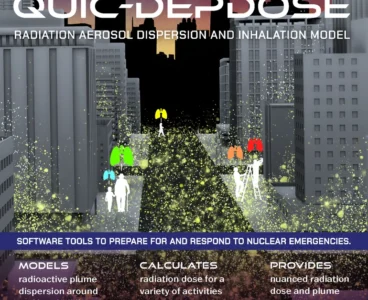
All unexpected radiological releases affect public health, economic stability, and global security. Los Alamos National Laboratory’s QUIC-DEPDOSE is a software application that calculates individualized radiation doses for people downwind from a radioactive plume by combining two key models: QUIC (for atmospheric dispersion) and DEPDOSE (for respiratory tract deposition and dose calculations). It leverages real topography…
New software offers realistic cell-signaling simulations
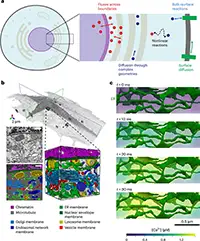
Researchers at the University of California San Diego have created and evaluated Spatial Modeling Algorithms for Reactions and Transport (SMART), a software package designed to simulate cell-signaling networks — complex molecular interactions that enable cells to respond to various environmental cues. These networks involve multiple steps and are heavily influenced by the three-dimensional structure…
Asian tech giants lead U.S. patent rankings

Who is leading in terms of U.S. patents? Asia. While U.S. patent grants rebounded by 4% in 2024 after a four-year decline, the real story is who’s driving innovation: Samsung Electronics maintained its crown for the third straight year with 6,377 patents, TSMC claimed second place with 3,989 patents, according to IFI Claims’ roundup of…
Sensor data, reimagined: When 90% less data can fuel 100x gains in efficiency in AI projects

For decades, the Nyquist-Shannon theorem—a foundational principle of signal processing—dictated that fully sampling a signal at or above twice its highest frequency was essential for capturing critical information. Now, a Pennsylvania startup called Lightscline suggests we may be entering a “post-Nyquist era.” According to a recent Nature Scientific Reports paper, the company’s neural-network-based software, inspired…
Leica Biosystems and Indica Labs partner to develop digital pathology platform
Leica Biosystems, a provider of anatomic and digital pathology solutions, has announced a strategic investment in Indica Labs, a company specializing in AI-powered digital pathology software. The collaboration aims to advance AI-enabled companion diagnostics (CDx) and support breakthroughs in biomarker analysis for cancer and other conditions. As part of the agreement, Leica Biosystems and Indica…
R&D 100 of the day: Digital twin system for tapping process, DiTwS-TP
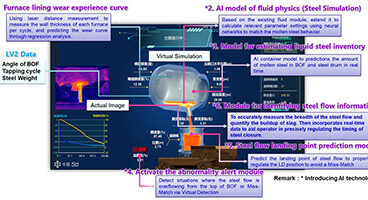
China Steel Corporation (CSC) and its co-developer, Industrial Technology Research Institute (ITRI), developed the new Digital Twin System for Tapping Process, which is helping transform the steel manufacturing landscape through automation and digitalization. This comprehensive system, featuring a real-time digital twin model, integrates monitoring, predictive maintenance, and process optimization to boost productivity, reduce costs, and enhance…