
Delivering laboratory buildings within tight budgets remains a challenge, particularly for developer-led projects where cost certainty is critical. Early planning decisions shape upfront costs and long-term adaptability. Establishing parameters early helps control capital investment without limiting future usability. Integrating cost estimation consultants, construction managers, and general contractors early in the design process is a key…
R&D World announces 2026 R&D 100 Technician of the Year
Cody Somers, lead technician at Kennametal, Inc., is the 2026 R&D 100 Technician of the Year. Having worked at the industrial technology and manufacturing company Kennametal since 2015, Somers has more than a decade of hands-on experience with tungsten carbide manufacturing processes. At Kennametal, Somers serves as a lead operator for multiple industrial-scale additive-manufacturing systems.…
NSF narrows anti-discrimination rules in grantmaking process
The National Science Foundation (NSF) rescinded a rule that prohibited the use of “criteria or methods of administration which have the effect of subjecting individuals to discrimination because of their race, color or national origin.” In the rule change, the NSF removed the words “or effect” from a rule that prohibited aid recipients from making selections of sites or locations of facilities “with…
The difference between using GenAI and working alongside it

R&D leaders entered 2026 with little doubt that generative AI would reshape how innovation gets done. The uncertainty now lies elsewhere: how much value is actually being created, and where? Despite widespread investment and executive pressure to accelerate adoption, a clear majority of R&D leaders we surveyed say that their current level of GenAI integration…
Building a discovery ecosystem: Essential strategies for new science facilities

First-time lab developers succeed not by replicating existing models, but by intentionally building flexible, partnership-driven discovery ecosystems that align tenants, infrastructure and market timing. As demand for science and research space grows and traditional office markets soften, developers are increasingly exploring laboratory and advanced manufacturing projects to diversify their portfolios. Entering the life sciences market, however, presents unique…
NIH employees warn of ‘institutionalized destruction’ one year after Bethesda Declaration

One year after nearly 500 National Institutes of Health (NIH) employees signed a letter warning that political interference was threatening the agency’s mission, the authors of a new report say the situation has only gotten worse. “The chaos of 2025 has been replaced with coordinated, systematic, institutionalized destruction in 2026,” the Bethesda Declaration: One Year…
R&D World parent company WTWH Media is now Arrowfly
WTWH Media, the parent company of R&D World, has announced that it has renamed itself Arrowfly. The change applies to the corporate entity. R&D World keeps its name, its URL, its newsletters, its editorial staff and its archives. The Cleveland-based company operates more than 40 B2B media brands and more than 45 industry events across…
NSF mandates immediate open access while disallowing grant funds to pay for it
The NSF’s new draft policy simultaneously requires researchers to publish open access immediately and proposes to eliminate the grant funding that pays for it at many journals, but fails to define exactly which publication costs are allowed. The NSF is renewing and revising its financial assistance policies and procedures document, renaming the longstanding Proposal and…
How Cypris evolved from selling patent reports to agentic R&D intelligence
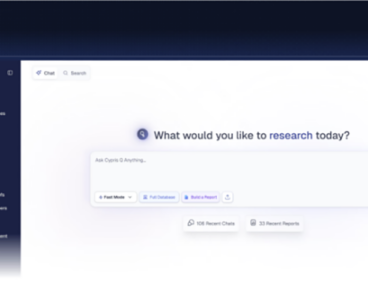
Over the past year, the AI-eats-software camp, which includes sell-side strategists at Jefferies and, more cautiously, analysts at Bain, has warned that generative AI could eat into the seat-based Software as a Service (SaaS) model. In some respects, those fears have been justified. After Anthropic released plug-ins for its Claude Cowork agent earlier in 2026,…
The NIH is proposing a grant cap that could help some labs and strain others

The National Institutes of Health (NIH) has issued a formal Request for Information (RFI) regarding a proposal to limit the number of Research Project Grants (RPGs) an individual investigator can hold simultaneously. The agency is considering caps ranging from two to four grants per Principal Investigator (PI) or Multi-Principal Investigator (MPI). A cap of four…
How the return of the spoils system could reshape U.S. federal science

The Trump administration has reclassified approximately 8,000 senior-level career officials across 54 agencies to Schedule Policy/Career, formerly Schedule F, status. The move strips the employees of standard civil service job protections, making it easier to remove them from their positions. Approximately 97% of those reclassified hold GS-15 or senior leadership positions. Agencies can remove Schedule…
The NIH tried to make research more accessible, researchers are paying the price

Continuing a Biden-era push accelerated by the Trump administration, the NIH is making research findings available to the public and requiring NIH-funded researchers to deposit the author-accepted version of their peer-reviewed manuscript in PubMed Central (PMC) and make it available at the time of publication. Many publishers enforce a six to 12-month embargo period before…
HHS instability is testing America’s hold on scientific leadership

Under the leadership of Secretary Robert F. Kennedy Jr., the Department of Health and Human Services has endured the departure of top officials at the CDC, FDA and NIH as well as significant staff reductions across the agency. This could erode American science as scientists look to move abroad. More than 75% of scientists who…
NSF bets $1.5B on X-Labs initiative to fund ‘generational breakthrough‘ as core budget faces proposed 55% cut
The National Science Foundation is channeling $1.5 billion over the next decade into independent research teams. Focus areas include quantum systems and next-generation scientific instruments. The news comes even as the agency navigates proposed budget cuts that would slash its funding by more than half and a grant pipeline that has slowed dramatically under the…
The R&D debt machine is ratcheting up in 2026

More R&D-heavy companies are going into debt. SpaceX? Racked up $23 billion in debt in 2025. Its xAI subsidiary, itself funded through loans, stands to repay $17.5 billion in debt. Microsoft? While it has retained its “AAA” credit rating, its stock has tumbled 12% year to date, partly over spending concerns. The company, which is…
AI agents in the R&D workforce: Moving beyond commodity AI
AI is being commoditized in front of our eyes. Months after a frontier release, rivals, often including open source variants, either match it in terms of benchmarks, or come close. Meanwhile, every R&D and IP team now has access to the same enterprise Copilot license, the same Claude and ChatGPT seats, the same general-purpose models…
Why pharma R&D procurement is often still too bespoke

The pharmaceutical industry operates in a universe where the inverse of Moore’s Law holds true. In a seminal 2012 paper, investment analyst and researcher Jack Scannell coined the term “Eroom’s Law” to explain the reality that drug development tends to get dramatically more expensive over long stretches of time. While Eroom’s Law is not usually…
The White House just proposed $1.5 trillion for Defense funding and $1.2 billion for AI supercomputers. Nondefense R&D would be cut 10%.
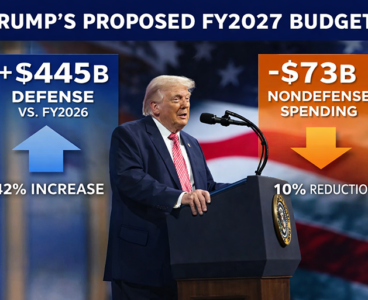
The White House just proposed what the Committee for a Responsible Federal Budget calls the largest year-over-year defense spending increase likely since World War II: $1.5 trillion in total budgetary resources, a $445 billion (42%) increase from FY2026. Of that, $350 billion would bypass the Senate’s 60-vote threshold entirely, routed through budget reconciliation as mandatory…
Designing the human science experience: How architecture shapes collaboration and discovery

As research grows more interdisciplinary, the environments built to support it don’t always keep up. Forward-thinking universities are rethinking laboratories not just as technical spaces but as places that shape how scientists interact, focus, and work together. At the University of Maryland and the University of Wisconsin–Madison, new facilities are testing that idea, designing around…
When AI does the inventing, the patent system doesn’t want to know

AI systems are playing an active role in designing experiments, screening millions of compounds and apparently generating novel mathematical proofs. Meanwhile, U.S. patent law still requires a human inventor, which precludes the potential of a solely AI inventor. The gap between those two realities is creating uncertainty for R&D organizations filing IP based on AI-assisted…
How a forgotten can of vintage ether can become a ticking time bomb
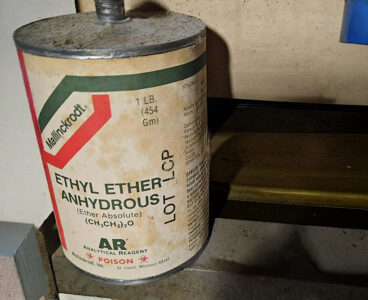
When a new homeowner in Southwest Michigan posted a photo of a vintage can of ethyl ether found in their basement to a large online chemistry forum on Reddit, the poster was just looking for cheap disposal advice. What they got instead was a chorus of terrified chemists and former hazardous waste technicians telling them…
CAS names 31 early-career scientists to 2026 future leaders cohort
CAS, a division of the American Chemical Society, has selected 31 Ph.D. candidates and postdoctoral scholars for its 2026 Future Leaders program, drawn from a competitive global applicant pool numbering in the hundreds. The cohort represents institutions across more than a dozen countries, including MIT, Caltech, Stanford, ETH Zürich, Korea Advanced Institute of Science and…
The price of a lab accident: When safety failures can run in the millions

By all accounts, December 29, 2008 was an unremarkable day at UCLA’s Molecular Sciences Building. Campus was mostly deserted for winter break. A few postdocs were catching up on benchwork. In a fourth-floor chemistry lab, 23-year-old research assistant Sheri Sangji drew tert-butyllithium, a chemical that ignites on contact with air, into a plastic syringe. The…
2025 R&D Leader of the Year: ‘Science thrives on openness and collaboration’

Thomas Lograsso, director of the Critical Materials Innovation Hub at Ames National Laboratory, accepted the 2025 R&D Leader of the Year award with a speech that emphasized collaboration and investing in the next generation. “Science thrives on openness and collaboration,” Lograsso said. “We must continue to invest in research, share knowledge freely, and empower the…
STEM and healthcare degrees dominate 2026 employment rankings, but growth is concentrated in a narrow slice
STEM and healthcare degrees claim 10 of the top 20 positions in a new employment ranking of 74 college majors with mathematical sciences projected to grow 28.4% through 2033, the fastest rate of any occupational category tracked by the Bureau of Labor Statistics. Nursing ranked first overall with a 1.42% unemployment rate, followed by mathematics,…