AI systems are playing an active role in designing experiments, screening millions of compounds and apparently generating novel mathematical proofs. Meanwhile, U.S. patent law still requires a human inventor, which precludes the potential of a solely AI inventor. The gap between those two realities is creating uncertainty for R&D organizations filing IP based on AI-assisted…
How a forgotten can of vintage ether can become a ticking time bomb
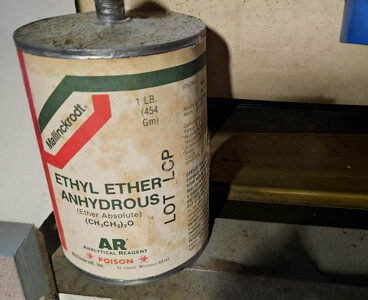
When a new homeowner in Southwest Michigan posted a photo of a vintage can of ethyl ether found in their basement to a large online chemistry forum on Reddit, the poster was just looking for cheap disposal advice. What they got instead was a chorus of terrified chemists and former hazardous waste technicians telling them…
CAS names 31 early-career scientists to 2026 future leaders cohort
CAS, a division of the American Chemical Society, has selected 31 Ph.D. candidates and postdoctoral scholars for its 2026 Future Leaders program, drawn from a competitive global applicant pool numbering in the hundreds. The cohort represents institutions across more than a dozen countries, including MIT, Caltech, Stanford, ETH Zürich, Korea Advanced Institute of Science and…
The price of a lab accident: When safety failures can run in the millions

By all accounts, December 29, 2008 was an unremarkable day at UCLA’s Molecular Sciences Building. Campus was mostly deserted for winter break. A few postdocs were catching up on benchwork. In a fourth-floor chemistry lab, 23-year-old research assistant Sheri Sangji drew tert-butyllithium, a chemical that ignites on contact with air, into a plastic syringe. The…
2025 R&D Leader of the Year: ‘Science thrives on openness and collaboration’
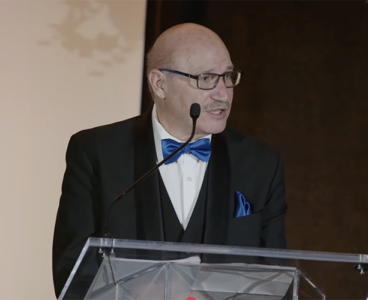
Thomas Lograsso, director of the Critical Materials Innovation Hub at Ames National Laboratory, accepted the 2025 R&D Leader of the Year award with a speech that emphasized collaboration and investing in the next generation. “Science thrives on openness and collaboration,” Lograsso said. “We must continue to invest in research, share knowledge freely, and empower the…
STEM and healthcare degrees dominate 2026 employment rankings, but growth is concentrated in a narrow slice
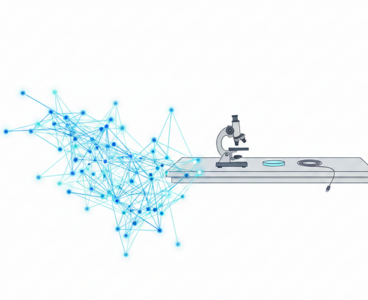
STEM and healthcare degrees claim 10 of the top 20 positions in a new employment ranking of 74 college majors with mathematical sciences projected to grow 28.4% through 2033, the fastest rate of any occupational category tracked by the Bureau of Labor Statistics. Nursing ranked first overall with a 1.42% unemployment rate, followed by mathematics,…
September’s jobs ‘wins’ collides with a historic collapse in federal science

The long-delayed September jobs report landed today with a headline that White House officials were eager to amplify. The economy added 119,000 jobs in September, more than double analysts’ expectations of roughly 50,000. Yet unemployment ticked up to 4.4%, the highest since 2021, and earlier months were revised down, with August now showing a loss…
Banks and consumer brands build IP fortresses while pharma firms loses ground

Banks and credit card companies are outpacing tech giants in patent portfolio growth, with JPMorgan Chase, Capital One, and Bank of America each adding more than 1,200 active patent families as they race to lock down IP around machine learning, payments infrastructure, and fraud detection. Those are findings from data from IFI Claims. In IFI…
Patent boom belongs to Asia and Big Tech, not Big Pharma

Asia’s patent offices carry the volume while Western megacaps in software, chips and medtech do most of the heavy filing. Drug majors are riding older IP waves instead of driving the boom. According to fresh WIPO data, innovators filed a record 3.7 million patent applications in 2024, up 4.9% from 2023 and the fastest growth…
The researcher of the future uses AI, collaborates globally and conducts research with a real-world impact

Elsevier’s “Researcher of the Future Report,” published earlier this month, reveals that while 58% of researchers use AI tools for work, 45% feel undertrained in AI. Even so, researchers identify the benefits of AI, with 58% of researchers saying it saves them time. 68% of researchers say the pressure to publish is greater than it was…
Lab automation is “vaporizing”: Why the hottest innovation is invisible
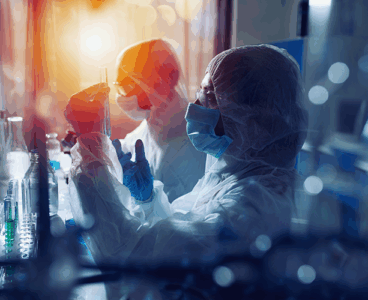
[Image from Adobe Stock] Why you should read this report: Lab automation looks hot, but the usual indicators are quiet: patents are flat, vendors report uneven demand, and standard market metrics barely move. This report shows what those signals miss—where recent AI-drug-discovery capital actually landed, why “Lab Automation Engineer” roles increasingly require Python and APIs…
Google on how AI will extend researchers

Asked whether AI will lessen the need for researchers, Google’s head of Research Yossi Matias gave a clear answer. “The only scenario where you would need fewer researchers is if we assume we’ve answered almost all the major questions. I don’t think anyone believes that,” he said at Google’s flagship research conference in Mountain View.…
CBO: FY2025 deficit $1.8T as shutdown idles much of federal science

After months of agency layoffs and program cuts, Washington still ended FY2025 with a $1.8 trillion deficit, essentially unchanged from last year, CBO estimates, while the shutdown idled large parts of the federal science enterprise. Across DOE labs, operations are continuing for now on prior-year funds, with limited visibility beyond the near term. Sandia told…
NSF turns 75 with its doors closed, facing a 60% budget cut in 2026

Visit nsf.gov this week and you’ll see a tan warning banner: ‘Due to a lapse in appropriations, NSF is closed.’ It’s five months past the agency’s 75th birthday: Harry Truman signed the National Science Foundation into law aboard his presidential train in Pocatello, Idaho on May 10, 1950. Now, roughly three-quarters of its staff are…
Does your company make the cut? 2026 Top Workplaces for Engineers nominations open

Engineering.com has opened nominations for its 2026 Top Workplaces for Engineers awards. Companies with at least 35 engineers or engineering staff comprising 10% of their workforce are eligible. The awards recognize organizations that create supportive and innovative cultures for engineering professionals, based on confidential employee feedback. Nominations are open through mid-January 2026, with winners to…
Global R&D Funding Forecast Preview 2025

The question is no longer if China will surpass U.S. R&D spending, but what happens next. R&D World’s 2025 Global Funding Forecast projects China reaching effective parity with the U.S. this year ($1.05T versus $1.07T in PPP terms), with a full crossover expected by 2026. While the specifics of the crossover vary based on your…
Making sense of the new R&D capitalization rules

When the Tax Cuts and Jobs Act’s (TCJA’s) R&D capitalization rules took effect in 2022, one of the biggest concerns for R&D-intensive companies was that the Section 174 R&D capitalization requirements would stifle innovation. The Trump Administration’s One Big Beautiful Bill Act (OBBBA), signed in July, brings significant relief for U.S. companies conducting R&D domestically…
Revealing the 2025 R&D 100 Awards Winners
The official 2025 R&D 100 Awards have been announced by R&D World. This worldwide science and innovation competition, now in its 63rd year, received entries from organizations around the world. This year’s judging panel included industry professionals from across the globe who evaluated breakthrough innovations in technology and science. The Winners are listed below by…
Asia owns IFI’s patent leaderboard as China takes 7 of top 10; Japan leads by company count

Not long ago, U.S. firms like IBM dominated patent rankings, topping U.S. grant lists for decades until Samsung overtook IBM in 2022. But now, Chinese companies claim seven of the top 10 spots in global active patent holdings, In front is State Grid Corp. a state-owned utility. The Chinese Academy of Sciences comes in second,…
The countdown is on: R&D World’s 2025 Awards announcements begin

From finalists spanning more than one dozen countries, our 54-member international judging panel has identified breakthrough innovations tackling some of today’s most pressing challenges. Among them are an AI-powered cancer diagnostics platform that can detect tumors months earlier than conventional methods, novel quantum computing architectures, and sustainable materials that fully biodegrade in about a month. This…
Microsoft Study: Data scientists among most exposed to AI, while lab roles see less impact

How is generative AI like Copilot reshaping work? A fresh Microsoft Research paper, published just this week on arXiv, dives into real-world usage data from anonymized Bing Copilot conversations to map AI’s impact on jobs. While the analysis excludes other R&D-related applications of AI, ranging from, say, AlphaFold’s potential in predicting protein folding to custom…
Hands-on with Patsnap’s Eureka Scout: Strong features meet evolving AI backbone

Patsnap, a Singapore-based AI platform for patent and R&D intelligence, hit unicorn status in 2021 with a valuation over $1 billion after a $300 million Series E round led by SoftBank Vision Fund 2 and Tencent. High-profile clients include NASA, Tesla, Vodafone, MIT and General Electric. The company was founded in 2007. After the CEO…
Trump blocks new Harvard visas after $3 billion in frozen research funds

President Donald Trump on Wednesday ordered a six-month halt on issuing new student visas to Harvard University students, declaring in a proclamation that he is “suspending the entry into the United States of any new Harvard student as a non-immigrant” for a period of six months because their presence “would be detrimental to the interests…
‘Big Beautiful Bill Act’ proposes restoring full R&D expensing for 2025-2029

Quick takeaways Cash now vs. later: Re-expensing gives R&D-focused firms more cash they can plow into trials, fabs or labs instead of handing it to the IRS. Long-term uncertainty: The proposed perk in the “One Big Beautiful Bill Act” would expire after 2029, so strategists already worry about what comes after that if it does…
NSF caps indirect costs at 15% for new university grants

The National Science Foundation will limit reimbursement for facilities and administrative (F&A) costs on all new awards to U.S. colleges and universities to 15% of modified total direct costs starting May 5, upending a decades-old system of institution-specific negotiated rates. The details of the new plan are spelled out in a policy notice. The policy…