Research & Development World

  • R&D World Home
  • Topics
    • Aerospace
    • Automotive
    • Biotech
    • Careers
    • Chemistry
    • Environment
    • Energy
    • Life Science
    • Material Science
    • R&D Management
    • Physics
  • Technology
    • 3D Printing
    • A.I./Robotics
    • Software
    • Battery Technology
    • Controlled Environments
      • Cleanrooms
      • Graphene
      • Lasers
      • Regulations/Standards
      • Sensors
    • Imaging
    • Nanotechnology
    • Scientific Computing
      • Big Data
      • HPC/Supercomputing
      • Informatics
      • Security
    • Semiconductors
  • R&D Market Pulse
  • R&D 100
    • 2026 R&D 100 Award Winners
    • 2026 Professional Award Winners
    • 2026 Special Recognition Winners
    • R&D 100 Awards Event
    • R&D 100 Submissions
    • Winner Archive
  • Resources
    • Research Reports
    • Digital Issues
    • Educational Assets
    • Subscribe
    • Video
    • Webinars
    • PharmSci360
    • Content submission guidelines for R&D World
  • Global Funding Forecast
  • Top Labs
  • Advertisers
    • Advertise
    • PR Submissions
    • Eblast Submissions
  • SUBSCRIBE

Scientists Use Graphene to Help Cool Electrical Components

By Kenny Walter, Digital Reporter | April 3, 2017

Graphene might hold the key to cooling the computer chips used in smartphones, computers and other electrical devices.

Researchers at Rutgers University have utilized graphene to help decrease the excessive heat generated by the increasing power of shrinking electronic components.

“You can fit graphene, a very thin, two-dimensional material that can be miniaturized, to cool a hot spot that creates heating problems in your chip,” Eva Andrei, Board of Governors professor of physics in the Department of Physics and Astronomy, said in a statement. “This solution doesn’t have moving parts and it’s quite efficient for cooling.

“We’ve achieved a power factor that is about two times higher than in previous thermoelectric coolers,” she added.

The power factor is the effectiveness of active cooling—when the electrical current carries heat away while passive cooling is when heat diffuses naturally.

Graphene—carbon atoms arranged in a honeycomb lattice—conducts electricity better than copper, quickly diffuses heat and is 100 times stronger than steel.

The researchers placed the graphene on devices made of boron nitride, which is extremely flat and smooth.

In a tiny computer or smartphone chip, billions of transistors generate substantial heat and high temperatures can hamper the performance of transistors—electronic devices that control the flow of power and can amplify signals.

Silicon dioxide—the traditional base for chips—hinders performance because it scatters electrons that can carry heat away.

Current methods to cool chips include small fans in computers, which is becoming less efficient and often break down. Water is also used for cooling but the method is complicated and prone to leaks that can fry computers.

“In a refrigerator, you have compression that does the cooling and you circulate a liquid,” Andrei said. “But this involves moving parts and one method of cooling without moving parts is called thermoelectric cooling.”

In smartphone and computer chips a piece of wire connect to a hot chip and heat is carried away passively. However, if the metal has hot and cold ends the electrons zip around the hot end and are sluggish at the cold end.

The researchers applied voltage to the metal, sending a current from the hot end to the cold end. The current spurred the electrons to carry away the heat much more efficiently than via passive cooling. Graphene is actually superior in both active and passive cooling and combining both makes graphene an efficient cooler.

“The electronics industry is moving towards this kind of cooling,” Andrei said. “There’s a very big research push to incorporate these kinds of coolers.

“There is a good chance that the graphene cooler is going to win out,” she added. “Other materials out there are much more expensive, they’re not as thin and they don’t have such a high power factor.”

The study was published in the Proceedings of the National Academy of Sciences of the United States of America.
Related Articles Read More >

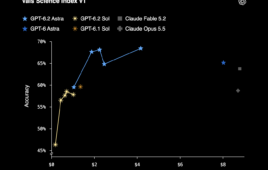
OpenAI’s GPT-6.2 Astra trails Claude Fable 5.2 by three points on an independent AI index at a fraction of the cost per task
Anthropic says Fable 5.2 nearly doubles its predecessor’s hardware-design score. Token prices fell 20%, but the cost per task doubled at full effort.
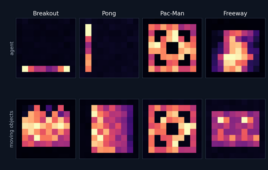
Heatmaps of first-layer weight strength for four game-playing networks; Breakout's paddle row, Pong's paddle column and Pac-Man's maze show up in the weights
MIT team says GPT-6 Astra can improve other AI models by editing their weights. Critics say its biggest result relied on standard ML engineering.
DOE packages national lab know-how as 35 skills for Claude Code, Codex and Gemini CLI
rd newsletter
EXPAND YOUR KNOWLEDGE AND STAY CONNECTED
Get the latest info on technologies, trends, and strategies in Research & Development.

R&D World Digital Issues

Fall 2026 issue

Browse the most current issue of R&D World and back issues in an easy to use high quality format. Clip, share and download with the leading R&D magazine today.

R&D 100 Awards
Research & Development World
  • Subscribe to R&D World Magazine
  • Sign up for R&D World’s newsletter
  • Contact Us
  • About Us
  • Drug Discovery & Development
  • Pharmaceutical Processing
  • Global Funding Forecast

Copyright © 2026 Arrowfly LLC. All Rights Reserved. The material on this site may not be reproduced, distributed, transmitted, cached or otherwise used, except with the prior written permission of Arrowfly
Privacy Policy | Advertising | About Us

Search R&D World

  • R&D World Home
  • Topics
    • Aerospace
    • Automotive
    • Biotech
    • Careers
    • Chemistry
    • Environment
    • Energy
    • Life Science
    • Material Science
    • R&D Management
    • Physics
  • Technology
    • 3D Printing
    • A.I./Robotics
    • Software
    • Battery Technology
    • Controlled Environments
      • Cleanrooms
      • Graphene
      • Lasers
      • Regulations/Standards
      • Sensors
    • Imaging
    • Nanotechnology
    • Scientific Computing
      • Big Data
      • HPC/Supercomputing
      • Informatics
      • Security
    • Semiconductors
  • R&D Market Pulse
  • R&D 100
    • 2026 R&D 100 Award Winners
    • 2026 Professional Award Winners
    • 2026 Special Recognition Winners
    • R&D 100 Awards Event
    • R&D 100 Submissions
    • Winner Archive
  • Resources
    • Research Reports
    • Digital Issues
    • Educational Assets
    • Subscribe
    • Video
    • Webinars
    • PharmSci360
    • Content submission guidelines for R&D World
  • Global Funding Forecast
  • Top Labs
  • Advertisers
    • Advertise
    • PR Submissions
    • Eblast Submissions
  • SUBSCRIBE