Research & Development World

  • R&D World Home
  • Topics
    • Aerospace
    • Automotive
    • Biotech
    • Careers
    • Chemistry
    • Environment
    • Energy
    • Life Science
    • Material Science
    • R&D Management
    • Physics
  • Technology
    • 3D Printing
    • A.I./Robotics
    • Software
    • Battery Technology
    • Controlled Environments
      • Cleanrooms
      • Graphene
      • Lasers
      • Regulations/Standards
      • Sensors
    • Imaging
    • Nanotechnology
    • Scientific Computing
      • Big Data
      • HPC/Supercomputing
      • Informatics
      • Security
    • Semiconductors
  • R&D Market Pulse
  • R&D 100
    • 2025 R&D 100 Award Winners
    • 2025 Professional Award Winners
    • 2025 Special Recognition Winners
    • R&D 100 Awards Event
    • R&D 100 Submissions
    • Winner Archive
  • Resources
    • Research Reports
    • Digital Issues
    • Educational Assets
    • Subscribe
    • Video
    • Webinars
    • Content submission guidelines for R&D World
  • Global Funding Forecast
  • Top Labs
  • Advertise
  • SUBSCRIBE

DOE provides $28M to advance scientific discovery using supercomputers

By Heather Hall | July 16, 2021

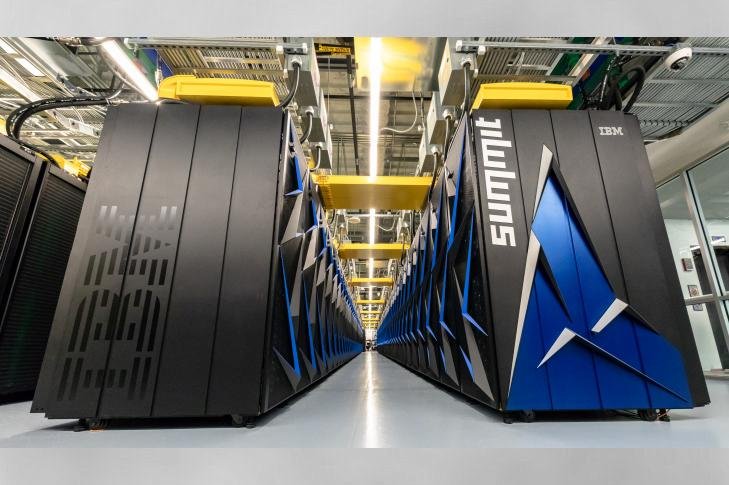
Supercomputer Summit at Oak Ridge National Laboratory

The U.S. Department of Energy (DOE) announces $28 million in funding for five research projects to develop software that will fully unleash the potential of DOE supercomputers to make new leaps in fields such as quantum information science and chemical reactions for clean energy applications.

“DOE’s national labs are home to some of the world’s fastest supercomputers, and with more advanced software programs we can fully harness the power of these supercomputers to make breakthrough discoveries and solve the world’s hardest to crack problems,” said U.S. Secretary of Energy Jennifer M. Granholm. “These investments will help sustain U.S. leadership in science, accelerate basic research in energy and advance solutions to the nation’s clean energy priorities.”

Supercomputers are essential in today’s world to addressing scientific topics of national interest, including clean energy, new materials, climate change, the origins of the universe and the nature of matter.

These awards, made through DOE’s Scientific Discovery through Advanced Computing (SciDAC) program, bring together experts in key areas of science and energy research, applied mathematics and computer science to address computing challenges and take maximum advantage of DOE’s supercomputers, allowing them to quicken the pace of scientific discovery.

The five selected projects will focus on computational methods, algorithms and software to further chemical and materials research, specifically for simulating quantum phenomena and chemical reactions. Teams will partner with either or both SciDAC Institutes – FASTMath and RAPIDS2 – led by Lawrence Berkeley and Argonne National Laboratories. A list of projects can be found here.

The projects are sponsored by the Offices of Advanced Scientific Computing Research (ASCR) and Basic Energy Sciences (BES) within the Department’s Office of Science through the SciDAC program. Projects were chosen by competitive peer review under a DOE Funding Opportunity Announcement open to universities, national laboratories, and other research organizations. The final details for each project award are subject to negotiations between DOE and the awardees.

Funding totals approximately $28 million, including $7 million in Fiscal Year 2021 dollars with outyear funding contingent on congressional appropriations


Related Articles Read More >

Who has access to Claude Mythos-tier models (and beyond) will redefine cybersecurity, including in R&D
Abstract of modern high tech internet data center room with rows of racks with network and server hardware. 3d rendering
A startup says it found hidden memory behavior in NVIDIA GPUs and is building a security layer around it
Ex-Google founders bet quantum-compressed chemistry can crack covalent drug design
NTT Research launches Scale Academy with SaltGrain, a zero-trust data security suite
rd newsletter
EXPAND YOUR KNOWLEDGE AND STAY CONNECTED
Get the latest info on technologies, trends, and strategies in Research & Development.

R&D World Digital Issues

Fall 2025 issue

Browse the most current issue of R&D World and back issues in an easy to use high quality format. Clip, share and download with the leading R&D magazine today.

R&D 100 Awards
Research & Development World
  • Subscribe to R&D World Magazine
  • Sign up for R&D World’s newsletter
  • Contact Us
  • About Us
  • Drug Discovery & Development
  • Pharmaceutical Processing
  • Global Funding Forecast

Copyright © 2026 WTWH Media LLC. All Rights Reserved. The material on this site may not be reproduced, distributed, transmitted, cached or otherwise used, except with the prior written permission of WTWH Media
Privacy Policy | Advertising | About Us

Search R&D World

  • R&D World Home
  • Topics
    • Aerospace
    • Automotive
    • Biotech
    • Careers
    • Chemistry
    • Environment
    • Energy
    • Life Science
    • Material Science
    • R&D Management
    • Physics
  • Technology
    • 3D Printing
    • A.I./Robotics
    • Software
    • Battery Technology
    • Controlled Environments
      • Cleanrooms
      • Graphene
      • Lasers
      • Regulations/Standards
      • Sensors
    • Imaging
    • Nanotechnology
    • Scientific Computing
      • Big Data
      • HPC/Supercomputing
      • Informatics
      • Security
    • Semiconductors
  • R&D Market Pulse
  • R&D 100
    • 2025 R&D 100 Award Winners
    • 2025 Professional Award Winners
    • 2025 Special Recognition Winners
    • R&D 100 Awards Event
    • R&D 100 Submissions
    • Winner Archive
  • Resources
    • Research Reports
    • Digital Issues
    • Educational Assets
    • Subscribe
    • Video
    • Webinars
    • Content submission guidelines for R&D World
  • Global Funding Forecast
  • Top Labs
  • Advertise
  • SUBSCRIBE