Research & Development World

  • R&D World Home
  • Topics
    • Aerospace
    • Automotive
    • Biotech
    • Careers
    • Chemistry
    • Environment
    • Energy
    • Life Science
    • Material Science
    • R&D Management
    • Physics
  • Technology
    • 3D Printing
    • A.I./Robotics
    • Software
    • Battery Technology
    • Controlled Environments
      • Cleanrooms
      • Graphene
      • Lasers
      • Regulations/Standards
      • Sensors
    • Imaging
    • Nanotechnology
    • Scientific Computing
      • Big Data
      • HPC/Supercomputing
      • Informatics
      • Security
    • Semiconductors
  • R&D Market Pulse
  • R&D 100
    • 2026 R&D 100 Award Winners
    • 2026 Professional Award Winners
    • 2026 Special Recognition Winners
    • R&D 100 Awards Event
    • R&D 100 Submissions
    • Winner Archive
  • Resources
    • Research Reports
    • Digital Issues
    • Educational Assets
    • Subscribe
    • Video
    • Webinars
    • PharmSci360
    • Content submission guidelines for R&D World
  • Global Funding Forecast
  • Top Labs
  • Advertisers
    • Advertise
    • PR Submissions
    • Eblast Submissions
  • SUBSCRIBE

In Cutting-edge Simulations, LA Basin Jiggles like Big Bowl of Jelly

By R&D Editors | August 26, 2015

CyberShake study 15.4 hazard map for 336 sites (white triangles) in the Los Angeles region. Map displays response spectral acceleration at 2 seconds period in units of surface gravitational acceleration for a two percent probability of exceedance in 50 years. Warm colors, representing areas of high hazard, often correspond to regions that overlay sedimentary basins including areas near Ventura (left center), Los Angeles (center), and San Bernardino (right center). Courtesy of Ricardo Taborda, University of Memphis, and Jacobo Bielak, Carnegie Mellon UniversityEarthquakes occur on a massive scale and often originate deep below the surface of the Earth, making them notoriously difficult to predict.

The Southern California Earthquake Center (SCEC) and its lead scientist, Thomas Jordan, use massive computing power made possible by the National Science Foundation (NSF) to improve our understanding of earthquakes. In doing so, SCEC is helping to provide long-term earthquake forecasts and more accurate hazard assessments.

One SCEC effort in particular, the PressOn project, aims to create more physically-realistic, wave-based earthquake simulations using an earthquake model they developed called CyberShake, which calculates how earthquake waves ripple through a 3-D model of the ground.

The latest NSF-funded supercomputers, capable of performing quadrillions of calculations every second, make this more accurate approach to studying earthquakes possible.

The Earth’s crust is made of plates that float on the molten outer core. Most earthquakes result from these plates moving relative to one another, a process called plate tectonics.

The edges of plates are rough. Those edges get stuck on one another while the rest of the plates keep moving, storing up energy — a process like stretching a rubber band. When the plate edges finally come unstuck (like letting go of one end of the rubber band), all the pent-up energy is released and the plate jerks into place. Aftershocks happen when the plate overshoots its equilibrium point and continues to readjust over the coming days to years.

Three distinct types of wave are generated by an earthquake: primary waves, secondary waves and surface waves. Each has a unique behavior and a distinct signature. The characteristics, timing and damage pattern of these waves differ by distance from the origin of the earthquake and the type of rock or soil they move through.

Given detailed information about the geological material in specific areas, physics-based 3-D wave propagation simulations are able to calculate how earthquake waves will move through the Earth and how strong the ground motions will be when the waves reach the surface.

In 2014, the SCEC team investigated the earthquake potential of the Los Angeles Basin, where the Pacific and North American plates run into each other at the San Andreas Fault. In this study, the simulation showed earthquake waves trapped, and reverberating, within in the Los Angeles basin. The high-shaking ground motions were much more than Jordan and his team expected.

“These basins act as essentially big bowls of jelly that shake during earthquakes and therefore very much affect the motion,” Jordan said.

SCEC’s simulations vary in terms of seismic wave cycles per second, or hertz. As that measurement increases, so does the potential for damage — and the complexity of the simulation. Structures such as buildings and bridges are most vulnerable to damage by seismic waves between 1 and 10 hertz.

The team first simulated individual earthquakes at 4 hertz. They then performed a simulation involving a large ensemble of earthquakes at 1 hertz–simulating more quakes required lowering the wave intensity — to calculate a probabilistic seismic hazard model for the Los Angeles area. A seismic hazard model describes the probability that an earthquake will occur in a given geographic area, within a given window of time, and with ground motion intensity exceeding a given threshold.

Starting in April 2015 and continuing over seven weeks, SCEC used the NSF-funded Blue Waters and Titan supercomputers at the Oak Ridge Leadership Computing Facility to calculate the first 1 hertz CyberShake hazard model specific to the Los Angeles Basin. This simulation doubled the maximum simulated frequency of the previous year’s CyberShake seismic hazard model, therefore also doubling the accuracy.

Even though the number of calculations required increased as the maximum simulated frequency of the earthquake went up, the tremendous computing power of Blue Waters and Titan reduced the time needed for these calculations from months to weeks.

Scientists believe seismic hazard analyses need to simulate earthquake frequencies above 10 hertz to realistically capture the full dynamics of a potential event. SCEC’s work is paving the way for those simulations. Physics-based 3-D earthquake simulations at 10 hertz, once a distant dream, are now on the horizon.
Related Articles Read More >

Anthropic says Fable 5.2 nearly doubles its predecessor’s hardware-design score. Token prices fell 20%, but the cost per task doubled at full effort.
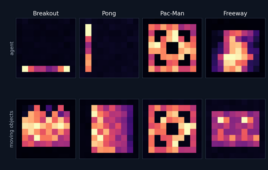
Heatmaps of first-layer weight strength for four game-playing networks; Breakout's paddle row, Pong's paddle column and Pac-Man's maze show up in the weights
MIT team says GPT-6 Astra can improve other AI models by editing their weights. Critics say its biggest result relied on standard ML engineering.
DOE packages national lab know-how as 35 skills for Claude Code, Codex and Gemini CLI
Jellyfish: Claude Code bills hit $252 a month per developer as software factories automate code production among early adopters
rd newsletter
EXPAND YOUR KNOWLEDGE AND STAY CONNECTED
Get the latest info on technologies, trends, and strategies in Research & Development.

R&D World Digital Issues

Fall 2026 issue

Browse the most current issue of R&D World and back issues in an easy to use high quality format. Clip, share and download with the leading R&D magazine today.

R&D 100 Awards
Research & Development World
  • Subscribe to R&D World Magazine
  • Sign up for R&D World’s newsletter
  • Contact Us
  • About Us
  • Drug Discovery & Development
  • Pharmaceutical Processing
  • Global Funding Forecast

Copyright © 2026 Arrowfly LLC. All Rights Reserved. The material on this site may not be reproduced, distributed, transmitted, cached or otherwise used, except with the prior written permission of Arrowfly
Privacy Policy | Advertising | About Us

Search R&D World

  • R&D World Home
  • Topics
    • Aerospace
    • Automotive
    • Biotech
    • Careers
    • Chemistry
    • Environment
    • Energy
    • Life Science
    • Material Science
    • R&D Management
    • Physics
  • Technology
    • 3D Printing
    • A.I./Robotics
    • Software
    • Battery Technology
    • Controlled Environments
      • Cleanrooms
      • Graphene
      • Lasers
      • Regulations/Standards
      • Sensors
    • Imaging
    • Nanotechnology
    • Scientific Computing
      • Big Data
      • HPC/Supercomputing
      • Informatics
      • Security
    • Semiconductors
  • R&D Market Pulse
  • R&D 100
    • 2026 R&D 100 Award Winners
    • 2026 Professional Award Winners
    • 2026 Special Recognition Winners
    • R&D 100 Awards Event
    • R&D 100 Submissions
    • Winner Archive
  • Resources
    • Research Reports
    • Digital Issues
    • Educational Assets
    • Subscribe
    • Video
    • Webinars
    • PharmSci360
    • Content submission guidelines for R&D World
  • Global Funding Forecast
  • Top Labs
  • Advertisers
    • Advertise
    • PR Submissions
    • Eblast Submissions
  • SUBSCRIBE