Research & Development World

  • R&D World Home
  • Topics
    • Aerospace
    • Automotive
    • Biotech
    • Careers
    • Chemistry
    • Environment
    • Energy
    • Life Science
    • Material Science
    • R&D Management
    • Physics
  • Technology
    • 3D Printing
    • A.I./Robotics
    • Software
    • Battery Technology
    • Controlled Environments
      • Cleanrooms
      • Graphene
      • Lasers
      • Regulations/Standards
      • Sensors
    • Imaging
    • Nanotechnology
    • Scientific Computing
      • Big Data
      • HPC/Supercomputing
      • Informatics
      • Security
    • Semiconductors
  • R&D Market Pulse
  • R&D 100
    • 2026 R&D 100 Award Winners
    • 2026 Professional Award Winners
    • 2026 Special Recognition Winners
    • R&D 100 Awards Event
    • R&D 100 Submissions
    • Winner Archive
  • Resources
    • Research Reports
    • Digital Issues
    • Educational Assets
    • Subscribe
    • Video
    • Webinars
    • PharmSci360
    • Content submission guidelines for R&D World
  • Global Funding Forecast
  • Top Labs
  • Advertisers
    • Advertise
    • PR Submissions
    • Eblast Submissions
  • SUBSCRIBE

Nano-Dagger Takes a Stab at Microbes

By A*STAR | January 16, 2018

A powerful solution to the global spread of antimicrobial resistance could soon become available, thanks to A*STAR researchers, who have come up with a physical and green alternative to biochemically active antibacterial agents.

Typically transmitted by contact with contaminated surfaces, bacterial infections pose serious health threats in medical settings. Small molecular antibacterial agents, which are commonly used in antiseptics, disinfectants, and preservatives, and other consumer care products, can prevent cross-infection by annihilating bacteria on frequently touched surfaces. However, their overuse contributes to antimicrobial resistance. These toxic and persistent substances can also harm the environment by disrupting the ecological balance of soils and endangering aquatic life.

In response to this, Yugen Zhang and Yuan Yuan, from the Institute of Bioengineering and Nanotechnology have developed nanostructured surfaces that destroy bacteria through physical, rather than biochemical interactions (Nanomedicine: Nanotechnology, Biology, and Medicine, “Enhanced biomimic bactericidal surfaces by coating with positively-charged ZIF nano-dagger arrays”). These surfaces mimic the antimicrobial patterns formed by ultra-small pillars on cicada wings. “In addition to being clean and safe, this technology does not require externally applied chemicals,” says Zhang.

The researchers added a zinc-based solution to various surfaces, including rubber, glass, wood, and metal foil, then immersed the surfaces in an aqueous solution containing amine-rich 2-methylimidazole to form a so-called zeolitic imidazolate framework coating. The coating consisted of an array of tiny, positively charged dagger-like crystals that grew perpendicularly to the substrates.

“We used inexpensive materials and a simple method to create this nano-dagger structure on different types of surfaces,” says Zhang noting that his team had to try numerous formulas before finding the right growth conditions.

Regardless of the coated substrate, the nano-dagger arrays effectively killed the antibiotic-resistant bacteria Escherichia coli and Staphylococcus aureus as well as the fungus Candida albicans, demonstrating their broad applicability. They also retained their antibacterial activity when exposed four consecutive times to E. coli over two months, proving their durability.

According to Zhang, the positive charges positioned on the nano-daggers first attract bacterial cells that bear negatively charged membranes, making them stick to the coated surface. Next, the sharp nano-dagger tips rip the cell membranes open through electrostatic and gravitational forces.

“We are really excited about the excellent bacterial killing property of this technology and believe that it will have wide-ranging applications in real life,” says Zhang. His team is currently working on developing nano-dagger surface prototypes and other antimicrobial nano-patterned surfaces using different materials.

Source: A*STAR
Related Articles Read More >

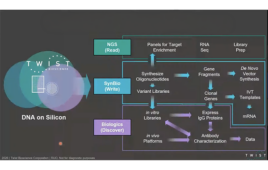
As AI floods drug discovery with designs, Twist uses DNA chips to tackle the wet-lab bottleneck
Interphex 2026 awards honor technologies focused on flexibility, automated workflows and ease of use
What every regulated lab should plan before building a cleanroom
6 essentials for seismic rated cleanrooms
rd newsletter
EXPAND YOUR KNOWLEDGE AND STAY CONNECTED
Get the latest info on technologies, trends, and strategies in Research & Development.

R&D World Digital Issues

Fall 2026 issue

Browse the most current issue of R&D World and back issues in an easy to use high quality format. Clip, share and download with the leading R&D magazine today.

R&D 100 Awards
Research & Development World
  • Subscribe to R&D World Magazine
  • Sign up for R&D World’s newsletter
  • Contact Us
  • About Us
  • Drug Discovery & Development
  • Pharmaceutical Processing
  • Global Funding Forecast

Copyright © 2026 Arrowfly LLC. All Rights Reserved. The material on this site may not be reproduced, distributed, transmitted, cached or otherwise used, except with the prior written permission of Arrowfly
Privacy Policy | Advertising | About Us

Search R&D World

  • R&D World Home
  • Topics
    • Aerospace
    • Automotive
    • Biotech
    • Careers
    • Chemistry
    • Environment
    • Energy
    • Life Science
    • Material Science
    • R&D Management
    • Physics
  • Technology
    • 3D Printing
    • A.I./Robotics
    • Software
    • Battery Technology
    • Controlled Environments
      • Cleanrooms
      • Graphene
      • Lasers
      • Regulations/Standards
      • Sensors
    • Imaging
    • Nanotechnology
    • Scientific Computing
      • Big Data
      • HPC/Supercomputing
      • Informatics
      • Security
    • Semiconductors
  • R&D Market Pulse
  • R&D 100
    • 2026 R&D 100 Award Winners
    • 2026 Professional Award Winners
    • 2026 Special Recognition Winners
    • R&D 100 Awards Event
    • R&D 100 Submissions
    • Winner Archive
  • Resources
    • Research Reports
    • Digital Issues
    • Educational Assets
    • Subscribe
    • Video
    • Webinars
    • PharmSci360
    • Content submission guidelines for R&D World
  • Global Funding Forecast
  • Top Labs
  • Advertisers
    • Advertise
    • PR Submissions
    • Eblast Submissions
  • SUBSCRIBE