Research & Development World

  • R&D World Home
  • Topics
    • Aerospace
    • Automotive
    • Biotech
    • Careers
    • Chemistry
    • Environment
    • Energy
    • Life Science
    • Material Science
    • R&D Management
    • Physics
  • Technology
    • 3D Printing
    • A.I./Robotics
    • Software
    • Battery Technology
    • Controlled Environments
      • Cleanrooms
      • Graphene
      • Lasers
      • Regulations/Standards
      • Sensors
    • Imaging
    • Nanotechnology
    • Scientific Computing
      • Big Data
      • HPC/Supercomputing
      • Informatics
      • Security
    • Semiconductors
  • R&D Market Pulse
  • R&D 100
    • 2026 R&D 100 Award Winners
    • 2026 Professional Award Winners
    • 2026 Special Recognition Winners
    • R&D 100 Awards Event
    • R&D 100 Submissions
    • Winner Archive
  • Resources
    • Research Reports
    • Digital Issues
    • Educational Assets
    • Subscribe
    • Video
    • Webinars
    • PharmSci360
    • Content submission guidelines for R&D World
  • Global Funding Forecast
  • Top Labs
  • Advertisers
    • Advertise
    • PR Submissions
    • Eblast Submissions
  • SUBSCRIBE

New MIT technology allows 3-D image interaction

By R&D Editors | January 3, 2014

In a Nov. 26, 2013, photo, Massachusetts Institute of Technology graduate student Sean Follmer demonstrates inFORM technology on campus in Cambridge, Mass. Follmer, a researcher with MIT's Tangible Media Group, moves his hands in front of a depth-sensing camera which sends signals to a motorized pin screen in another location where a 3-D image pops up to manipulate the red ball. AP Photo/Elise AmendolaResearchers at the Massachusetts Institute of Technology have found a way to allow people in one place to interact with three-dimensional versions of people or objects in a different location.

MIT’s Tangible Media Group calls the technology inFORM. A person in one location moves or puts an object in front of a depth-sensing camera. That camera sends signals to a motorized pin screen somewhere else and that’s where the 3-D image pops up. If someone on camera is moving his hands, for example, that movement would show up on the pin screen in another location.

They hope the technology can eventually be used by urban planners and architects. It could also be used by doctors and others who need to look at computed tomography scans.

According to MIT Technology Review, inFORM uses a Kinect motion sensing camera sourced from the Xbox system. It helps relay the movement of physical “pixels” on a table that move in lockstep with data from the camera. This direct link lets people remotely control objects from a distance or physically interact with temporary objects like data. The demonstration setup has a low 30-pixel-by-30-pixel resolution that helps illustrate the potential. The developers envision far higher resolutions in the future, which will help the system feel much more lifelike.

Source: The Associated Press


Related Articles Read More >

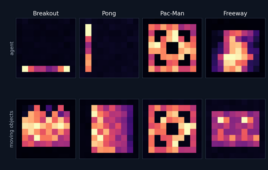
Heatmaps of first-layer weight strength for four game-playing networks; Breakout's paddle row, Pong's paddle column and Pac-Man's maze show up in the weights
MIT team says GPT-6 Astra can improve other AI models by editing their weights. Critics say its biggest result relied on standard ML engineering.
DOE packages national lab know-how as 35 skills for Claude Code, Codex and Gemini CLI
Jellyfish: Claude Code bills hit $252 a month per developer as software factories automate code production among early adopters
How Kimi K3.1 Pro stacks up against Claude Opus 5.5 and GPT-6 Astra
rd newsletter
EXPAND YOUR KNOWLEDGE AND STAY CONNECTED
Get the latest info on technologies, trends, and strategies in Research & Development.

R&D World Digital Issues

Fall 2026 issue

Browse the most current issue of R&D World and back issues in an easy to use high quality format. Clip, share and download with the leading R&D magazine today.

R&D 100 Awards
Research & Development World
  • Subscribe to R&D World Magazine
  • Sign up for R&D World’s newsletter
  • Contact Us
  • About Us
  • Drug Discovery & Development
  • Pharmaceutical Processing
  • Global Funding Forecast

Copyright © 2026 Arrowfly LLC. All Rights Reserved. The material on this site may not be reproduced, distributed, transmitted, cached or otherwise used, except with the prior written permission of Arrowfly
Privacy Policy | Advertising | About Us

Search R&D World

  • R&D World Home
  • Topics
    • Aerospace
    • Automotive
    • Biotech
    • Careers
    • Chemistry
    • Environment
    • Energy
    • Life Science
    • Material Science
    • R&D Management
    • Physics
  • Technology
    • 3D Printing
    • A.I./Robotics
    • Software
    • Battery Technology
    • Controlled Environments
      • Cleanrooms
      • Graphene
      • Lasers
      • Regulations/Standards
      • Sensors
    • Imaging
    • Nanotechnology
    • Scientific Computing
      • Big Data
      • HPC/Supercomputing
      • Informatics
      • Security
    • Semiconductors
  • R&D Market Pulse
  • R&D 100
    • 2026 R&D 100 Award Winners
    • 2026 Professional Award Winners
    • 2026 Special Recognition Winners
    • R&D 100 Awards Event
    • R&D 100 Submissions
    • Winner Archive
  • Resources
    • Research Reports
    • Digital Issues
    • Educational Assets
    • Subscribe
    • Video
    • Webinars
    • PharmSci360
    • Content submission guidelines for R&D World
  • Global Funding Forecast
  • Top Labs
  • Advertisers
    • Advertise
    • PR Submissions
    • Eblast Submissions
  • SUBSCRIBE