Research & Development World

  • R&D World Home
  • Topics
    • Aerospace
    • Automotive
    • Biotech
    • Careers
    • Chemistry
    • Environment
    • Energy
    • Life Science
    • Material Science
    • R&D Management
    • Physics
  • Technology
    • 3D Printing
    • A.I./Robotics
    • Software
    • Battery Technology
    • Controlled Environments
      • Cleanrooms
      • Graphene
      • Lasers
      • Regulations/Standards
      • Sensors
    • Imaging
    • Nanotechnology
    • Scientific Computing
      • Big Data
      • HPC/Supercomputing
      • Informatics
      • Security
    • Semiconductors
  • R&D Market Pulse
  • R&D 100
    • 2026 R&D 100 Award Winners
    • 2026 Professional Award Winners
    • 2026 Special Recognition Winners
    • R&D 100 Awards Event
    • R&D 100 Submissions
    • Winner Archive
  • Resources
    • Research Reports
    • Digital Issues
    • Educational Assets
    • Subscribe
    • Video
    • Webinars
    • PharmSci360
    • Content submission guidelines for R&D World
  • Global Funding Forecast
  • Top Labs
  • Advertise
  • SUBSCRIBE

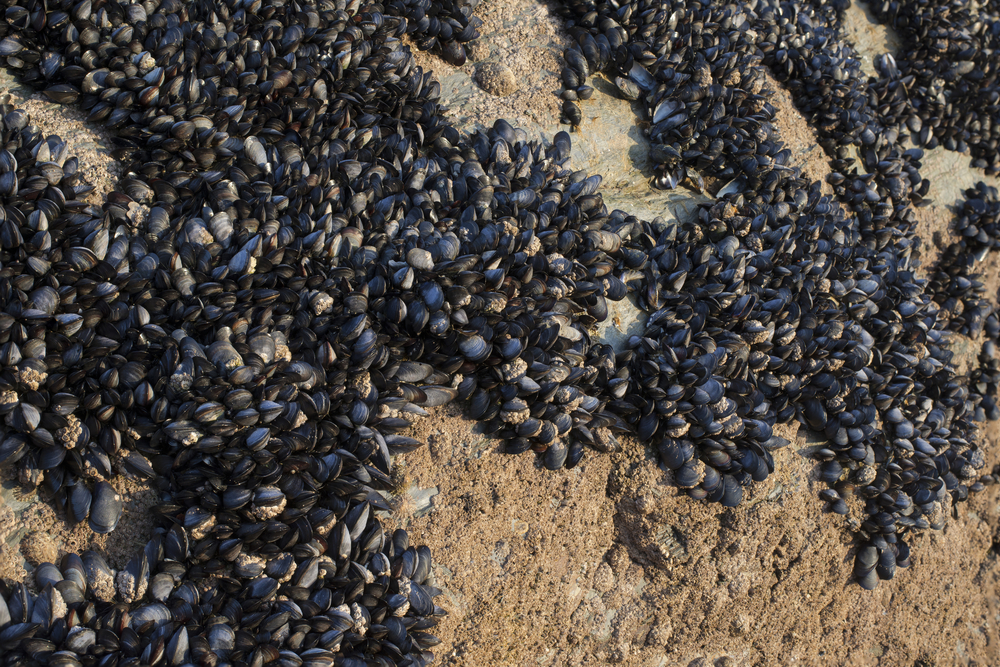
Adhesive Inspired by Mussels Maintains Strength Underwater

By Ryan Bushey | March 14, 2017

A new form of super glue could come from an unlikely source.

Scientists at Purdue University created a new polymer adhesive inspired by the proteins mussels use to stick to rocks.

The researchers specifically analyzed amino acids in the glue called DOPA, which contains compounds called catechols that let these creatures bind directly to a surface and stay there under extreme conditions. The end results produced a material the scientists call poly(catechol-styrene).

“We are focusing on catechols given that the animals use this type of chemistry so successfully,” said lead researcher and Purdue University chemistry and materials engineering professor Jonathan Walker, Ph.D., in a statement. “Poly(catechol-styrene) is looking to be, possibly, one of the strongest underwater adhesives found to date.”

Testing involving the polymer revealed it performed better than 10 commercial adhesives when bonding to polished aluminum, according to the announcement.

It yielded similar strong results when bonding to wood, Telfon and polished aluminum.

“These findings are helping to reveal which aspects of mussel adhesion are most important when managing attachment within their wet and salty environment,” continued Wilker. “All that is needed for high strength bonding underwater appears to be a catechol-containing polymer.”

Notably, this nature-inspired glue demonstrated it was 17 times stronger than the natural compound produced by mussels when dunked underwater.

The team explained that usually synthetic versions of natural compounds don’t perform as well as the genuine article, but one theory is that this glue is only as strong as needed for certain biological requirements. It breaks apart to help the animals safely escape when being hunted by predators.

Future experiments will involve testing this adhesive system in real-world conditions.

The study was published in the journal ACS Applied Materials and Interfaces.
Related Articles Read More >

Norstella launches Atlas, a biopharma agentic platform that can ‘train you’
How a Duke-led HPC method brought cell-scale cancer simulation to a single cloud node 
As AI floods drug discovery with designs, Twist uses DNA chips to tackle the wet-lab bottleneck
Purple Glowing Spiral Fractal Background Image, Illustration - Vortex repeating spiral patterns, Symmetrical repeating geometric patterns. Abstract design, black background
Recursion says its Norstella-backed real-time simulation can expand trial eligibility by up to 40%
rd newsletter
EXPAND YOUR KNOWLEDGE AND STAY CONNECTED
Get the latest info on technologies, trends, and strategies in Research & Development.

R&D World Digital Issues

Fall 2025 issue

Browse the most current issue of R&D World and back issues in an easy to use high quality format. Clip, share and download with the leading R&D magazine today.

R&D 100 Awards
Research & Development World
  • Subscribe to R&D World Magazine
  • Sign up for R&D World’s newsletter
  • Contact Us
  • About Us
  • Drug Discovery & Development
  • Pharmaceutical Processing
  • Global Funding Forecast

Copyright © 2026 Arrowfly LLC. All Rights Reserved. The material on this site may not be reproduced, distributed, transmitted, cached or otherwise used, except with the prior written permission of Arrowfly
Privacy Policy | Advertising | About Us

Search R&D World

  • R&D World Home
  • Topics
    • Aerospace
    • Automotive
    • Biotech
    • Careers
    • Chemistry
    • Environment
    • Energy
    • Life Science
    • Material Science
    • R&D Management
    • Physics
  • Technology
    • 3D Printing
    • A.I./Robotics
    • Software
    • Battery Technology
    • Controlled Environments
      • Cleanrooms
      • Graphene
      • Lasers
      • Regulations/Standards
      • Sensors
    • Imaging
    • Nanotechnology
    • Scientific Computing
      • Big Data
      • HPC/Supercomputing
      • Informatics
      • Security
    • Semiconductors
  • R&D Market Pulse
  • R&D 100
    • 2026 R&D 100 Award Winners
    • 2026 Professional Award Winners
    • 2026 Special Recognition Winners
    • R&D 100 Awards Event
    • R&D 100 Submissions
    • Winner Archive
  • Resources
    • Research Reports
    • Digital Issues
    • Educational Assets
    • Subscribe
    • Video
    • Webinars
    • PharmSci360
    • Content submission guidelines for R&D World
  • Global Funding Forecast
  • Top Labs
  • Advertise
  • SUBSCRIBE