Research & Development World

  • R&D World Home
  • Topics
    • Aerospace
    • Automotive
    • Biotech
    • Careers
    • Chemistry
    • Environment
    • Energy
    • Life Science
    • Material Science
    • R&D Management
    • Physics
  • Technology
    • 3D Printing
    • A.I./Robotics
    • Software
    • Battery Technology
    • Controlled Environments
      • Cleanrooms
      • Graphene
      • Lasers
      • Regulations/Standards
      • Sensors
    • Imaging
    • Nanotechnology
    • Scientific Computing
      • Big Data
      • HPC/Supercomputing
      • Informatics
      • Security
    • Semiconductors
  • R&D Market Pulse
  • R&D 100
    • 2025 R&D 100 Award Winners
    • 2025 Professional Award Winners
    • 2025 Special Recognition Winners
    • R&D 100 Awards Event
    • R&D 100 Submissions
    • Winner Archive
  • Resources
    • Research Reports
    • Digital Issues
    • Educational Assets
    • R&D Index
    • Subscribe
    • Video
    • Webinars
    • Content submission guidelines for R&D World
  • Global Funding Forecast
  • Top Labs
  • Advertise
  • SUBSCRIBE

Bringing Graphene Speakers to the Mobile Market

By American Chemical Society | September 8, 2016

Graphene has been hailed as a wonder material since it was first made more than a decade ago. It’s showing up in an increasing number of products, including coatings, sports equipment and even light bulbs. Now scientists are one step closer to making graphene audio speakers for mobile devices. They report in the journal ACS Applied Materials & Interfaces a simple way to fabricate once-elusive thermoacoustic speakers using the ultra-thin material.

Conventional speakers today rely on many mechanical parts that vibrate to create sound and must be encased in an acoustic cavity—essentially, in a box. But this approach complicates manufacturing and limits where listeners can put their speakers. Scientists have been pursuing ways around this by turning to a principle conceived of more than a century ago: thermoacoustics, the production of sound by rapidly heating and cooling a material rather than through vibrations. Science has caught up to this concept largely thanks to the development of graphene, which is highly conductive and durable. Some efforts to make graphene speakers have succeeded, but making them en masse would be challenging. Jung-Woo Choi, Byungjin Cho, Sang Ouk Kim and colleagues at Korea Advanced Institute of Science and Technology (KAIST) wanted to come up with a simpler approach.

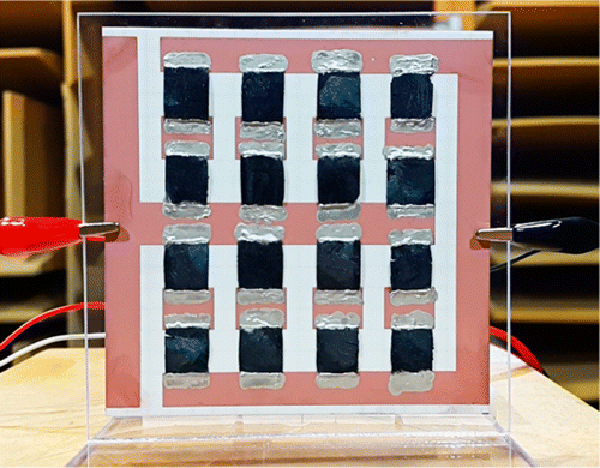
The researchers developed a two-step (freeze-drying and reduction/doping) method for making a sound-emitting graphene aerogel. An array of 16 of these aerogels comprised a speaker that could operate on 40 Watts of power with a sound quality comparable to that of other graphene-based sound systems. The researchers say their fabrication method is practical and could lend itself to mass production for use in mobile devices and other applications. Because the speaker is thin and doesn’t vibrate, it could fit snugly against walls and even curved surfaces.

 

Related Articles Read More >

The 2025 R&D 100 Finalists are here
New nanotechnology method increases microalgae biofuel yield by 300%
New nanopore sensor paves the way for fast, accurate, low-cost DNA sequencing
Floating solar mats clean polluted water — and generate power
rd newsletter
EXPAND YOUR KNOWLEDGE AND STAY CONNECTED
Get the latest info on technologies, trends, and strategies in Research & Development.
RD 25 Power Index

R&D World Digital Issues

Fall 2025 issue

Browse the most current issue of R&D World and back issues in an easy to use high quality format. Clip, share and download with the leading R&D magazine today.

Research & Development World
  • Subscribe to R&D World Magazine
  • Sign up for R&D World’s newsletter
  • Contact Us
  • About Us
  • Drug Discovery & Development
  • Pharmaceutical Processing
  • Global Funding Forecast

Copyright © 2025 WTWH Media LLC. All Rights Reserved. The material on this site may not be reproduced, distributed, transmitted, cached or otherwise used, except with the prior written permission of WTWH Media
Privacy Policy | Advertising | About Us

Search R&D World

  • R&D World Home
  • Topics
    • Aerospace
    • Automotive
    • Biotech
    • Careers
    • Chemistry
    • Environment
    • Energy
    • Life Science
    • Material Science
    • R&D Management
    • Physics
  • Technology
    • 3D Printing
    • A.I./Robotics
    • Software
    • Battery Technology
    • Controlled Environments
      • Cleanrooms
      • Graphene
      • Lasers
      • Regulations/Standards
      • Sensors
    • Imaging
    • Nanotechnology
    • Scientific Computing
      • Big Data
      • HPC/Supercomputing
      • Informatics
      • Security
    • Semiconductors
  • R&D Market Pulse
  • R&D 100
    • 2025 R&D 100 Award Winners
    • 2025 Professional Award Winners
    • 2025 Special Recognition Winners
    • R&D 100 Awards Event
    • R&D 100 Submissions
    • Winner Archive
  • Resources
    • Research Reports
    • Digital Issues
    • Educational Assets
    • R&D Index
    • Subscribe
    • Video
    • Webinars
    • Content submission guidelines for R&D World
  • Global Funding Forecast
  • Top Labs
  • Advertise
  • SUBSCRIBE