Research & Development World

  • R&D World Home
  • Topics
    • Aerospace
    • Automotive
    • Biotech
    • Careers
    • Chemistry
    • Environment
    • Energy
    • Life Science
    • Material Science
    • R&D Management
    • Physics
  • Technology
    • 3D Printing
    • A.I./Robotics
    • Software
    • Battery Technology
    • Controlled Environments
      • Cleanrooms
      • Graphene
      • Lasers
      • Regulations/Standards
      • Sensors
    • Imaging
    • Nanotechnology
    • Scientific Computing
      • Big Data
      • HPC/Supercomputing
      • Informatics
      • Security
    • Semiconductors
  • R&D Market Pulse
  • R&D 100
    • 2025 R&D 100 Award Winners
    • 2025 Professional Award Winners
    • 2025 Special Recognition Winners
    • R&D 100 Awards Event
    • R&D 100 Submissions
    • Winner Archive
  • Resources
    • Research Reports
    • Digital Issues
    • Educational Assets
    • R&D Index
    • Subscribe
    • Video
    • Webinars
    • Content submission guidelines for R&D World
  • Global Funding Forecast
  • Top Labs
  • Advertise
  • SUBSCRIBE

New Evidence of Water on Moon

By Kenny Walter | July 24, 2017

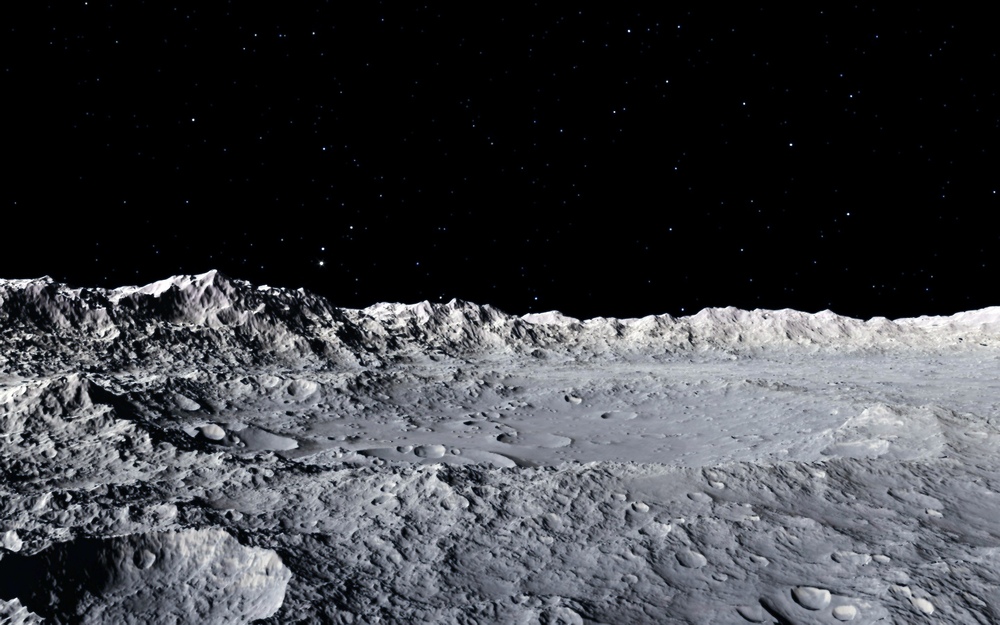
The interior of the Moon may contain an unusually high amount of trapped water, according to a new study.

After examining satellite data, scientists from Brown University have discovered numerous volcanic deposits distributed across the surface of the Moon that contains high levels of trapped water.

The water is believed to consist of glass beads formed by the explosive eruption of magma coming from the deep lunar interior, bolstering the idea that the lunar mantle is water-rich.

Scientists have long believed that the interior has been depleted of water and other volatile compounds. However, in 2008 a trace amount of water was detected in some of the volcanic glass beads brought back to Earth from the Apollo 15 and 17 missions to the Moon.

Then in 2011 tiny crystalline formations within the beads were discovered to contain similar amounts of water as some basalts on Earth, suggesting that parts of the Moon’s mantle contain as much water as Earth’s.

“The key question is whether those Apollo samples represent the bulk conditions of the lunar interior or instead represent unusual or perhaps anomalous water-rich regions within an otherwise ‘dry’ mantle,” Ralph Milliken, lead author of the new research and an associate professor in Brown’s Department of Earth, Environmental and Planetary Sciences, said in a statement.

“By looking at the orbital data, we can examine the large pyroclastic deposits on the Moon that were never sampled by the Apollo or Luna missions,” he added. “The fact that nearly all of them exhibit signatures of water suggests that the Apollo samples are not anomalous, so it may be that the bulk interior of the Moon is wet.”

To detect the water, the scientists used orbital spectrometers to measure the light that bounces off a planetary surface. By looking at which wavelengths of light are absorbed or reflected by the surface they were able to determine which minerals and other compounds are present.

However, the spectrometer also ends up measuring heat as the lunar surface heats up over the course of the day.

“That thermally emitted radiation happens at the same wavelengths that we need to use to look for water,” Milliken said. “So in order to say with any confidence that water is present, we first need to account for and remove the thermally emitted component.”

Water was eventually found in nearly all of the large pyroclastic deposits that had been previously mapped across the Moon’s surface.

“The distribution of these water-rich deposits is the key thing,” Milliken said. “They’re spread across the surface, which tells us that the water found in the Apollo samples isn’t a one-off.

“Lunar pyroclastics seem to be universally water-rich, which suggests the same may be true of the mantle.”

The evidence of water could lead to further discovery on the Moon’s formation and could have further implications for future lunar exploration.

The study was published in Nature Geoscience.

Related Articles Read More >

NASA R&D 100 Winner enables high-speed data transfer from space
The Milky Way is glowing: these scientists think dark matter may be the cause
Reusable rocket startup raises $510 million
2025 R&D layoffs tracker: hardware and chips lead the year’s biggest cuts while biopharma pares pipelines
rd newsletter
EXPAND YOUR KNOWLEDGE AND STAY CONNECTED
Get the latest info on technologies, trends, and strategies in Research & Development.
RD 25 Power Index

R&D World Digital Issues

Fall 2025 issue

Browse the most current issue of R&D World and back issues in an easy to use high quality format. Clip, share and download with the leading R&D magazine today.

Research & Development World
  • Subscribe to R&D World Magazine
  • Sign up for R&D World’s newsletter
  • Contact Us
  • About Us
  • Drug Discovery & Development
  • Pharmaceutical Processing
  • Global Funding Forecast

Copyright © 2025 WTWH Media LLC. All Rights Reserved. The material on this site may not be reproduced, distributed, transmitted, cached or otherwise used, except with the prior written permission of WTWH Media
Privacy Policy | Advertising | About Us

Search R&D World

  • R&D World Home
  • Topics
    • Aerospace
    • Automotive
    • Biotech
    • Careers
    • Chemistry
    • Environment
    • Energy
    • Life Science
    • Material Science
    • R&D Management
    • Physics
  • Technology
    • 3D Printing
    • A.I./Robotics
    • Software
    • Battery Technology
    • Controlled Environments
      • Cleanrooms
      • Graphene
      • Lasers
      • Regulations/Standards
      • Sensors
    • Imaging
    • Nanotechnology
    • Scientific Computing
      • Big Data
      • HPC/Supercomputing
      • Informatics
      • Security
    • Semiconductors
  • R&D Market Pulse
  • R&D 100
    • 2025 R&D 100 Award Winners
    • 2025 Professional Award Winners
    • 2025 Special Recognition Winners
    • R&D 100 Awards Event
    • R&D 100 Submissions
    • Winner Archive
  • Resources
    • Research Reports
    • Digital Issues
    • Educational Assets
    • R&D Index
    • Subscribe
    • Video
    • Webinars
    • Content submission guidelines for R&D World
  • Global Funding Forecast
  • Top Labs
  • Advertise
  • SUBSCRIBE