Research & Development World

  • R&D World Home
  • Topics
    • Aerospace
    • Automotive
    • Biotech
    • Careers
    • Chemistry
    • Environment
    • Energy
    • Life Science
    • Material Science
    • R&D Management
    • Physics
  • Technology
    • 3D Printing
    • A.I./Robotics
    • Software
    • Battery Technology
    • Controlled Environments
      • Cleanrooms
      • Graphene
      • Lasers
      • Regulations/Standards
      • Sensors
    • Imaging
    • Nanotechnology
    • Scientific Computing
      • Big Data
      • HPC/Supercomputing
      • Informatics
      • Security
    • Semiconductors
  • R&D Market Pulse
  • R&D 100
    • 2026 R&D 100 Award Winners
    • 2026 Professional Award Winners
    • 2026 Special Recognition Winners
    • R&D 100 Awards Event
    • R&D 100 Submissions
    • Winner Archive
  • Resources
    • Research Reports
    • Digital Issues
    • Educational Assets
    • Subscribe
    • Video
    • Webinars
    • PharmSci360
    • Content submission guidelines for R&D World
  • Global Funding Forecast
  • Top Labs
  • Advertisers
    • Advertise
    • PR Submissions
    • Eblast Submissions
  • SUBSCRIBE

Physicists Create Water Tractor Beam

By R&D Editors | August 11, 2014

Dr Horst Punzmann (left) and Professor Michael Shats test their wave-generated tractor beam. Courtesy of Stuart HayPhysicists at The Australian National University have created a tractor beam on water, providing a radical new technique that could confine oil spills, manipulate floating objects or explain rips at the beach.

The group, led by Professor Michael Shats, discovered they can control water flow patterns with simple wave generators, enabling them to move floating objects at will.

“We have figured out a way of creating waves that can force a floating object to move against the direction of the wave,” said Dr Horst Punzmann, from the Research School of Physics and Engineering, who led the project.

“No one could have guessed this result,” he said.

The new technique gives scientists a way of controlling things adrift on water in a way they have never had before, resembling sci-fi tractor beams that draw in objects.

Using a ping-pong ball in a wave tank, the group worked out the size and frequency of the waves required to move the ball in whichever direction they want.

Advanced particle tracking tools, developed by team members Dr. Nicolas Francois and Dr. Hua Xia, revealed that the waves generate currents on the surface of the water.

“We found that above a certain height, these complex three-dimensional waves generate flow patterns on the surface of the water,” Professor Shats said. “The tractor beam is just one of the patterns, they can be inward flows, outward flows or vortices.”

The team also experimented with different shaped plungers to generate different swirling flow patterns.

As yet, no mathematical theory can explain these experiments, Dr. Punzmann said.

“It’s one of the great unresolved problems, yet anyone in the bathtub can reproduce it. We were very surprised no one had described it before.”

Video: https://www.youtube.com/watch?v=ZUYCkHWgVss

Related Articles Read More >

Anthropic says Fable 5.2 nearly doubles its predecessor’s hardware-design score. Token prices fell 20%, but the cost per task doubled at full effort.
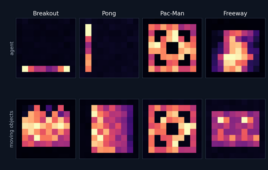
Heatmaps of first-layer weight strength for four game-playing networks; Breakout's paddle row, Pong's paddle column and Pac-Man's maze show up in the weights
MIT team says GPT-6 Astra can improve other AI models by editing their weights. Critics say its biggest result relied on standard ML engineering.
DOE packages national lab know-how as 35 skills for Claude Code, Codex and Gemini CLI
Jellyfish: Claude Code bills hit $252 a month per developer as software factories automate code production among early adopters
rd newsletter
EXPAND YOUR KNOWLEDGE AND STAY CONNECTED
Get the latest info on technologies, trends, and strategies in Research & Development.

R&D World Digital Issues

Fall 2026 issue

Browse the most current issue of R&D World and back issues in an easy to use high quality format. Clip, share and download with the leading R&D magazine today.

R&D 100 Awards
Research & Development World
  • Subscribe to R&D World Magazine
  • Sign up for R&D World’s newsletter
  • Contact Us
  • About Us
  • Drug Discovery & Development
  • Pharmaceutical Processing
  • Global Funding Forecast

Copyright © 2026 Arrowfly LLC. All Rights Reserved. The material on this site may not be reproduced, distributed, transmitted, cached or otherwise used, except with the prior written permission of Arrowfly
Privacy Policy | Advertising | About Us

Search R&D World

  • R&D World Home
  • Topics
    • Aerospace
    • Automotive
    • Biotech
    • Careers
    • Chemistry
    • Environment
    • Energy
    • Life Science
    • Material Science
    • R&D Management
    • Physics
  • Technology
    • 3D Printing
    • A.I./Robotics
    • Software
    • Battery Technology
    • Controlled Environments
      • Cleanrooms
      • Graphene
      • Lasers
      • Regulations/Standards
      • Sensors
    • Imaging
    • Nanotechnology
    • Scientific Computing
      • Big Data
      • HPC/Supercomputing
      • Informatics
      • Security
    • Semiconductors
  • R&D Market Pulse
  • R&D 100
    • 2026 R&D 100 Award Winners
    • 2026 Professional Award Winners
    • 2026 Special Recognition Winners
    • R&D 100 Awards Event
    • R&D 100 Submissions
    • Winner Archive
  • Resources
    • Research Reports
    • Digital Issues
    • Educational Assets
    • Subscribe
    • Video
    • Webinars
    • PharmSci360
    • Content submission guidelines for R&D World
  • Global Funding Forecast
  • Top Labs
  • Advertisers
    • Advertise
    • PR Submissions
    • Eblast Submissions
  • SUBSCRIBE