CHXI–MMT
Category: Analytical/Test
Developers: Sandia National Laboratories
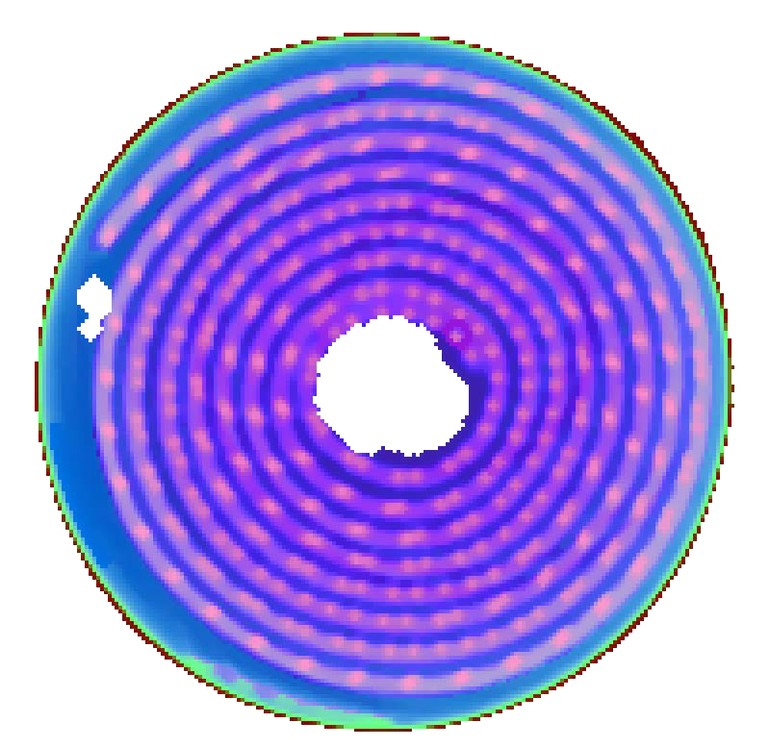
Product Description:This innovative, colorized X-ray imaging system combines a nano-patterned X-ray anode with hyperspectral detection to achieve unprecedented spatial resolution and material identification. It overcomes traditional limitations, enabling sharper imaging, precise diagnostics and cost-effective, high-precision measurements with standard X-ray sources. In addition to imaging, it can identify materials by analyzing spectral absorption from multiple emission lines. This dual capability of high-resolution imaging and material characterization marks an advancement in medicine, materials science and forensics. It enables high-precision measurements with traditional X-ray sources, reducing the need for costly accelerator facilities and making advanced imaging techniques more accessible to various industries and research institutions. The technology addresses traditional X-ray imaging’s limitations while enhancing reliability and accuracy, which has applications such as surgical planning and structural integrity assessments. Overall, its capabilities open new possibilities in biomedical imaging, TSA applications, non-destructive testing, and advanced manufacturing, driving innovation and breakthroughs in science and technology.
Developers: Sandia National Laboratories
Product Description:This innovative, colorized X-ray imaging system combines a nano-patterned X-ray anode with hyperspectral detection to achieve unprecedented spatial resolution and material identification. It overcomes traditional limitations, enabling sharper imaging, precise diagnostics and cost-effective, high-precision measurements with standard X-ray sources. In addition to imaging, it can identify materials by analyzing spectral absorption from multiple emission lines. This dual capability of high-resolution imaging and material characterization marks an advancement in medicine, materials science and forensics. It enables high-precision measurements with traditional X-ray sources, reducing the need for costly accelerator facilities and making advanced imaging techniques more accessible to various industries and research institutions. The technology addresses traditional X-ray imaging’s limitations while enhancing reliability and accuracy, which has applications such as surgical planning and structural integrity assessments. Overall, its capabilities open new possibilities in biomedical imaging, TSA applications, non-destructive testing, and advanced manufacturing, driving innovation and breakthroughs in science and technology.