Radio Frequency Situational Awareness Model
Category: Other
Developers: MIT Lincoln Laboratory
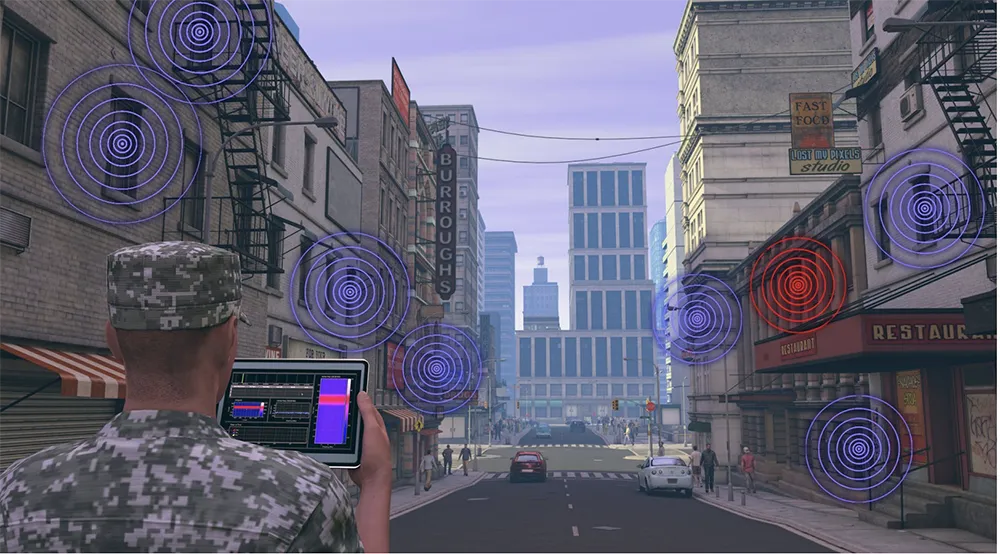
Product Description:The Lincoln Laboratory Radio Frequency Situational Awareness Model (LL RF-SAM) uses advances in AI to enhance the warfighter’s electromagnetic spectrum situational awareness. Innovations in self-supervised learning and test-time adaptation have enabled LL RF-SAM to flexibly characterize the spectrum more robustly than has been seen previously. This technology addresses fundamental needs that serve as barriers for adoption in the field — most notably, the need to have reliable model outputs from which end users can derive actionable insights. LL RF-SAM's use of self-supervised learning for RF data, in conjunction with TTA for RF, gives this technology a competitive advantage that enhances robustness to real-world environmental variability. Additionally, LL RF-SAM strategically leverages self-supervised learning to minimize the data volume bottleneck that comes from human-in-the-loop data labeling, which drastically decreases upfront costs for data curation and improves the deployed model's performance. Lastly, its developers have targeted deployment of this technology for tactical edge-focused scenarios operating at near real-time to assist operators as much as possible and in as timely a manner as possible. MIT Lincoln Laboratory envisions that the future adoption and spread of this technology will have a significant impact across various sectors, such as SIGINT and wireless infrastructure security.
Developers: MIT Lincoln Laboratory
Product Description:The Lincoln Laboratory Radio Frequency Situational Awareness Model (LL RF-SAM) uses advances in AI to enhance the warfighter’s electromagnetic spectrum situational awareness. Innovations in self-supervised learning and test-time adaptation have enabled LL RF-SAM to flexibly characterize the spectrum more robustly than has been seen previously. This technology addresses fundamental needs that serve as barriers for adoption in the field — most notably, the need to have reliable model outputs from which end users can derive actionable insights. LL RF-SAM's use of self-supervised learning for RF data, in conjunction with TTA for RF, gives this technology a competitive advantage that enhances robustness to real-world environmental variability. Additionally, LL RF-SAM strategically leverages self-supervised learning to minimize the data volume bottleneck that comes from human-in-the-loop data labeling, which drastically decreases upfront costs for data curation and improves the deployed model's performance. Lastly, its developers have targeted deployment of this technology for tactical edge-focused scenarios operating at near real-time to assist operators as much as possible and in as timely a manner as possible. MIT Lincoln Laboratory envisions that the future adoption and spread of this technology will have a significant impact across various sectors, such as SIGINT and wireless infrastructure security.