Research & Development World

  • R&D World Home
  • Topics
    • Aerospace
    • Automotive
    • Biotech
    • Careers
    • Chemistry
    • Environment
    • Energy
    • Life Science
    • Material Science
    • R&D Management
    • Physics
  • Technology
    • 3D Printing
    • A.I./Robotics
    • Software
    • Battery Technology
    • Controlled Environments
      • Cleanrooms
      • Graphene
      • Lasers
      • Regulations/Standards
      • Sensors
    • Imaging
    • Nanotechnology
    • Scientific Computing
      • Big Data
      • HPC/Supercomputing
      • Informatics
      • Security
    • Semiconductors
  • R&D Market Pulse
  • R&D 100
    • 2025 R&D 100 Award Winners
    • 2025 Professional Award Winners
    • 2025 Special Recognition Winners
    • R&D 100 Awards Event
    • R&D 100 Submissions
    • Winner Archive
  • Resources
    • Research Reports
    • Digital Issues
    • Educational Assets
    • R&D Index
    • Subscribe
    • Video
    • Webinars
    • Content submission guidelines for R&D World
  • Global Funding Forecast
  • Top Labs
  • Advertise
  • SUBSCRIBE

Samsung Makes Graphene Breakthrough

By R&D Editors | April 14, 2014

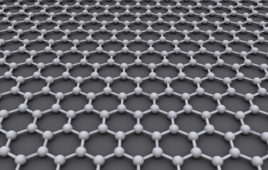
graphene molecular grid, graphene atomic structure concept, hexag

Conceptual graphene rendering [Adobe Stock]

Samsung Electronics has announced a breakthrough synthesis method to speed the commercialization of graphene, a unique material ideally suited for electronic devices. Samsung Advanced Institute of Technology (SAIT), in partnership with Sungkyunkwan University, became the first in the world to develop this new method.

“This is one of the most significant breakthroughs in graphene research in history,” says SAIT’s Lab. “We expect this discovery to accelerate the commercialization of graphene, which could unlock the next era of consumer electronic technology.”

Graphene has one hundred times greater electron mobility than silicon, the most widely used material in semiconductors today. It is more durable than steel and has high heat conductibility as well as flexibility, which makes it the perfect material for use in flexible displays, wearables, and other next-generation electronic devices.

Through its partnership with Sungkyungkwan University’s School of Advanced Materials Science and Engineering, SAIT uncovered a new method of growing large area, single crystal wafer scale graphene. Engineers around the world have invested heavily in research for the commercialization of graphene, but have faced many obstacles due to the challenges associated with it. In the past, researchers have found that multi-crystal synthesis – the process of synthesizing small graphene particles to produce large-area graphene – deteriorated the electric and mechanical properties of the material, limiting its application range and making it difficult to commercialize.

The new method developed by SAIT and Sungkyunkwan University synthesizes large-area graphene into a single crystal on a semiconductor, maintaining its electric and mechanical properties. The new method repeatedly synthesizes single crystal graphene on the current semiconductor wafer scale.

Over the past several decades, the growth of the semiconductor industry has been driven by the ability to grow the area of a silicon wafer, while steadily decreasing the process node. In order to commercialize graphene to displace the industry’s reliance on silicon, it is vital to develop a new method to grow a single crystal graphene into a large area.

The research results were published in the April 4 issue of Science Magazine and ScienceExpress, one of the world’s most prestigious science journals.

Samsung and Sungkyunkwan University have been partnering in the field of nano research since 2006. This breakthrough is a testament to the strengths of the two institutions, who together were able to successfully achieve results that could become a driver of next generation technology.

The research was funded by Korea’s Ministry of Science, ICT and Future Planning (MSIP), under the Project to Nurture Leading Creative Researching Experts Program.

Release Date: April 4, 2014
Source: Samsung

Related Articles Read More >

The emerging materials shaping next-generation semiconductor electronics
24 R&D trends that redefined 2024
Graphene-based flowmeter sensor measures nano-rate fluid flows, Part 3: The sensor
Graphene-based flowmeter sensor measures nano-rate fluid flows, Part 2: The graphene context
rd newsletter
EXPAND YOUR KNOWLEDGE AND STAY CONNECTED
Get the latest info on technologies, trends, and strategies in Research & Development.
RD 25 Power Index

R&D World Digital Issues

Fall 2025 issue

Browse the most current issue of R&D World and back issues in an easy to use high quality format. Clip, share and download with the leading R&D magazine today.

Research & Development World
  • Subscribe to R&D World Magazine
  • Sign up for R&D World’s newsletter
  • Contact Us
  • About Us
  • Drug Discovery & Development
  • Pharmaceutical Processing
  • Global Funding Forecast

Copyright © 2025 WTWH Media LLC. All Rights Reserved. The material on this site may not be reproduced, distributed, transmitted, cached or otherwise used, except with the prior written permission of WTWH Media
Privacy Policy | Advertising | About Us

Search R&D World

  • R&D World Home
  • Topics
    • Aerospace
    • Automotive
    • Biotech
    • Careers
    • Chemistry
    • Environment
    • Energy
    • Life Science
    • Material Science
    • R&D Management
    • Physics
  • Technology
    • 3D Printing
    • A.I./Robotics
    • Software
    • Battery Technology
    • Controlled Environments
      • Cleanrooms
      • Graphene
      • Lasers
      • Regulations/Standards
      • Sensors
    • Imaging
    • Nanotechnology
    • Scientific Computing
      • Big Data
      • HPC/Supercomputing
      • Informatics
      • Security
    • Semiconductors
  • R&D Market Pulse
  • R&D 100
    • 2025 R&D 100 Award Winners
    • 2025 Professional Award Winners
    • 2025 Special Recognition Winners
    • R&D 100 Awards Event
    • R&D 100 Submissions
    • Winner Archive
  • Resources
    • Research Reports
    • Digital Issues
    • Educational Assets
    • R&D Index
    • Subscribe
    • Video
    • Webinars
    • Content submission guidelines for R&D World
  • Global Funding Forecast
  • Top Labs
  • Advertise
  • SUBSCRIBE