Research & Development World

  • R&D World Home
  • Topics
    • Aerospace
    • Automotive
    • Biotech
    • Careers
    • Chemistry
    • Environment
    • Energy
    • Life Science
    • Material Science
    • R&D Management
    • Physics
  • Technology
    • 3D Printing
    • A.I./Robotics
    • Software
    • Battery Technology
    • Controlled Environments
      • Cleanrooms
      • Graphene
      • Lasers
      • Regulations/Standards
      • Sensors
    • Imaging
    • Nanotechnology
    • Scientific Computing
      • Big Data
      • HPC/Supercomputing
      • Informatics
      • Security
    • Semiconductors
  • R&D Market Pulse
  • R&D 100
    • 2025 R&D 100 Award Winners
    • 2025 Professional Award Winners
    • 2025 Special Recognition Winners
    • R&D 100 Awards Event
    • R&D 100 Submissions
    • Winner Archive
  • Resources
    • Research Reports
    • Digital Issues
    • Educational Assets
    • R&D Index
    • Subscribe
    • Video
    • Webinars
    • Content submission guidelines for R&D World
  • Global Funding Forecast
  • Top Labs
  • Advertise
  • SUBSCRIBE

Scientists Detect Second Set of Gravitational Waves

By Ryan Bushey | June 15, 2016

The Laser Interferometer Gravitational Wave-Observatory has done it again.

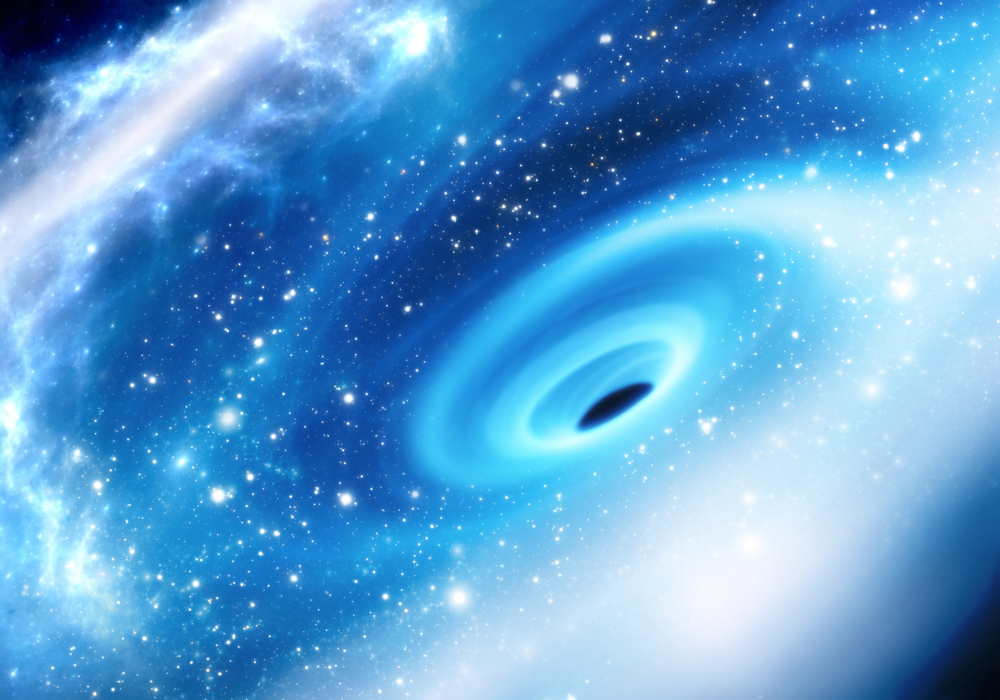
LIGO announced it had successfully detected another set of gravitational waves that reached Earth after two black holes collided and merged into each other an estimated 1.4 billion years ago, reported Reuters.

Two LIGO observatories based in Livingston, La. and Hanford, Wash. detected this event late on Dec. 25, 2015. LIGO’s detectors are essentially, “a laser that shines through a special kind of mirror that splits the beams in two, sending one beam down one side of the L and one beam down the other,” wrote Popular Science.

The lasers hit the mirrors at the end of the tunnels and then returned to the middle mirror where the beams should line up together. A gravitational wave hitting would change the shape of the laser in the tunnel causing it to flicker.

The Louisiana site picked up the signal first with the Washington location receiving it 1.1 milliseconds later, which could help these scientists deduce an approximate location of where these two celestial bodies amalgamated.

The size of these particular black holes were respectively eight and 14 times bigger than the sun before they fused together while the final product became 21 times larger than the sun after this event occurred, noted Reuters.

By contrast, the ripples in space time announced in February were 150 kilometers in diameter and hit each other 1.3 billion years ago. Also, the time delay between the Washington and Louisiana sites came down to 7 milliseconds as well.

This research will be published in the journal Physical Review Letters.
Related Articles Read More >

Scientists find farthest galaxy ever detected
NASA tests AI route planning for Perseverance rover drives on Mars
Dec 8, 2019 Hawthorne / Los Angeles / CA / USA - close up of SpaceX (Space Exploration Technologies Corp.) sign at their headquarters; SpaceX is a private American aerospace manufacturer
The 12-year quest behind the SpaceX-xAI merger: From a 2012 warning about AI destroying Mars colonies to a $1.25 trillion deal
Researchers discover new form of water
rd newsletter
EXPAND YOUR KNOWLEDGE AND STAY CONNECTED
Get the latest info on technologies, trends, and strategies in Research & Development.
RD 25 Power Index

R&D World Digital Issues

Fall 2025 issue

Browse the most current issue of R&D World and back issues in an easy to use high quality format. Clip, share and download with the leading R&D magazine today.

R&D 100 Awards
Research & Development World
  • Subscribe to R&D World Magazine
  • Sign up for R&D World’s newsletter
  • Contact Us
  • About Us
  • Drug Discovery & Development
  • Pharmaceutical Processing
  • Global Funding Forecast

Copyright © 2026 WTWH Media LLC. All Rights Reserved. The material on this site may not be reproduced, distributed, transmitted, cached or otherwise used, except with the prior written permission of WTWH Media
Privacy Policy | Advertising | About Us

Search R&D World

  • R&D World Home
  • Topics
    • Aerospace
    • Automotive
    • Biotech
    • Careers
    • Chemistry
    • Environment
    • Energy
    • Life Science
    • Material Science
    • R&D Management
    • Physics
  • Technology
    • 3D Printing
    • A.I./Robotics
    • Software
    • Battery Technology
    • Controlled Environments
      • Cleanrooms
      • Graphene
      • Lasers
      • Regulations/Standards
      • Sensors
    • Imaging
    • Nanotechnology
    • Scientific Computing
      • Big Data
      • HPC/Supercomputing
      • Informatics
      • Security
    • Semiconductors
  • R&D Market Pulse
  • R&D 100
    • 2025 R&D 100 Award Winners
    • 2025 Professional Award Winners
    • 2025 Special Recognition Winners
    • R&D 100 Awards Event
    • R&D 100 Submissions
    • Winner Archive
  • Resources
    • Research Reports
    • Digital Issues
    • Educational Assets
    • R&D Index
    • Subscribe
    • Video
    • Webinars
    • Content submission guidelines for R&D World
  • Global Funding Forecast
  • Top Labs
  • Advertise
  • SUBSCRIBE