Research & Development World

  • R&D World Home
  • Topics
    • Aerospace
    • Automotive
    • Biotech
    • Careers
    • Chemistry
    • Environment
    • Energy
    • Life Science
    • Material Science
    • R&D Management
    • Physics
  • Technology
    • 3D Printing
    • A.I./Robotics
    • Software
    • Battery Technology
    • Controlled Environments
      • Cleanrooms
      • Graphene
      • Lasers
      • Regulations/Standards
      • Sensors
    • Imaging
    • Nanotechnology
    • Scientific Computing
      • Big Data
      • HPC/Supercomputing
      • Informatics
      • Security
    • Semiconductors
  • R&D Market Pulse
  • R&D 100
    • 2026 R&D 100 Award Winners
    • 2026 Professional Award Winners
    • 2026 Special Recognition Winners
    • R&D 100 Awards Event
    • R&D 100 Submissions
    • Winner Archive
  • Resources
    • Research Reports
    • Digital Issues
    • Educational Assets
    • Subscribe
    • Video
    • Webinars
    • PharmSci360
    • Content submission guidelines for R&D World
  • Global Funding Forecast
  • Top Labs
  • Advertisers
    • Advertise
    • PR Submissions
    • Eblast Submissions
  • SUBSCRIBE

Transforming Pregnancy Research With a Smartphone App

By Scripps Research Institute | September 5, 2018

 For years, pregnant women have been underrepresented in biomedical research. Current treatments, interventions and guidelines do a poor job of taking into consideration the diverse characteristics of all pregnant women.

“For example, the guidelines for recommended weight gain during pregnancy are very general, and don’t take into consideration factors such as race, height, age or number of previous pregnancies,” says Jennifer Radin, PhD, an epidemiologist and digital medicine expert at the Scripps Research Translational Institute.

This lack of representation in research has jarring consequences. Rates of maternal morbidity and mortality in the United States are among the highest in developed countries.

Radin and her colleagues seek to apply a digital approach to addressing the many knowledge gaps that exist for pregnancy. In an article published in npj Digital Medicine describing their early experience, the team demonstrate how scientists can use a smartphone-based research platform to recruit a large and diverse population of pregnant women to participate in a research study: in this case, a study that uses surveys and sensor collected data to better understand individual pregnancy health.

To implement the study, Radin and colleagues partnered with WebMD, a leading provider of health information services. The highly trafficked WebMD Pregnancy app has been downloaded by over 1.6 million people since 2013. The study platform, built using Apple’s ResearchKit technology, was embedded into this popular app and connected the researchers with a highly engaged audience of potential study participants.

Over the course of the first nine months of the planned multi-decade program, 2,058 participants from 50 states (who matched the inclusion criteria) were enrolled into the study. These participants completed a total of more than 14,000 surveys, and shared over 107,000 daily measurements of activity, heart rate, sleep and blood pressure.

“Pregnant women are curious about their health. They want to understand what is normal for women like them and how they can keep themselves and their developing baby healthy,” Radin explains. “Increasingly, they turn to apps to search for information and to ask other women about their pregnancy experiences. They are also using sensors to track and monitor their individual health.”

A large burden of pregnancy morbidity and mortality impacts African American women, women living in rural areas, and women with co-morbidities, such as diabetes and cardiovascular disease. Radin and her colleagues believe that a mobile research app platform, combined with sensors that enable the collection of frequent and more detailed data, will eliminate many of the barriers that exist for traditional clinic-based studies (e.g. lack of access to care centers, time constraints, transportation challenges) which often lack participant diversity.

“We’re now focusing on expanding the reach of our research app platform, by making it available to both iOS and Android users,” says Steven Steinhubl, MD, director of digital medicine at Scripps Research Translational Institute. “We also want to provide individualized information back to participants and ultimately find ways to improve pregnancy health for all women.”
Related Articles Read More >

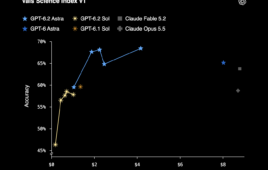
OpenAI’s GPT-6.2 Astra trails Claude Fable 5.2 by three points on an independent AI index at a fraction of the cost per task
Anthropic says Fable 5.2 nearly doubles its predecessor’s hardware-design score. Token prices fell 20%, but the cost per task doubled at full effort.
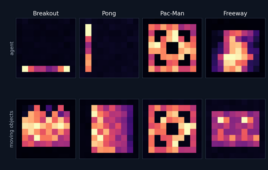
Heatmaps of first-layer weight strength for four game-playing networks; Breakout's paddle row, Pong's paddle column and Pac-Man's maze show up in the weights
MIT team says GPT-6 Astra can improve other AI models by editing their weights. Critics say its biggest result relied on standard ML engineering.
DOE packages national lab know-how as 35 skills for Claude Code, Codex and Gemini CLI
rd newsletter
EXPAND YOUR KNOWLEDGE AND STAY CONNECTED
Get the latest info on technologies, trends, and strategies in Research & Development.

R&D World Digital Issues

Fall 2026 issue

Browse the most current issue of R&D World and back issues in an easy to use high quality format. Clip, share and download with the leading R&D magazine today.

R&D 100 Awards
Research & Development World
  • Subscribe to R&D World Magazine
  • Sign up for R&D World’s newsletter
  • Contact Us
  • About Us
  • Drug Discovery & Development
  • Pharmaceutical Processing
  • Global Funding Forecast

Copyright © 2026 Arrowfly LLC. All Rights Reserved. The material on this site may not be reproduced, distributed, transmitted, cached or otherwise used, except with the prior written permission of Arrowfly
Privacy Policy | Advertising | About Us

Search R&D World

  • R&D World Home
  • Topics
    • Aerospace
    • Automotive
    • Biotech
    • Careers
    • Chemistry
    • Environment
    • Energy
    • Life Science
    • Material Science
    • R&D Management
    • Physics
  • Technology
    • 3D Printing
    • A.I./Robotics
    • Software
    • Battery Technology
    • Controlled Environments
      • Cleanrooms
      • Graphene
      • Lasers
      • Regulations/Standards
      • Sensors
    • Imaging
    • Nanotechnology
    • Scientific Computing
      • Big Data
      • HPC/Supercomputing
      • Informatics
      • Security
    • Semiconductors
  • R&D Market Pulse
  • R&D 100
    • 2026 R&D 100 Award Winners
    • 2026 Professional Award Winners
    • 2026 Special Recognition Winners
    • R&D 100 Awards Event
    • R&D 100 Submissions
    • Winner Archive
  • Resources
    • Research Reports
    • Digital Issues
    • Educational Assets
    • Subscribe
    • Video
    • Webinars
    • PharmSci360
    • Content submission guidelines for R&D World
  • Global Funding Forecast
  • Top Labs
  • Advertisers
    • Advertise
    • PR Submissions
    • Eblast Submissions
  • SUBSCRIBE