Research & Development World

  • R&D World Home
  • Topics
    • Aerospace
    • Automotive
    • Biotech
    • Careers
    • Chemistry
    • Environment
    • Energy
    • Life Science
    • Material Science
    • R&D Management
    • Physics
  • Technology
    • 3D Printing
    • A.I./Robotics
    • Software
    • Battery Technology
    • Controlled Environments
      • Cleanrooms
      • Graphene
      • Lasers
      • Regulations/Standards
      • Sensors
    • Imaging
    • Nanotechnology
    • Scientific Computing
      • Big Data
      • HPC/Supercomputing
      • Informatics
      • Security
    • Semiconductors
  • R&D Market Pulse
  • R&D 100
    • 2026 R&D 100 Award Winners
    • 2026 Professional Award Winners
    • 2026 Special Recognition Winners
    • R&D 100 Awards Event
    • R&D 100 Submissions
    • Winner Archive
  • Resources
    • Research Reports
    • Digital Issues
    • Educational Assets
    • Subscribe
    • Video
    • Webinars
    • PharmSci360
    • Content submission guidelines for R&D World
  • Global Funding Forecast
  • Top Labs
  • Advertise
  • SUBSCRIBE

Research reveals new challenges for mercury cleanup

By R&D Editors | August 6, 2013

undefined

click to enlarge
 
ORNL researchers are learning more about the microbial processes that convert elemental mercury into methylmercury.   

More forms of mercury can be converted to deadly methylmercury than previously thought, according to a study published in Nature Geoscience.The discovery provides scientists with another piece of the mercury puzzle, bringing them one step closer to understanding the challenges associated with mercury cleanup.

Earlier this year, a multidisciplinary team of researchers at Oak Ridge National Laboratory  (ORNL) discovered two key genes that are essential for microbes to convert oxidized mercury to methylmercury, a neurotoxin that can penetrate skin and at high doses affect brain and muscle tissue, causing paralysis and brain damage.

The discovery of how methylmercury is formed answered a question that had stumped scientists for decades, and the findings published this week build on that breakthrough.

Most mercury researchers have believed that microbes could not convert elemental mercury—which is volatile and relatively inert—into methylmercury. Instead of becoming more toxic, they reasoned that elemental mercury would bubble out of water and dissipate. That offered a solution for oxidized mercury, which dissolves in water. By converting oxidized mercury into elemental mercury, they hoped to eliminate the threat of methylmercury contamination in water systems.

ORNL’s study and a parallel study reported by Rutgers Univ., however, suggest that elemental mercury is also susceptible to bacterial manipulation, a finding that makes environmental cleanup more challenging.

“Communities of microorganisms can work together in environments that lack oxygen to convert elemental mercury to methylmercury,” study leader Baohua Gu said. “Some bacteria remove electrons from elemental mercury to create oxidized mercury, while others add a methyl group to produce methylmercury.”

Mercury is a toxin that spreads around the globe mainly through the burning of coal, other industrial uses and natural processes such as volcanic eruptions, and various forms of mercury are widely found in sediments and water. Methylmercury bioaccumulates in aquatic food chains, especially in large fish.

The fight against mercury pollution involves scientists with expertise in chemistry, computational biology, microbiology, neutron science, biochemistry and bacterial genetics. Other ORNL efforts are focusing on when, where and why bacteria are producing methylmercury.

“Our research allows us to understand generally where and how bacteria might produce methylmercury so that we can target those areas in the future,” said ORNL’s Liyuan Liang, a co-author and director of the DOE-funded mercury research program. “We are trying to understand the process of microbial mercury methylation. Once we understand the process, we can begin to form solutions to combat mercury pollution.”

Source: Oak Ridge National Laboratory
Related Articles Read More >

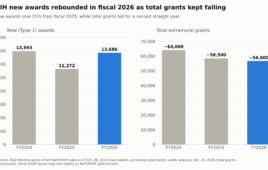
NIH awarded more new grants in fiscal 2026, even as total awards fell
Illustration of a folded protein with three amino acid substitutions labeled: leucine to glycine, cysteine to aspartate and serine to phenylalanine.
Twist adds cell-free antibody screening for AI-designed candidates
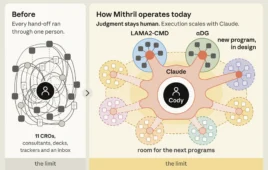
Anthropic acquires a one-person biotech that used Claude to coordinate 11 labs
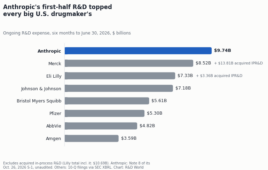
Bar chart of first-half 2026 R&D: Anthropic $9.74 billion, above the ongoing R&D of Merck, Eli Lilly, Johnson & Johnson, Bristol Myers Squibb, Pfizer, AbbVie and Amgen
Anthropic’s R&D budget now rivals Eli Lilly’s
rd newsletter
EXPAND YOUR KNOWLEDGE AND STAY CONNECTED
Get the latest info on technologies, trends, and strategies in Research & Development.

R&D World Digital Issues

Fall 2026 issue

Browse the most current issue of R&D World and back issues in an easy to use high quality format. Clip, share and download with the leading R&D magazine today.

R&D 100 Awards
Research & Development World
  • Subscribe to R&D World Magazine
  • Sign up for R&D World’s newsletter
  • Contact Us
  • About Us
  • Drug Discovery & Development
  • Pharmaceutical Processing
  • Global Funding Forecast

Copyright © 2026 Arrowfly LLC. All Rights Reserved. The material on this site may not be reproduced, distributed, transmitted, cached or otherwise used, except with the prior written permission of Arrowfly
Privacy Policy | Advertising | About Us

Search R&D World

  • R&D World Home
  • Topics
    • Aerospace
    • Automotive
    • Biotech
    • Careers
    • Chemistry
    • Environment
    • Energy
    • Life Science
    • Material Science
    • R&D Management
    • Physics
  • Technology
    • 3D Printing
    • A.I./Robotics
    • Software
    • Battery Technology
    • Controlled Environments
      • Cleanrooms
      • Graphene
      • Lasers
      • Regulations/Standards
      • Sensors
    • Imaging
    • Nanotechnology
    • Scientific Computing
      • Big Data
      • HPC/Supercomputing
      • Informatics
      • Security
    • Semiconductors
  • R&D Market Pulse
  • R&D 100
    • 2026 R&D 100 Award Winners
    • 2026 Professional Award Winners
    • 2026 Special Recognition Winners
    • R&D 100 Awards Event
    • R&D 100 Submissions
    • Winner Archive
  • Resources
    • Research Reports
    • Digital Issues
    • Educational Assets
    • Subscribe
    • Video
    • Webinars
    • PharmSci360
    • Content submission guidelines for R&D World
  • Global Funding Forecast
  • Top Labs
  • Advertise
  • SUBSCRIBE