CSIRO, Australia’s national science agency, in partnership with Meat & Livestock Australia (MLA) and Google Australia, has launched a global competition with a $75,000 (USD) prize pool to advance the use of AI in agriculture.
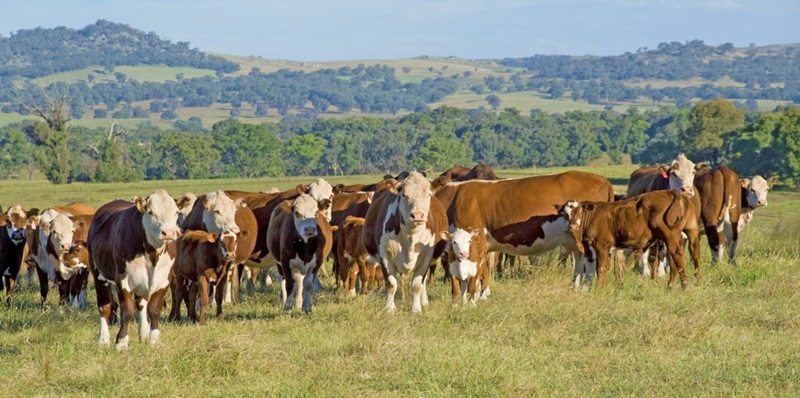
Accurate biomass estimation helps farmers manage grazing pressure and maintain pasture quality across diverse environments. Credit: CSIRO
The challenge, hosted on Kaggle, aims to improve the accuracy and efficiency of estimating pasture biomass, a critical factor in grazing management. Grazing systems cover approximately half of Australia’s landmass and about a quarter of the Earth’s land surface and are vital for food production.
Incorrect estimates of pasture biomass can lead to waste and decrease the health of the land and livestock. Accurate estimates of pasture biomass enable farmers to make better decisions and support land health, leading to consistent production and healthier soil.
Current methods are failing
The current standard method for measuring biomass is called “clip and weigh”. This method involves harvesting standing forage at a given time to predict the available biomass. A specific number of plots within the grazing area are hand clipped and weighed, then averaged and multiplied by a conversion factor to estimate the approximate pounds per acre of biomass.
This method only provides a measurement of plant production, not forage production, because some of the weight may be plant species that livestock will not consume.
Plate meters and capacitance — the ability of an object to store an electric charge — meters can provide quicker readings, but are less accurate. Remote sensing enables broad-scale monitoring, but it requires manual validation and can’t separate biomass by species.
How AI could help
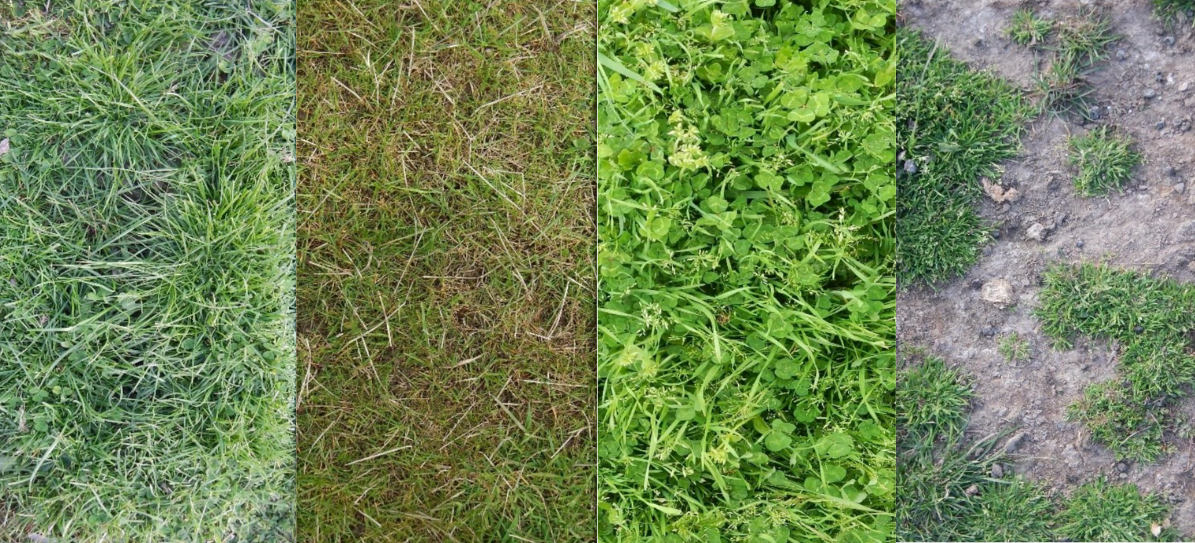
Examples of pasture variability used in the AI challenge dataset, ranging from lush green grass to dry, sparse cover and dense clover-like vegetation. These images help train models to estimate biomass and support smarter grazing decisions. Credit: CSIRO
Competitors will use pasture images linked with detailed field measurements to train an AI model to estimate pasture availability and the quantity of plant species. An accurate AI model could reduce the need for manual sampling.
“If successful, an AI-powered, machine vision approach will reduce the time and cost associated with manual sampling,” Michael Lee, MLA’s group manager, said in a press release.
The challenge launched on Wednesday and will end on Jan. 28, 2026. The challenge has 1,695 participants as of Thursday. The first place prize is $50,000, second prize is $20,000 and third prize is $5,000. All prizes are in USD.