[Adobe Stock]
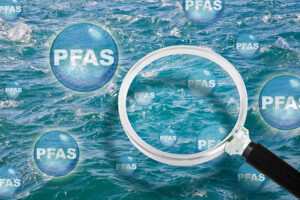
PFAS are commonly found in drinking water, soil, waste sites, foods and food packaging, household products and more. Studies have shown exposure to certain levels of PFAS to cause reproductive effects such as decreased fertility, developmental effects in children, increased risk of cancer, reduced immune response and increased cholesterol. PFAS break down very slowly, which is why they have been nicknamed “forever chemicals,” and can build up in humans, animals and the environment.
The research team was inspired by the volatile reaction in batteries, where lithium degrades the fluorinated electrolytes, to use lithium to break down the fluorine-based chemical. The reaction turns the carbon-fluorine bonds in PFOA into lithium-fluorine bonds, creating a less toxic substance.
The researchers were also able to reuse the fluoride to make compounds relevant for batteries and pharmaceuticals. They showed that the method works, to varying degrees, on 33 other PFAS. Twenty-two of the compounds were degraded by more than 70% and two of them showed 99% degradation, making this a promising method for degrading multiple PFAS compounds.
The team dissolved lithium perchlorate salt in an organic solvent to make an electrolyte, creating conditions similar to those within a battery.
Most techniques for breaking down PFAS rely on oxidation, the removal of electrons to break the carbon-fluorine bonds. This works best in aqueous solutions.
Applying the strategy in the real world could be difficult, though, due to lithium’s high reactivity and the challenge of extracting PFAS from their environments. The team is working on developing a similar reductive system that works in aqueous solutions, eliminating the need to capture PFAS and mix them into organic solvents and making the method much more efficient. Lithium, however, reacts violently with water, so this will be a challenge.