The deadline for the Trump administration to petition the Supreme Court to slash federal support for science funding has passed without action from the administration. This could end a 14-month standoff over a policy to reduce the rate of reimbursement for indirect costs on federal grants.

Adobe
The 14-month standoff
The issue began with a decision made by the NIH in February 2025, when the organization said it would set a 15% cap on payments for indirect costs, regardless of the actual costs. Indirect costs cover high-performance computing (HPC) clusters, ISO-rated clean rooms, hazardous waste management and advanced imaging cores that individual grants often can’t cover.
Traditionally, every research institution negotiates its own rate with the government based on its expenses. These rates often range from 50% to 70% of the direct research costs. For a $1 million grant, an institution would receive about $600,000 for indirect costs. Under this cap, they would only receive $150,000.
The administration estimated that the cap could save up to $4 billion annually. It argued that taxpayer money should go directly to science rather than administration. Universities and states pushed back, worried the cap could trigger layoffs, lab closures and stall clinical trials. Major research institutions would have lost $100 million to $800 million annually. Some feared that this would force institutions to use grant money towards indirect costs, leaving less for research.
State attorneys general and major higher-education associations filed 22 lawsuits against the administration to stop the policy.
A district judge blocked the cuts, and the 1st U.S. Circuit Court of Appeals agreed in January 2026, finding that the policy violated the NIH’s own regulations and congressional language that was designed to prevent cuts. Congress also included language in recent spending bills specifically designed to prevent the administration from capping indirect research costs and required the NIH to report monthly to Congress about grant awards, terminations and cancellations. The courts ruled that the administration was infringing on Congress’s power of the purse.
Under recently passed budget bills, the NIH and other federal agencies cannot make changes to how universities are reimbursed for indirect costs until Sept. 30, 2026. By dropping the challenge, the administration is allowing the January 2026 ruling to stand. This has eased fears surrounding staffing security, as indirect costs pay for essential non-science staff.
The legal reasoning behind blocking the NIH cap also applied to similar attempts by the Department of Energy and the Department of Defense. The decision likely signals the end of these efforts as well, preserving the current funding model.
The FAIR model
Research associations, led by the Joint Associations Group, are pushing Congress to adopt the Financial Accountability in Research (FAIR) model. The model would replace the old overhead system with a more transparent, splitting costs into essential research performance support and general research operations. This model could solve the administration’s transparency concerns without the drastic financial cuts of a 15% cap. The transparency of the model could make academic-industry partnerships easier to audit and justify.
Institutions could voluntarily adopt more transparent accounting to show where overhead costs go as an attempt to future-proof against a flat cap by showing how much running a lab costs.
The new front: Direct budget cuts in the FY 2027 proposal
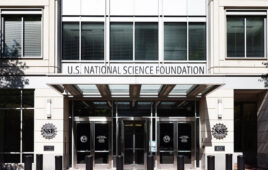
Although the challenge over indirect costs has now effectively ended, the administration is shifting its focus to the direct budget. The recently proposed FY 2027 budget proposes a 12.3% cut to the NIH and a 54% cut to the National Science Foundation (NSF). This cut could affect the Graduate Research Fellowship Program and result in a smaller pool of PhD-level talent entering the private sector in the next few years.
This shift moves concerns from indirect costs to the number of grants awarded. Funding cuts could create a hyper-competitive funding environment as the payline, the percentile of grants that get funded, will likely drop significantly.