Adobe Stock
Clinical trials are notoriously difficult to predict, and they have grown more so as protocols pile on endpoints, procedures and eligibility rules. As that complexity climbs, so do the odds of studies needing mid-course changes. The share of Phase 1 through 4 protocols requiring at least one amendment hit 76%, up from 57% in 2015, according to a Tufts Center for the Study of Drug Development analysis published in 2024.

Sid Jain
The complexity often works against operational goals. “The majority of studies don’t enroll on time,” said Sid Jain, SVP of clinical development and data science at Recursion, a clinical-stage biotech. Its pipeline spans oncology and rare disease, including REC-4881, a Phase 2 MEK1/2 inhibitor for familial adenomatous polyposis, and REC-617, a Phase 1/2 CDK7 inhibitor for advanced solid tumors.
Rehearsing the trial before the first patient enrolls
Recursion is betting it can catch some of those problems before a study opens, by pressure-testing protocols against real patient data. The company forged a partnership with Norstella a couple of years ago, initially using electronic health record and claims data to support its REC-4881 program for familial adenomatous polyposis. In late March 2026, the companies expanded the relationship to Citeline’s trial-design and patient-cohort tools, Protocol SmartDesign and Cohort SmartBuilder.
Recursion has more freedom to rethink these workflows than most drug developers, Jain argued, because it was built as an AI-native company and founded in 2013. “We still have five to seven clinical programs, so you get to try different things, different approaches,” he noted. “What makes it really hard to deploy AI and technology is exactly that 20 or 30 years of legacy technology silos, which we frankly don’t have to deal with. We can design these systems for a very modern architecture and take advantage of the latest and greatest technology.”
Jain also points to the change management advantages of being a tech-enabled pharma company, which can attract new employees and make new tools easier to introduce.
The effort has backing at the top. Najat Khan, who joined Recursion in 2024 as chief R&D and commercial officer, became CEO on January 1, 2026, succeeding co-founder Chris Gibson. Recursion cast the change as a move toward “execution and value creation,” with translating its platform into clinical proof a central aim.
Recursion’s bet on AI is more concentrated than that of most drugmakers. It built BioHive-2, a 504-GPU NVIDIA system it called the largest supercomputer in the pharmaceutical industry when the machine came online in May 2024, and trained foundation models such as Boltz-2 on it. That lead proved short-lived. In March 2026, Eli Lilly switched on LillyPod, a 1,016-GPU system it billed as the most powerful AI factory wholly owned by a drugmaker, and within weeks Roche said its own footprint had climbed above 3,500 GPUs.
In the biopharma sector, AI spending clearly has momentum, with McKinsey citing a projection that the pharma AI market will grow from more than $4 billion in 2025 to $25.7 billion by 2030.
Still, not everyone agrees the technology will live up to the marketing. “There was this promise you’d see dramatic improvement” in trial success rates from AI, said RBC Capital Markets analyst Trung Huynh. “I don’t think that’s happened yet. I don’t think there’s definitive proof that AI improves outcomes so far.”

Suzanne Caruso
Pharmaceutical timelines, however, are fundamentally different from those in other industries. Recursion is betting trial design is one place the technology can prove its worth.
Its alliance with Norstella has grown beyond a simple data feed. Suzanne Caruso, president clinical, regulatory and strategic intelligence at Norstella, described Citeline’s role as surfacing insights from harmonized data, drawn from real-world data, past trial experience and protocols, that Recursion then folds into its own stack.
Recursion began by using Norstella’s EHR data to map a rare-disease population, its patient journey and the limits of existing care. “We wanted to bring that data in-house, build our own models in our own data pipeline, and also use large language models to extract the very specific insights we needed and include them as part of our overall evidence package,” Jain said.
Defining and testing the intended patient population
Recursion’s models identify the patient population expected to respond, and Citeline’s Cohort SmartBuilder applies the proposed eligibility criteria to linked real-world data, testing a protocol’s assumptions and showing how each requirement changes the size and composition of the eligible cohort. According to Citeline’s product materials, the tool maps plain-language inclusion and exclusion criteria to more than 80,000 ICD-10 codes, all manually validated by its in-house clinical experts, and returns an eligible patient count in real time, without coding or manual chart review.
For Jain, the appeal of rehearsing a study this way is the chance to test it before committing major resources. “Some of their tools let you build out a cohort and see, in real time, different scenarios, assessing patient eligibility, expanding or restricting the patient funnel based on the criteria, and simulating a trial well before you actually put first patient in,” he said.
Caruso described the tension the simulations are designed to expose, asking: “Did I make my protocol too narrow? Am I actually not going to be able to operationalize this? Will there be no patient population at the end of the day that benefits, because we made it so scientifically perfect that we can’t operationalize it?”
Revising the protocol
Those cohort simulations earn their keep when they change a study decision. The resulting funnel gives Recursion a way to isolate which assumptions carry the greatest enrollment cost. One criterion might remove a large share of otherwise suitable patients, while another adjustment might broaden the cohort while preserving the biological rationale for the study. Recursion can use those results to challenge assumptions embedded in the protocol, weigh the scientific value of each restriction and decide whether an eligibility rule still belongs.
“There are cases where we’ve been able to prove or disprove some of the current hypotheses about a patient population that weren’t included in the initial protocol,” Jain said. “We’ve expanded the eligibility criteria.” Recursion has amended protocols based on those findings, he added, describing modeled increases of 10% to 40% in the eligible population.
REC-4881, the MEK1/2 inhibitor mentioned at the outset, offers a potential example of that process in practice. Recursion had narrowed eligibility in its familial adenomatous polyposis study to patients age 55 and older as it evaluated adverse events, then moved to reopen enrollment to adults beginning at age 18.
Analysts see much of the near-term value riding on that program. Needham’s Gil Blum has called the FDA’s read on REC-4881’s pivotal trial design the company’s “next value driver.”
Recursion also wants to use real-world data after a trial to contextualize results and reduce reliance on placebo arms over time, Jain said.
Identifying the sites that can reach those patients
Once the patient population is set, the trial still has to reach it. Caruso said Recursion’s willingness to reconsider familiar choices creates room to look beyond the roster of investigators used in past studies and ask who the “investigators of the future” should be.
Recursion combines real-world patient data with Citeline’s historical intelligence on sites and investigators. The pairing lets Recursion identify sites that already treat the patient population it wants, then assess whether those sites can realistically enroll. “We also ask, does this site have experience running a Phase 1 or Phase 2 study?” Jain said. “How many trials have they done? How many were successful? Do they have a PI who has worked on this type of study before?” The combination of decision points yields a multifactorial decision. “You build your models on all these factors to identify the top-tier sites to prioritize for outreach and enrollment,” he said. “If you can get the majority of your sites within that top tier, you start to see enrollment rates increase significantly.”
Jain said the approach has helped it beat historical enrollment projections by 30% to 60% in most of its studies by selecting the right countries and sites.
The approach also has benefits for evidence generation. “For a lot of these early-stage studies, going to the FDA with a very strong evidence package, one that’s both a clinical trial database and a real-world database, increases the likelihood of getting alignment from the FDA and other regulators,” Jain said.
Caruso echoed the multidimensional aspects of the approach. “You have to have harmonized data, from RWD, from experience, from protocols, from many different facets of both the clinical development plan and commercialization, as you decide whether or not to put money toward an asset,” she said. “What Citeline does is surface those insights in the data for Recursion to take and say, ‘How do I build this into my own ecosystem to optimize?’”
On extending the momentum with agents
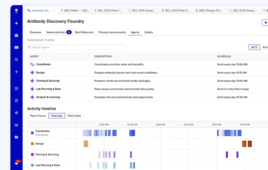
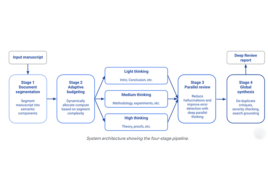
Both Caruso and Jain are optimistic about the promise of agents playing a larger role in clinical trials in the future. Caruso, for instance, described an agent that could receive a proposed protocol, test its eligibility criteria against a real-world patient population and return an initial assessment of where recruitment or feasibility problems may arise.
“This is no longer, ‘I need to send it out to 40 different advocacy groups and wait 17 weeks for a readout,’” she said. The agent could identify the largest issues first, allowing investigators and patient advocates to spend their time on the questions that require direct experience and judgment. “I want to take a first pass, see what we can do, and then get advocacy involved, so we give them a better protocol.”
Jain sees a broader role for agents across clinical development. “The idea,” Jain said, is to tell an agent: “based on the foundational models, the EHR data, and a cohort you have access to, give me the first draft of the IND.” From that, the agent would propose the patient population to include, assemble the supporting evidence and flag the gaps the development team still needs to address. Jain said agents could generate several trial-design options for a clinical review committee within hours, compared with a process that can take weeks.
The specialists would retain responsibility for the decision, with computational biologists, data scientists and clinical teams reviewing the outputs and validating the evidence. “You still have to have a human in the loop throughout that process to validate the outcomes,” Jain said.