The National Science Foundation (NSF) rescinded a rule that prohibited the use of “criteria or methods of administration which have the effect of subjecting individuals to discrimination because of their race, color or national origin.”
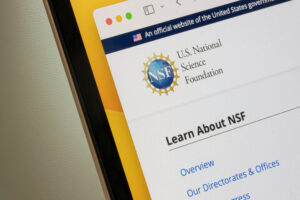
In the rule change, the NSF removed the words “or effect” from a rule that prohibited aid recipients from making selections of sites or locations of facilities “with the purpose or effect of defeating or substantially impairing the accomplishment of the objectives of the Act or this regulation.”
The NSF declined a request for comment from R&D World.
“The rescission of the disparate impact rules at NSF aren’t happening alone. Starting in December, the Department of Justice rescinded its Title VI rule, and in the months since, many other agencies, including the Departments of Education, HHS and now NSF, rescinded their Title VI rules on disparate impact. It’s all stemming from the administration’s larger effort to eliminate disparate impact standards from all federal civil rights enforcement,” Lindsey Tepe, the director of government relations at the American Council on Education (ACE), said in an interview with R&D World.
“I imagine every federal grant-making agency will follow suit in the coming months if they haven’t already,” she added.
The NSF also removed a clause that allowed for the “consideration of race, color or national origin if the purpose and effect are to remove or overcome the consequences of practices or impediments which have restricted the availability of, or participation in, the program or activity receiving Federal financial assistance.”
“The practical impact of this rule’s deletions will be to clarify for NSF Federal funding recipients that NSF’s Title VI regulations do not prohibit disparate impact and prohibit only intentional discrimination,” the NSF stated in the document outlining the changes.
“If someone on campus experiences discrimination, they will no longer be able to use a disparate impact standard. They’ll have to prove intentional discrimination in order to have some sort of actionable claim, which makes it much more difficult for someone who feels as though they’ve been a victim of discrimination to prove that has taken place,” Tepe said.
No public comment period
The changes took effect on Aug. 4, 2026, without a comment period. The rule change states, “NSF issues this final rule without prior public notice and comment or a delayed effective date pursuant to the exception in the Administrative Procedure Act (APA) for rules ‘relating to agency management or personnel or to public property, loans, grants, benefits, or contracts.'”
“We have significant concerns with how federal agencies are skipping the notice and comment period, which is generally required by the APA,” Tepe said. “Bypassing the notice and comment is really becoming a disturbing trend.”
The Department of Education also recently skipped the comment period for three civil rights regulations, she said.
Typically, agencies release proposed rules for a public comment period of 30 to 60 days, Tepe said. The agency also must address comments in the final ruling.
“Not offering public comment or response to public comments is a real change in how any administration in the last 20 to 50 years has moved forward,” Tepe said.
Trump’s executive order
On April 23, 2025, President Donald Trump issued Executive Order 14281, titled ” Restoring Equality of Opportunity and Meritocracy,” which states that the principle that “all citizens are treated equally under the law… guarantees equality of opportunity, not equal outcomes.”
The order goes on to state that “disparate-impact liability imperils the effectiveness of civil rights laws by mandating, rather than proscribing, discrimination.”
The NSF affirms that it “would have initiated steps toward making these changes regardless of E.O. 14281.”
The NSF estimates that fewer than 30% of the total number of civil rights complaints the foundation has received since 2017 included alleged violations of Title VI. Of those, 64% were dismissed due to insufficient evidence or other disqualifying factors, the foundation said. Ultimately, only 1.5% were accepted and investigated by the NSF.
This action “should decrease NSF’s enforcement costs,” the foundation said, though it could not estimate what these costs amount to.
The changes “may result in greater flexibility and lower compliance costs for recipients,” the foundation stated.
“All of these efforts speak to a broader effort by the administration to root out both disparate impact theory and consideration of race across the board, even if consideration of race is meant to alleviate past forms of racial discrimination,” Tepe said.
“We continue to be alarmed by the changes that are being advanced without opportunity for public input,” she added.


Tell Us What You Think!
You must be logged in to post a comment.