Scientists have discovered a new enzyme that could enable the first microbial production of bio-based toluene, a widely used octane booster in gasoline. Credit: Scientists have discovered a new enzyme that could enable the first microbial production of bio-based toluene, a widely used octane booster in gasoline.
Scientists have discovered a new enzyme that could enable the first microbial production of bio-based toluene, a widely used octane booster in gasoline.
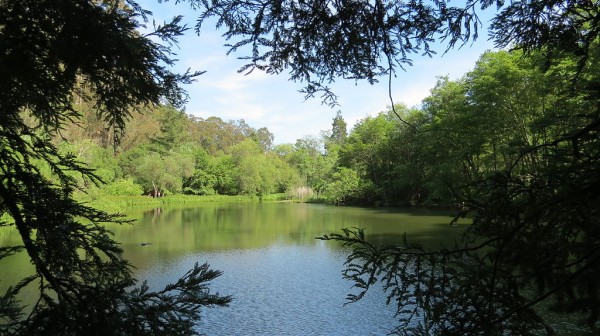
A team from the U.S. Department of Energy’s Joint BioEnergy Institute (JBEI) and the Lawrence Berkeley National Laboratory conducted an intensive study of the toluene-producing enzyme PhdB—a glycyl radical enzyme (GRE) of bacterial origin that catalyzes phenylacetate decarboxylation, and its cognate activating enzyme PhdA, a radical S-adenosylmethionine enzyme—discovered in two distinct anoxic microbial communities that produce toluene. One community contained microbes from lake sediment and the other was found in sewage sludge.
The study will enable first-time biochemical synthesis of an aromatic fuel hydrocarbon from renewable resources rather than from petroleum.
The researchers were motivated to investigate bio-based toluene after reading reports from the 1980s that showed microbial toluene biosynthesis in anoxic lake sediments. Despite a number of reports of bacterial toluene production since that time, the identity of the enzyme catalyzing this biochemically challenging reaction was still unknown. The radical nature of GREs allows them to catalyze chemically challenging reactions, such as anaerobic decarboxylation of phenylacetate to generate toluene. GREs are relevant to human health and occur within the human gut microbiome. They also have potential biotechnological applications.
The researchers first began working with a bacterial species reported to make toluene. However, when those reports appeared to be irreproducible, the team looked at the environment for toluene-producing cultures—specifically to municipal sewage and anoxic lake sediment.
“All enzyme discovery projects are challenging. But moving from discovery in a single bacterial species, to discovery in a complex microbial community from sewage sludge or lake sediments, was more difficult by orders of magnitude,” Harry Beller, Berkeley Lab senior scientist and scientific lead at JBEI, said in a statement. “This study became a needle-in-a-haystack search for the toluene-producing enzyme in a candidate pool of hundreds of thousands of enzymes.”
Metagenome analyses revealed that these microbial communities each contained more than 300,000 genes–the equivalent of more than 50 bacterial genomes. Anaerobic microbial communities and many of their enzymes are also sensitive to oxygen, forcing the researchers to manipulate cultures and enzymes under strictly anaerobic conditions.
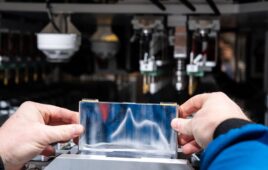
The researchers combined protein purification techniques including fast protein liquid chromatography, with modern metagenomics, metaproteomic and associated bioinformatics analyses. The team validated their prediction of the toluene biosynthesis enzyme with experiments using highly controlled assays involving purified proteins.
The team does not yet know why a bacterium produces toluene, but believe it could be because the bacterium is producing toluene as a toxin to outcompete other microbes in its environment. They also hypothesized that the phenylacetate decarboxylase reaction provides a strategy for the bacterium to regulate its internal pH in a somewhat acidic, fermentative environment.
“We have so much to learn about the extraordinary metabolic diversity of bacteria,” Beller said. “Through eons of evolution, nature has devised enzymes that can catalyze difficult chemical reactions, and as we discover these, we can harness them for biotechnology.”