Research & Development World

  • R&D World Home
  • Topics
    • Aerospace
    • Automotive
    • Biotech
    • Careers
    • Chemistry
    • Environment
    • Energy
    • Life Science
    • Material Science
    • R&D Management
    • Physics
  • Technology
    • 3D Printing
    • A.I./Robotics
    • Software
    • Battery Technology
    • Controlled Environments
      • Cleanrooms
      • Graphene
      • Lasers
      • Regulations/Standards
      • Sensors
    • Imaging
    • Nanotechnology
    • Scientific Computing
      • Big Data
      • HPC/Supercomputing
      • Informatics
      • Security
    • Semiconductors
  • R&D Market Pulse
  • R&D 100
    • 2026 R&D 100 Award Winners
    • 2026 Professional Award Winners
    • 2026 Special Recognition Winners
    • R&D 100 Awards Event
    • R&D 100 Submissions
    • Winner Archive
  • Resources
    • Research Reports
    • Digital Issues
    • Educational Assets
    • Subscribe
    • Video
    • Webinars
    • PharmSci360
    • Content submission guidelines for R&D World
  • Global Funding Forecast
  • Top Labs
  • Advertisers
    • Advertise
    • PR Submissions
    • Eblast Submissions
  • SUBSCRIBE

Algae-Forestry, Bioenergy Mix Could Help Make Carbon Dioxide Vanish From Thin Air

By Cornell University | April 13, 2018

An unconventional mélange of algae, eucalyptus and bioenergy with carbon capture and storage appears to be a quirky ecological recipe. But, scientists from Cornell University, Duke University, and the University of Hawaii at Hilo have an idea that could use that recipe to help power and provide food protein to large regions of the world – and simultaneously remove carbon dioxide from Earth’s atmosphere.

“Algae may be the key to unlocking an important negative-emissions technology to combat climate change,” said Charles Greene, Cornell professor of Earth and Atmospheric Sciences and a co-author of new research published in Earth’s Future, by the American Geophysical Union.

“Combining two technologies – bio-energy with carbon capture and storage, and microalgae production – may seem like an odd couple, but it could provide enough scientific synergy to help solve world hunger and at the same time reduce the level of greenhouse gases that are changing our climate system,” Greene said.

Based on an idea first conceptualized by co-author Ian Archibald of Cinglas Ltd., Chester, England, the scientists call the new integrated system ABECCS, or algae bioenergy with carbon capture and storage. The system can act as a carbon dioxide sink while also generating food and electricity. For example, a 7,000-acre ABECCS facility can yield as much protein as soybeans produced on the same land footprint, while simultaneously generating 17 million kilowatt hours of electricity and sequestering 30,000 tons of carbon dioxide per year.

The ABECCS system’s economic viability depends on the value of the nutritional products being produced and the price of carbon. Even without a price on carbon, microalgae production – in a fish-farming, aquacultural sense – is commercially viable today if the algae are priced as a fishmeal replacement in aquafeeds.

“In the future, as the price of carbon increases, ABECCS has the potential to reduce carbon dioxide in the atmosphere in an environmentally sustainable and profitable way,” said Greene, who is a fellow at Cornell’s Atkinson Center for a Sustainable Future.
Related Articles Read More >

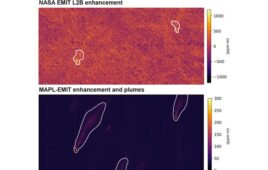
Two methane maps of the same EMIT scene: NASA's standard L2B enhancement, grainy with two small outlined plumes, above MAPL-EMIT output showing elongated plumes against a clean dark background.
Google AI finds more methane plumes in NASA satellite data
A data center campus with exhaust stacks beside a canal
1 in 4 data centers sits in a water-stressed area. Few states track how much water they use
Research vessel Nautilus is mapping the bottom of the Mariana Trench with new multibeam sonar 
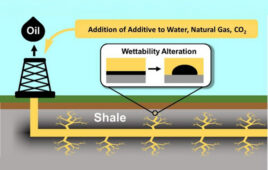
Inside the Lab: NETL’s Oil and Gas Center of Excellence focuses on technologies to enhance production   
rd newsletter
EXPAND YOUR KNOWLEDGE AND STAY CONNECTED
Get the latest info on technologies, trends, and strategies in Research & Development.

R&D World Digital Issues

Fall 2026 issue

Browse the most current issue of R&D World and back issues in an easy to use high quality format. Clip, share and download with the leading R&D magazine today.

R&D 100 Awards
Research & Development World
  • Subscribe to R&D World Magazine
  • Sign up for R&D World’s newsletter
  • Contact Us
  • About Us
  • Drug Discovery & Development
  • Pharmaceutical Processing
  • Global Funding Forecast

Copyright © 2026 Arrowfly LLC. All Rights Reserved. The material on this site may not be reproduced, distributed, transmitted, cached or otherwise used, except with the prior written permission of Arrowfly
Privacy Policy | Advertising | About Us

Search R&D World

  • R&D World Home
  • Topics
    • Aerospace
    • Automotive
    • Biotech
    • Careers
    • Chemistry
    • Environment
    • Energy
    • Life Science
    • Material Science
    • R&D Management
    • Physics
  • Technology
    • 3D Printing
    • A.I./Robotics
    • Software
    • Battery Technology
    • Controlled Environments
      • Cleanrooms
      • Graphene
      • Lasers
      • Regulations/Standards
      • Sensors
    • Imaging
    • Nanotechnology
    • Scientific Computing
      • Big Data
      • HPC/Supercomputing
      • Informatics
      • Security
    • Semiconductors
  • R&D Market Pulse
  • R&D 100
    • 2026 R&D 100 Award Winners
    • 2026 Professional Award Winners
    • 2026 Special Recognition Winners
    • R&D 100 Awards Event
    • R&D 100 Submissions
    • Winner Archive
  • Resources
    • Research Reports
    • Digital Issues
    • Educational Assets
    • Subscribe
    • Video
    • Webinars
    • PharmSci360
    • Content submission guidelines for R&D World
  • Global Funding Forecast
  • Top Labs
  • Advertisers
    • Advertise
    • PR Submissions
    • Eblast Submissions
  • SUBSCRIBE