Research & Development World

  • R&D World Home
  • Topics
    • Aerospace
    • Automotive
    • Biotech
    • Careers
    • Chemistry
    • Environment
    • Energy
    • Life Science
    • Material Science
    • R&D Management
    • Physics
  • Technology
    • 3D Printing
    • A.I./Robotics
    • Software
    • Battery Technology
    • Controlled Environments
      • Cleanrooms
      • Graphene
      • Lasers
      • Regulations/Standards
      • Sensors
    • Imaging
    • Nanotechnology
    • Scientific Computing
      • Big Data
      • HPC/Supercomputing
      • Informatics
      • Security
    • Semiconductors
  • R&D Market Pulse
  • R&D 100
    • 2026 R&D 100 Award Winners
    • 2026 Professional Award Winners
    • 2026 Special Recognition Winners
    • R&D 100 Awards Event
    • R&D 100 Submissions
    • Winner Archive
  • Resources
    • Research Reports
    • Digital Issues
    • Educational Assets
    • Subscribe
    • Video
    • Webinars
    • PharmSci360
    • Content submission guidelines for R&D World
  • Global Funding Forecast
  • Top Labs
  • Advertisers
    • Advertise
    • PR Submissions
    • Eblast Submissions
  • SUBSCRIBE

Designing Wildlife Habitats for Wide-ranging Species

By R&D Editors | January 23, 2009

Designing Wildlife Habitats for Wide-ranging Species

New programming approach enables dramatic modeling improvements

Due to massive volumes of landscape data and the novel application of algorithms from circuit theory, researchers are working to speed code using state-of-the-art sparse linear solvers, graph computations, vectorization and parallelization of the code. The result is a dramatic reduction in computing time from days to minutes on an eight-core server.

Ecologists are modeling wildlife migration and gene flows across fragmented landscapes using electrical network theory. Corridors are areas that connect important habitats in human-altered landscapes. They provide natural avenues along which animals can travel, plants can propagate, genetic interchange can occur, species can move in response to environmental changes and natural disasters, and threatened populations can be replenished from other areas.

A good example is “Y2Y,” or the Yellowstone to Yukon corridor, where U.S. and Canadian conservation organizations are trying to identify which habitats to conserve to protect species from harmful decline or extinction. Effective modeling can be instrumental in smart conservation planning, helping organizations decide which lands to preserve or restore and where to best invest their tight conservation budgets in order to preserve habitat and connectivity for wildlife populations. Circuitscape,1 a tool written in Python and M, uses several knowledge discovery algorithms to map known characteristics of the target species to the topography and thereby model the species’ behavior and identify likely corridors.

Traditionally, code may have taken three days to process a landscape with a million raster cells on a desktop workstation. Improvements resulting from using a suite of algorithms known as the Knowledge Discovery Suite2 (KDS), which defines algorithms at a higher level with efficient parallel implementations, combined with vectorization and parallelization with Star-P, enable problems 10 times bigger to be processed within minutes on a HPC. Sequential performance is also increased dramatically. With this fast response time, ecologists can use these techniques as part of their routine workflow, rather than an esoteric tool only to be used in specialized situations.

1. www.circuitscape.org
2. Brad H. McRae, Brett G. Dickson, Timothy H. Keitt, and Viral B. Shah, “Using circuit theory to model connectivity in ecology, evolution, and conservation”, Ecology, Vol. 89, No. 10, pp. 2712-2724.

Steve Reinhardt is Vice President of Joint Research at Interactive Supercomputing. He may be contacted at [email protected].

Related Articles Read More >

About 5% of Progress Software’s Domo AI customers use agents to automate workflows
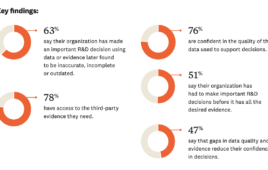
Elsevier survey: 63% of corporate R&D staff say a key decision rested on flawed data
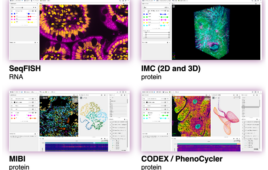
Screenshots of HuBMAP Data Portal visualizations of seqFISH, imaging mass cytometry, MIBI and CODEX/PhenoCycler data, showing fluorescent tissue images and cell clusters.
Harvard-led team says NIH-funded healthy-tissue atlas is AI-ready, but its paper warns it’s not fully representative
Abstract of modern high tech internet data center room with rows of racks with network and server hardware. 3d rendering
A startup says it found hidden memory behavior in NVIDIA GPUs and is building a security layer around it
rd newsletter
EXPAND YOUR KNOWLEDGE AND STAY CONNECTED
Get the latest info on technologies, trends, and strategies in Research & Development.

R&D World Digital Issues

Fall 2026 issue

Browse the most current issue of R&D World and back issues in an easy to use high quality format. Clip, share and download with the leading R&D magazine today.

R&D 100 Awards
Research & Development World
  • Subscribe to R&D World Magazine
  • Sign up for R&D World’s newsletter
  • Contact Us
  • About Us
  • Drug Discovery & Development
  • Pharmaceutical Processing
  • Global Funding Forecast

Copyright © 2026 Arrowfly LLC. All Rights Reserved. The material on this site may not be reproduced, distributed, transmitted, cached or otherwise used, except with the prior written permission of Arrowfly
Privacy Policy | Advertising | About Us

Search R&D World

  • R&D World Home
  • Topics
    • Aerospace
    • Automotive
    • Biotech
    • Careers
    • Chemistry
    • Environment
    • Energy
    • Life Science
    • Material Science
    • R&D Management
    • Physics
  • Technology
    • 3D Printing
    • A.I./Robotics
    • Software
    • Battery Technology
    • Controlled Environments
      • Cleanrooms
      • Graphene
      • Lasers
      • Regulations/Standards
      • Sensors
    • Imaging
    • Nanotechnology
    • Scientific Computing
      • Big Data
      • HPC/Supercomputing
      • Informatics
      • Security
    • Semiconductors
  • R&D Market Pulse
  • R&D 100
    • 2026 R&D 100 Award Winners
    • 2026 Professional Award Winners
    • 2026 Special Recognition Winners
    • R&D 100 Awards Event
    • R&D 100 Submissions
    • Winner Archive
  • Resources
    • Research Reports
    • Digital Issues
    • Educational Assets
    • Subscribe
    • Video
    • Webinars
    • PharmSci360
    • Content submission guidelines for R&D World
  • Global Funding Forecast
  • Top Labs
  • Advertisers
    • Advertise
    • PR Submissions
    • Eblast Submissions
  • SUBSCRIBE