Research & Development World

  • R&D World Home
  • Topics
    • Aerospace
    • Automotive
    • Biotech
    • Careers
    • Chemistry
    • Environment
    • Energy
    • Life Science
    • Material Science
    • R&D Management
    • Physics
  • Technology
    • 3D Printing
    • A.I./Robotics
    • Software
    • Battery Technology
    • Controlled Environments
      • Cleanrooms
      • Graphene
      • Lasers
      • Regulations/Standards
      • Sensors
    • Imaging
    • Nanotechnology
    • Scientific Computing
      • Big Data
      • HPC/Supercomputing
      • Informatics
      • Security
    • Semiconductors
  • R&D Market Pulse
  • R&D 100
    • 2026 R&D 100 Award Winners
    • 2026 Professional Award Winners
    • 2026 Special Recognition Winners
    • R&D 100 Awards Event
    • R&D 100 Submissions
    • Winner Archive
  • Resources
    • Research Reports
    • Digital Issues
    • Educational Assets
    • Subscribe
    • Video
    • Webinars
    • PharmSci360
    • Content submission guidelines for R&D World
  • Global Funding Forecast
  • Top Labs
  • Advertise
  • SUBSCRIBE

Carbon Dioxide Cleans Water With Less Energy

By Kenny Walter | May 15, 2017

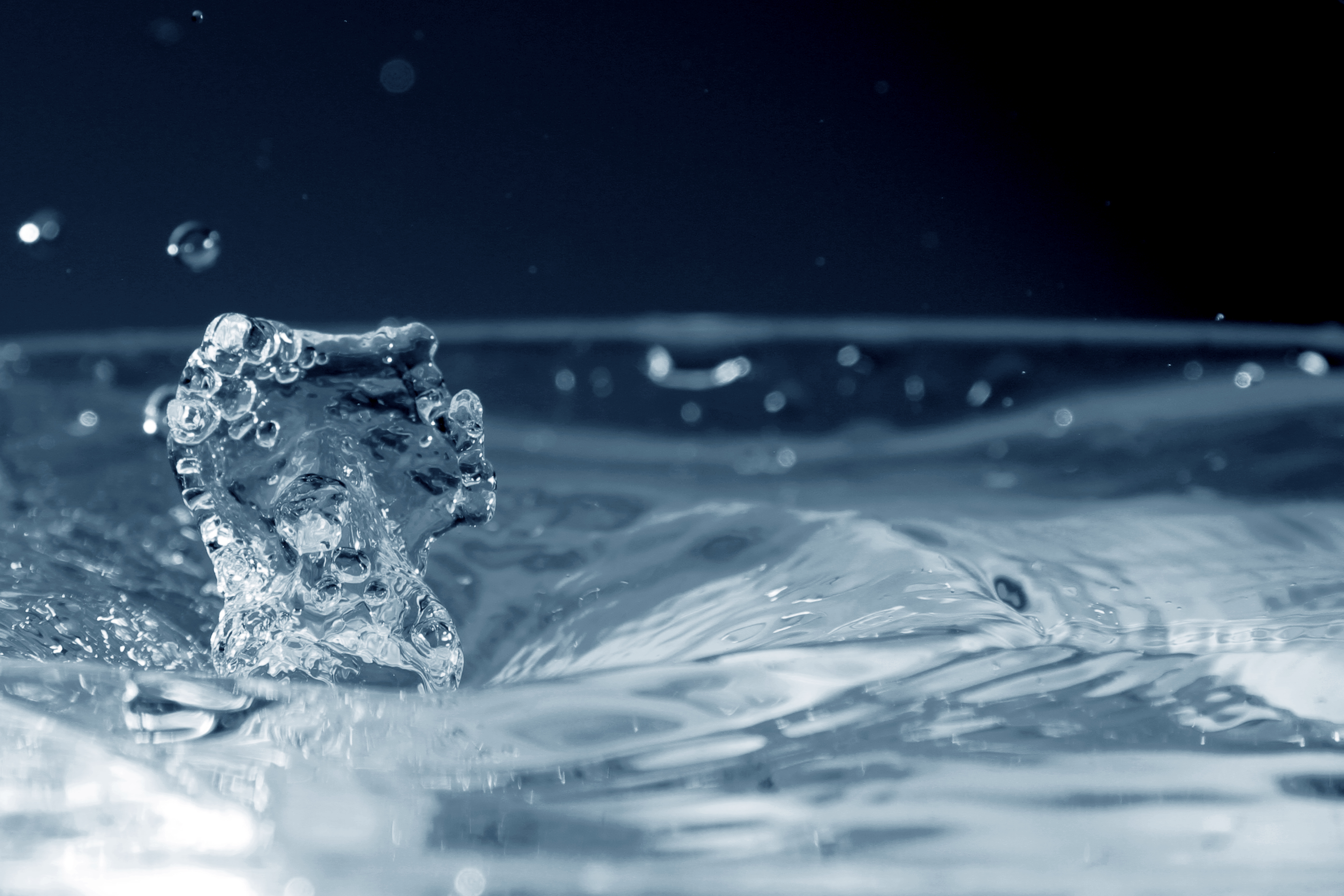
A new filtration system uses carbon dioxide to treat water, providing a remediation solution that uses  less energy and is less expensive.

Researchers from Princeton University have developed a new technique that utilizes the technology that adds fizz to soda to remove particles from dirty water without using as much energy or the need for costly filters.

“You could potentially use this to clean water from a pond or river that has bacteria and dirt particles,” Sangwoo Shin, an assistant professor of mechanical engineering at the University of Hawaii at Manoa and former post-doctoral researcher in the laboratory of Howard Stone, the Donald R. Dixon ’69 and Elizabeth W. Dixon Professor of Mechanical and Aerospace Engineering at Princeton, said in a statement.

The new system injects carbon dioxide gas into a stream of water in a system of channels to temporarily change the water’s chemistry to make it slightly more acidic. This causes the contaminating particles to move to one side of the channel depending on their electrical charge, which allows researchers to split the water stream and filter out the suspended particles.

The carbon dioxide dissolves in water to create ions, where a positively charged hydrogen atom moves quickly through the water solution and a negatively charged bicarbonate molecule moves slowly.

They achieved this by building a laboratory-scale filter that removed particles three orders of magnitude more efficiently than conventional microfiltration systems.

The majority of contaminants have the same amount of surface charge, allowing the electric field to be an effective way to strain them from water.

The channel walls—made permeable to carbon dioxide with a silicone rubber—allows the ions to keep moving, while the pressurized carbon dioxide diffuses through one of the channel walls and permeates out the other side.

When the technique is completed the carbon dioxide is removed by exposing the water to the air, which eliminates the carbonation effect like in soda.

According to Shin, the system could benefit the developing world because it does not require installation and ultimate replacement of filters. The system can also be utilized to make portable units at a relatively low-cost.

“It is definitely able to scale up to a hundred liters per hour, which meets a practical household standard,” Shin said.

The technique could also be used as a supplement a desalinization plant to strain out the particles before or after the water passes through the desalinization membrane, reducing the need to use chemicals like chlorine to treat the water.

The study was published in Nature Communications.

Related Articles Read More >

Research vessel Nautilus is mapping the bottom of the Mariana Trench with new multibeam sonar 
Inside the Lab: NETL’s Oil and Gas Center of Excellence focuses on technologies to enhance production   
How LLNL won a $2M grant and found a commercialization partner for its methanol reactor design 
New process could reduce energy needed for crude-oil distillation by 31%
rd newsletter
EXPAND YOUR KNOWLEDGE AND STAY CONNECTED
Get the latest info on technologies, trends, and strategies in Research & Development.

R&D World Digital Issues

Fall 2025 issue

Browse the most current issue of R&D World and back issues in an easy to use high quality format. Clip, share and download with the leading R&D magazine today.

R&D 100 Awards
Research & Development World
  • Subscribe to R&D World Magazine
  • Sign up for R&D World’s newsletter
  • Contact Us
  • About Us
  • Drug Discovery & Development
  • Pharmaceutical Processing
  • Global Funding Forecast

Copyright © 2026 Arrowfly LLC. All Rights Reserved. The material on this site may not be reproduced, distributed, transmitted, cached or otherwise used, except with the prior written permission of Arrowfly
Privacy Policy | Advertising | About Us

Search R&D World

  • R&D World Home
  • Topics
    • Aerospace
    • Automotive
    • Biotech
    • Careers
    • Chemistry
    • Environment
    • Energy
    • Life Science
    • Material Science
    • R&D Management
    • Physics
  • Technology
    • 3D Printing
    • A.I./Robotics
    • Software
    • Battery Technology
    • Controlled Environments
      • Cleanrooms
      • Graphene
      • Lasers
      • Regulations/Standards
      • Sensors
    • Imaging
    • Nanotechnology
    • Scientific Computing
      • Big Data
      • HPC/Supercomputing
      • Informatics
      • Security
    • Semiconductors
  • R&D Market Pulse
  • R&D 100
    • 2026 R&D 100 Award Winners
    • 2026 Professional Award Winners
    • 2026 Special Recognition Winners
    • R&D 100 Awards Event
    • R&D 100 Submissions
    • Winner Archive
  • Resources
    • Research Reports
    • Digital Issues
    • Educational Assets
    • Subscribe
    • Video
    • Webinars
    • PharmSci360
    • Content submission guidelines for R&D World
  • Global Funding Forecast
  • Top Labs
  • Advertise
  • SUBSCRIBE