Research & Development World

  • R&D World Home
  • Topics
    • Aerospace
    • Automotive
    • Biotech
    • Careers
    • Chemistry
    • Environment
    • Energy
    • Life Science
    • Material Science
    • R&D Management
    • Physics
  • Technology
    • 3D Printing
    • A.I./Robotics
    • Software
    • Battery Technology
    • Controlled Environments
      • Cleanrooms
      • Graphene
      • Lasers
      • Regulations/Standards
      • Sensors
    • Imaging
    • Nanotechnology
    • Scientific Computing
      • Big Data
      • HPC/Supercomputing
      • Informatics
      • Security
    • Semiconductors
  • R&D Market Pulse
  • R&D 100
    • 2025 R&D 100 Award Winners
    • 2025 Professional Award Winners
    • 2025 Special Recognition Winners
    • R&D 100 Awards Event
    • R&D 100 Submissions
    • Winner Archive
  • Resources
    • Research Reports
    • Digital Issues
    • Educational Assets
    • Subscribe
    • Video
    • Webinars
    • Content submission guidelines for R&D World
  • Global Funding Forecast
  • Top Labs
  • Advertise
  • SUBSCRIBE

Biotech Company Gets OK to Reverse Brain Death

By R&D Editors | May 4, 2016

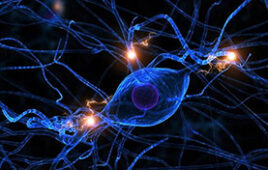
 Following the therapy, the patients’ brains will be monitored for signs of regeneration, particularly in the upper spinal cord, the region where independent breathing and heartbeat are controlled.Biotech company Bioquark Inc. recently received the go-ahead to see if brain regeneration is possible in patients that have been declared clinically dead.

“Scientists will use a combination of therapies, which include injecting the brain with stem cells and a cocktail of peptides, as well as deploying lasers and nerve stimulation techniques, which have been shown to bring patients out of comas,” reported The Telegraph.

The trial will focus on 20 patients who have been kept alive via life support. Following the therapy, the patients’ brains will be monitored for signs of regeneration, particularly in the upper spinal cord, the region where independent breathing and heartbeat are controlled.

The ReAnima Project, according to the media outlet, received approval from an Institutional Review board at the National Institutes of Health in the U.S. and India.

“Through our study, we will gain unique insights into the state of human brain death, which will have important connections to future therapeutic development for other severe disorders of consciousness, such as coma, and the vegetative and minimally conscious states, as well as a range of degenerative (central nervous system) conditions, including Alzheimer’s and Parkinson’s disease,” said Dr. Sergei Paylian, the founder, president & chief science officer of Bioquark, in a statement.

Other nonhuman species are adept at regenerating and remodeling their brain and brain stem following trauma, such as amphibians, planarians, and certain fish. Despite suffering from brain death, a human body can still circulate blood, digest food, excrete waste, balance hormones, become sexually mature, and even gestate and give birth.

“We are very excited about the approval of our protocol,” said Bioquark CEO Ira Pastor in a statement. “With the convergence of the disciplines of regenerative biology, cognitive neuroscience, and clinical resuscitation, we are poised to delve into an area of scientific understanding previously inaccessible with existing technologies.”     

According to The Telegraph, the research is hoping to recruit potential first patients soon.


R&D 100 AWARD ENTRIES NOW OPEN:

Establish your company as a technology leader! For more than 50 years, the R&D 100 Awards have showcased new products of technological significance. You can join this exclusive community! Learn more.



Related Articles Read More >

Cradle co-founder Elise de Reus on why openness is protein engineering’s competitive advantage
PacBio’s HiFi Solves Consortium identifies genetic causes in 1 in 10 infertile couples
Researchers validate first clinical test for Andes virus
Alphabet-spinoff Isomorphic Labs raises $2.1 billion in quest to ‘solve all disease’ with AI-based drug discovery tools
rd newsletter
EXPAND YOUR KNOWLEDGE AND STAY CONNECTED
Get the latest info on technologies, trends, and strategies in Research & Development.

R&D World Digital Issues

Fall 2025 issue

Browse the most current issue of R&D World and back issues in an easy to use high quality format. Clip, share and download with the leading R&D magazine today.

R&D 100 Awards
Research & Development World
  • Subscribe to R&D World Magazine
  • Sign up for R&D World’s newsletter
  • Contact Us
  • About Us
  • Drug Discovery & Development
  • Pharmaceutical Processing
  • Global Funding Forecast

Copyright © 2026 WTWH Media LLC. All Rights Reserved. The material on this site may not be reproduced, distributed, transmitted, cached or otherwise used, except with the prior written permission of WTWH Media
Privacy Policy | Advertising | About Us

Search R&D World

  • R&D World Home
  • Topics
    • Aerospace
    • Automotive
    • Biotech
    • Careers
    • Chemistry
    • Environment
    • Energy
    • Life Science
    • Material Science
    • R&D Management
    • Physics
  • Technology
    • 3D Printing
    • A.I./Robotics
    • Software
    • Battery Technology
    • Controlled Environments
      • Cleanrooms
      • Graphene
      • Lasers
      • Regulations/Standards
      • Sensors
    • Imaging
    • Nanotechnology
    • Scientific Computing
      • Big Data
      • HPC/Supercomputing
      • Informatics
      • Security
    • Semiconductors
  • R&D Market Pulse
  • R&D 100
    • 2025 R&D 100 Award Winners
    • 2025 Professional Award Winners
    • 2025 Special Recognition Winners
    • R&D 100 Awards Event
    • R&D 100 Submissions
    • Winner Archive
  • Resources
    • Research Reports
    • Digital Issues
    • Educational Assets
    • Subscribe
    • Video
    • Webinars
    • Content submission guidelines for R&D World
  • Global Funding Forecast
  • Top Labs
  • Advertise
  • SUBSCRIBE