Research & Development World

  • R&D World Home
  • Topics
    • Aerospace
    • Automotive
    • Biotech
    • Careers
    • Chemistry
    • Environment
    • Energy
    • Life Science
    • Material Science
    • R&D Management
    • Physics
  • Technology
    • 3D Printing
    • A.I./Robotics
    • Software
    • Battery Technology
    • Controlled Environments
      • Cleanrooms
      • Graphene
      • Lasers
      • Regulations/Standards
      • Sensors
    • Imaging
    • Nanotechnology
    • Scientific Computing
      • Big Data
      • HPC/Supercomputing
      • Informatics
      • Security
    • Semiconductors
  • R&D Market Pulse
  • R&D 100
    • 2025 R&D 100 Award Winners
    • 2025 Professional Award Winners
    • 2025 Special Recognition Winners
    • R&D 100 Awards Event
    • R&D 100 Submissions
    • Winner Archive
  • Resources
    • Research Reports
    • Digital Issues
    • Educational Assets
    • R&D Index
    • Subscribe
    • Video
    • Webinars
    • Content submission guidelines for R&D World
  • Global Funding Forecast
  • Top Labs
  • Advertise
  • SUBSCRIBE

Brains of the Blind Adjust to Significantly Enhance Other Senses

By Kenny Walter | March 23, 2017

New research suggests that the brain rewires itself to help enhance other senses in blind people.

According to a new study led by Massachusetts Eye and Ear, the brains of those who are born blind make new connections in the absence of visual information, resulting in enhanced, compensatory abilities such as a heightened sense of hearing, smell and touch, as well as cognitive functions like memory and language.

“Our results demonstrate that the structural and functional neuroplastic brain changes occurring as a result of early ocular blindness may be more widespread than initially thought,” lead author Corinna Bauer, Ph.D., a scientist at Schepens Eye Research Institute of Mass. Eye and Ear and an instructor of ophthalmology at Harvard Medical School, said in a statement. “We observed significant changes not only in the occipital cortex (where vision is processed), but also areas implicated in memory, language processing, and sensory motor functions.”

The researchers used MRI multimodal brain imaging techniques, specifically diffusion-based and resting state imaging, to reveal the changes in a group of 12 subjects with early blindness, defined as those born with or who have acquired profound blindness prior to the age of three. They compared their scans to a group of 16 sighted subjects in the same age range.

The team observed structural and functional connectivity changes, including evidence of enhanced connections. Information was seen going back and forth between areas of the brain on the scans of those with early blindness that they did not observe in the sighted group.

These connections appear to be unique in those with profound blindness, suggesting that the brain rewires itself in the absence of visual information to boost other senses. The researchers explained that this is because of the process of neuroplasticity—the ability of our brains to naturally adapt to our experiences.

The next step in the research will be to increase the understanding of these connections, which could lead to more effective rehabilitation efforts that will enable blind individuals to better compensate for the absence of visual information.

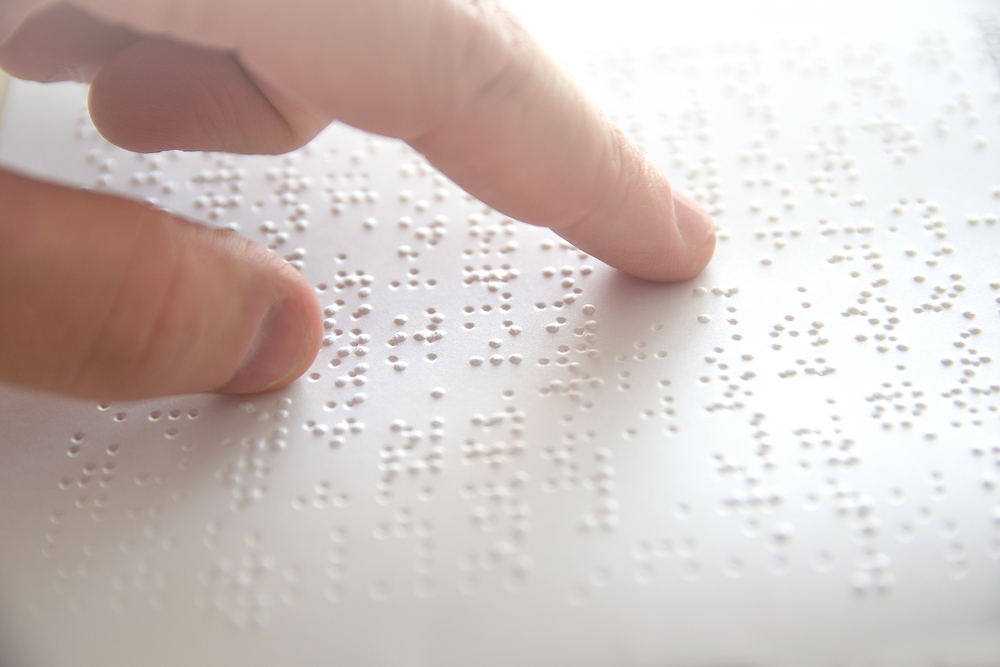
“Even in the case of being profoundly blind, the brain rewires itself in a manner to use the information at its disposal so that it can interact with the environment in a more effective manner,” senior author Lotfi Merabet, O.D., Ph.D., director of the Laboratory for Visual Neuroplasticity at the Schepens Eye Research Institute of Mass. Eye and Ear and an associate professor of ophthalmology at Harvard Medical School, said in a statement. “If the brain can rewire itself – perhaps through training and enhancing the use of other modalities like hearing, and touch and language tasks such as braille reading—there is tremendous potential for the brain to adapt.”

The study was published in PLOS One.

Related Articles Read More >

Pancreas or pancreatic cancer with organs and tumors or cancerous cells 3D rendering illustration with male body. Anatomy, oncology, disease, medical, biology, science, healthcare concepts.
AI tool used to detect pancreatic cancer in routine CT scans in China 
Drones help diagnose deadly whale viruses 
Drowning in variants? Mount Sinai tool adds phenotype filter
Oral Wegovy approval charts a new course for blockbuster drug development
rd newsletter
EXPAND YOUR KNOWLEDGE AND STAY CONNECTED
Get the latest info on technologies, trends, and strategies in Research & Development.
RD 25 Power Index

R&D World Digital Issues

Fall 2025 issue

Browse the most current issue of R&D World and back issues in an easy to use high quality format. Clip, share and download with the leading R&D magazine today.

R&D 100 Awards
Research & Development World
  • Subscribe to R&D World Magazine
  • Sign up for R&D World’s newsletter
  • Contact Us
  • About Us
  • Drug Discovery & Development
  • Pharmaceutical Processing
  • Global Funding Forecast

Copyright © 2026 WTWH Media LLC. All Rights Reserved. The material on this site may not be reproduced, distributed, transmitted, cached or otherwise used, except with the prior written permission of WTWH Media
Privacy Policy | Advertising | About Us

Search R&D World

  • R&D World Home
  • Topics
    • Aerospace
    • Automotive
    • Biotech
    • Careers
    • Chemistry
    • Environment
    • Energy
    • Life Science
    • Material Science
    • R&D Management
    • Physics
  • Technology
    • 3D Printing
    • A.I./Robotics
    • Software
    • Battery Technology
    • Controlled Environments
      • Cleanrooms
      • Graphene
      • Lasers
      • Regulations/Standards
      • Sensors
    • Imaging
    • Nanotechnology
    • Scientific Computing
      • Big Data
      • HPC/Supercomputing
      • Informatics
      • Security
    • Semiconductors
  • R&D Market Pulse
  • R&D 100
    • 2025 R&D 100 Award Winners
    • 2025 Professional Award Winners
    • 2025 Special Recognition Winners
    • R&D 100 Awards Event
    • R&D 100 Submissions
    • Winner Archive
  • Resources
    • Research Reports
    • Digital Issues
    • Educational Assets
    • R&D Index
    • Subscribe
    • Video
    • Webinars
    • Content submission guidelines for R&D World
  • Global Funding Forecast
  • Top Labs
  • Advertise
  • SUBSCRIBE