Research & Development World

  • R&D World Home
  • Topics
    • Aerospace
    • Automotive
    • Biotech
    • Careers
    • Chemistry
    • Environment
    • Energy
    • Life Science
    • Material Science
    • R&D Management
    • Physics
  • Technology
    • 3D Printing
    • A.I./Robotics
    • Software
    • Battery Technology
    • Controlled Environments
      • Cleanrooms
      • Graphene
      • Lasers
      • Regulations/Standards
      • Sensors
    • Imaging
    • Nanotechnology
    • Scientific Computing
      • Big Data
      • HPC/Supercomputing
      • Informatics
      • Security
    • Semiconductors
  • R&D Market Pulse
  • R&D 100
    • 2025 R&D 100 Award Winners
    • 2025 Professional Award Winners
    • 2025 Special Recognition Winners
    • R&D 100 Awards Event
    • R&D 100 Submissions
    • Winner Archive
  • Resources
    • Research Reports
    • Digital Issues
    • Educational Assets
    • Subscribe
    • Video
    • Webinars
    • PharmSci360
    • Content submission guidelines for R&D World
  • Global Funding Forecast
  • Top Labs
  • Advertise
  • SUBSCRIBE

Bubble Recoil Could Be Used to Cool Microchips, Even in Space

By University of Illinois, Chicago | March 6, 2017

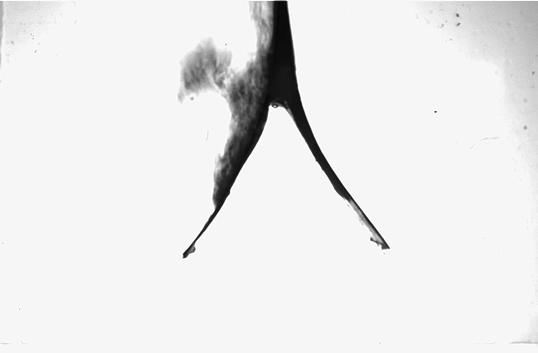
Alternate boiling on two heater circuits swings the apparatus in liquid coolant. Source: UIC/ALEXANDER YARIN

The bubbles that form on a heated surface create a tiny recoil when they leave it, like the kick from a gun firing blanks. Now researchers at the University of Illinois at Chicago, under funding from NASA, have shown how this miniscule force can be harnessed to mix liquid coolant around high-power microelectronics — in space or on Earth.

The vapor-recoil force “is not well-studied, and has never been applied, to my knowledge,” says Alexander Yarin, UIC Distinguished Professor of Mechanical Engineering and senior author on the study, published in the journal Nature Microgravity.

“In flights to Mars or the moon, equipment like computers generate a lot of heat,” Yarin said. As the computers and chips become smaller and are packed tighter, the production of heat becomes a restriction on computing power.

Engineers have looked to “pool-boiling,” which is liquid-cooling at a temperature near the boiling point of the fluid. In boiling, all heat is absorbed in converting the liquid to vapor, with no further rise in temperature until the phase change is complete.

But the lack of gravity in space poses a special problem for pool-boiling: The bubbles have no buoyancy.

“On Earth, the bubbles rise, and cold coolant comes in,” Yarin said. “But in space, the bubbles don’t rise. They stay on the submerged surface, and can merge together to form an insulating vapor layer, and the heat-removal process is interrupted.

“You can try mechanical mixing, but a motor also creates heat. You can try a strong electric field, but that also produces heat and creates other problems,” he said. Both methods take up space and require power.

Yarin and his coworkers sandwiched two heat-generating circuit chips back-to-back. By alternating the voltage to the two chips, they were able to cause the apparatus to swing back and forth through the coolant at about 1 centimeter per second.

“When one chip operates, it produces bubbles and a recoil force. Then the other, and it pushes back — enough to swing the chips in the cooling fluid and shed the bubbles,” Yarin said.

“It works with or without gravity – in space, exactly as on Earth.”

The researchers also showed that the force is greater when the bubbles are smaller and more numerous, resulting in a swing of greater arc and velocity. Nanofibers made of polymer were supersonically blown onto the chips, creating a nanotexture for increased bubble nucleation.

“Each single bubble works like jet propulsion,” said Sumit Sinha-Ray, Yarin’s doctoral student and study co-author. “When a bubble leaves a submerged surface, it pushes the surface back. You don’t see it, because the bubbles are tiny and the surface is big. But we organized the bubbles to get the chip swinging.”

Related Articles Read More >

How a Duke-led HPC method brought cell-scale cancer simulation to a single cloud node 
Princeton researchers uncover hidden mathematical link between origami and structural design
NTT Research taps Tetsuomi Sogawa to lead PHI Lab as optical-computing work advances
IBM physicist and Montreal computer scientist share Turing Award for quantum information breakthroughs
rd newsletter
EXPAND YOUR KNOWLEDGE AND STAY CONNECTED
Get the latest info on technologies, trends, and strategies in Research & Development.

R&D World Digital Issues

Fall 2025 issue

Browse the most current issue of R&D World and back issues in an easy to use high quality format. Clip, share and download with the leading R&D magazine today.

R&D 100 Awards
Research & Development World
  • Subscribe to R&D World Magazine
  • Sign up for R&D World’s newsletter
  • Contact Us
  • About Us
  • Drug Discovery & Development
  • Pharmaceutical Processing
  • Global Funding Forecast

Copyright © 2026 Arrowfly LLC. All Rights Reserved. The material on this site may not be reproduced, distributed, transmitted, cached or otherwise used, except with the prior written permission of Arrowfly
Privacy Policy | Advertising | About Us

Search R&D World

  • R&D World Home
  • Topics
    • Aerospace
    • Automotive
    • Biotech
    • Careers
    • Chemistry
    • Environment
    • Energy
    • Life Science
    • Material Science
    • R&D Management
    • Physics
  • Technology
    • 3D Printing
    • A.I./Robotics
    • Software
    • Battery Technology
    • Controlled Environments
      • Cleanrooms
      • Graphene
      • Lasers
      • Regulations/Standards
      • Sensors
    • Imaging
    • Nanotechnology
    • Scientific Computing
      • Big Data
      • HPC/Supercomputing
      • Informatics
      • Security
    • Semiconductors
  • R&D Market Pulse
  • R&D 100
    • 2025 R&D 100 Award Winners
    • 2025 Professional Award Winners
    • 2025 Special Recognition Winners
    • R&D 100 Awards Event
    • R&D 100 Submissions
    • Winner Archive
  • Resources
    • Research Reports
    • Digital Issues
    • Educational Assets
    • Subscribe
    • Video
    • Webinars
    • PharmSci360
    • Content submission guidelines for R&D World
  • Global Funding Forecast
  • Top Labs
  • Advertise
  • SUBSCRIBE