Research & Development World

  • R&D World Home
  • Topics
    • Aerospace
    • Automotive
    • Biotech
    • Careers
    • Chemistry
    • Environment
    • Energy
    • Life Science
    • Material Science
    • R&D Management
    • Physics
  • Technology
    • 3D Printing
    • A.I./Robotics
    • Software
    • Battery Technology
    • Controlled Environments
      • Cleanrooms
      • Graphene
      • Lasers
      • Regulations/Standards
      • Sensors
    • Imaging
    • Nanotechnology
    • Scientific Computing
      • Big Data
      • HPC/Supercomputing
      • Informatics
      • Security
    • Semiconductors
  • R&D Market Pulse
  • R&D 100
    • 2025 R&D 100 Award Winners
    • 2025 Professional Award Winners
    • 2025 Special Recognition Winners
    • R&D 100 Awards Event
    • R&D 100 Submissions
    • Winner Archive
  • Resources
    • Research Reports
    • Digital Issues
    • Educational Assets
    • Subscribe
    • Video
    • Webinars
    • PharmSci360
    • Content submission guidelines for R&D World
  • Global Funding Forecast
  • Top Labs
  • Advertise
  • SUBSCRIBE

IBM physicist and Montreal computer scientist share Turing Award for quantum information breakthroughs

By Julia Rock-Torcivia | March 25, 2026

The A.M. Turing Award, one of the biggest awards in computer science, has been awarded to Charles Bennett, a physicist at IBM, and Gilles Brassard, a computer scientist at the University of Montreal, for “their essential role in establishing the foundations of quantum information science and transforming secure communication and computing.” The award, given by the Association of Computing Machinery (ACM), carries a $1 million prize, with financial support provided by Google. 
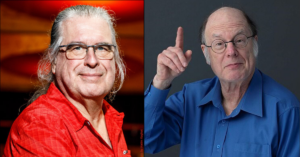
Charles Bennett (right) and Gilles Brassard (left)

Bennett and Brassard are widely recognized as founders of quantum information science, a field at the intersection of physics and computer science that treats quantum mechanical phenomena not merely as properties of matter, but as resources for processing and transmitting information.

In 1984, inspired by the insights of their late collaborator Stephen Wiesner, Bennett and Brassard introduced the first practical protocol for quantum cryptography, now known as BB84. The paper, “Quantum Cryptography: Public Key Distribution and Coin Tossing,” demonstrated that two parties could establish a secret encryption key with security guaranteed by the laws of physics, even against adversaries with unlimited computational power and technological sophistication, such as a quantum computer.

From cryptography to teleportation

Beyond cryptography, Bennett and Brassard’s work reshaped the theoretical foundations of computing. In 1993, with other collaborators, they introduced quantum teleportation, demonstrating how an arbitrary quantum state could be transmitted between distant parties using quantum entanglement — the surprisingly correlated behavior of particles too far apart to influence one another — and classical communication. This discovery showed that entanglement, once viewed primarily as a philosophical curiosity, could serve as a practical resource. Experimental verification of related phenomena was recognized by the 2022 Nobel Prize in Physics.

Their subsequent work on entanglement distillation in 1996 demonstrated how imperfect entanglement could be strengthened into high-quality entanglement, a critical step toward scalable quantum communication. These ideas underpin ongoing efforts to build quantum networks and ultimately a quantum internet capable of transmitting quantum information across global distances.

Four decades of cross-disciplinary impact

Over four decades, Bennett and Brassard’s collaboration bridged two previously distinct disciplines: physics and computer science. By incorporating quantum principles into computational models, their work has influenced cryptography, algorithm design, computational complexity, learning theory, interactive proofs and mathematical physics. Their research helped catalyze a generation of physicists and computer scientists to work across disciplinary boundaries.

“Bennett and Brassard fundamentally changed our understanding of information itself,” Yannis Ioannidis, president of ACM, said in a statement. “Their insights expanded the boundaries of computing and set in motion decades of discovery across disciplines. The global momentum behind quantum technologies today underscores the enduring importance of their contributions.”
Related Articles Read More >

Princeton researchers uncover hidden mathematical link between origami and structural design
NTT Research taps Tetsuomi Sogawa to lead PHI Lab as optical-computing work advances
Research team shows nanoparticles adhere to quantum mechanics
Researchers could be one step closer to understanding the origin of matter thanks to a new study
rd newsletter
EXPAND YOUR KNOWLEDGE AND STAY CONNECTED
Get the latest info on technologies, trends, and strategies in Research & Development.

R&D World Digital Issues

Fall 2025 issue

Browse the most current issue of R&D World and back issues in an easy to use high quality format. Clip, share and download with the leading R&D magazine today.

R&D 100 Awards
Research & Development World
  • Subscribe to R&D World Magazine
  • Sign up for R&D World’s newsletter
  • Contact Us
  • About Us
  • Drug Discovery & Development
  • Pharmaceutical Processing
  • Global Funding Forecast

Copyright © 2026 WTWH Media LLC. All Rights Reserved. The material on this site may not be reproduced, distributed, transmitted, cached or otherwise used, except with the prior written permission of WTWH Media
Privacy Policy | Advertising | About Us

Search R&D World

  • R&D World Home
  • Topics
    • Aerospace
    • Automotive
    • Biotech
    • Careers
    • Chemistry
    • Environment
    • Energy
    • Life Science
    • Material Science
    • R&D Management
    • Physics
  • Technology
    • 3D Printing
    • A.I./Robotics
    • Software
    • Battery Technology
    • Controlled Environments
      • Cleanrooms
      • Graphene
      • Lasers
      • Regulations/Standards
      • Sensors
    • Imaging
    • Nanotechnology
    • Scientific Computing
      • Big Data
      • HPC/Supercomputing
      • Informatics
      • Security
    • Semiconductors
  • R&D Market Pulse
  • R&D 100
    • 2025 R&D 100 Award Winners
    • 2025 Professional Award Winners
    • 2025 Special Recognition Winners
    • R&D 100 Awards Event
    • R&D 100 Submissions
    • Winner Archive
  • Resources
    • Research Reports
    • Digital Issues
    • Educational Assets
    • Subscribe
    • Video
    • Webinars
    • PharmSci360
    • Content submission guidelines for R&D World
  • Global Funding Forecast
  • Top Labs
  • Advertise
  • SUBSCRIBE