Research & Development World

  • R&D World Home
  • Topics
    • Aerospace
    • Automotive
    • Biotech
    • Careers
    • Chemistry
    • Environment
    • Energy
    • Life Science
    • Material Science
    • R&D Management
    • Physics
  • Technology
    • 3D Printing
    • A.I./Robotics
    • Software
    • Battery Technology
    • Controlled Environments
      • Cleanrooms
      • Graphene
      • Lasers
      • Regulations/Standards
      • Sensors
    • Imaging
    • Nanotechnology
    • Scientific Computing
      • Big Data
      • HPC/Supercomputing
      • Informatics
      • Security
    • Semiconductors
  • R&D Market Pulse
  • R&D 100
    • 2025 R&D 100 Award Winners
    • 2025 Professional Award Winners
    • 2025 Special Recognition Winners
    • R&D 100 Awards Event
    • R&D 100 Submissions
    • Winner Archive
  • Resources
    • Research Reports
    • Digital Issues
    • Educational Assets
    • R&D Index
    • Subscribe
    • Video
    • Webinars
    • Content submission guidelines for R&D World
  • Global Funding Forecast
  • Top Labs
  • Advertise
  • SUBSCRIBE

Decoding the Genome’s Cryptic Language

By UC San Diego | March 16, 2017

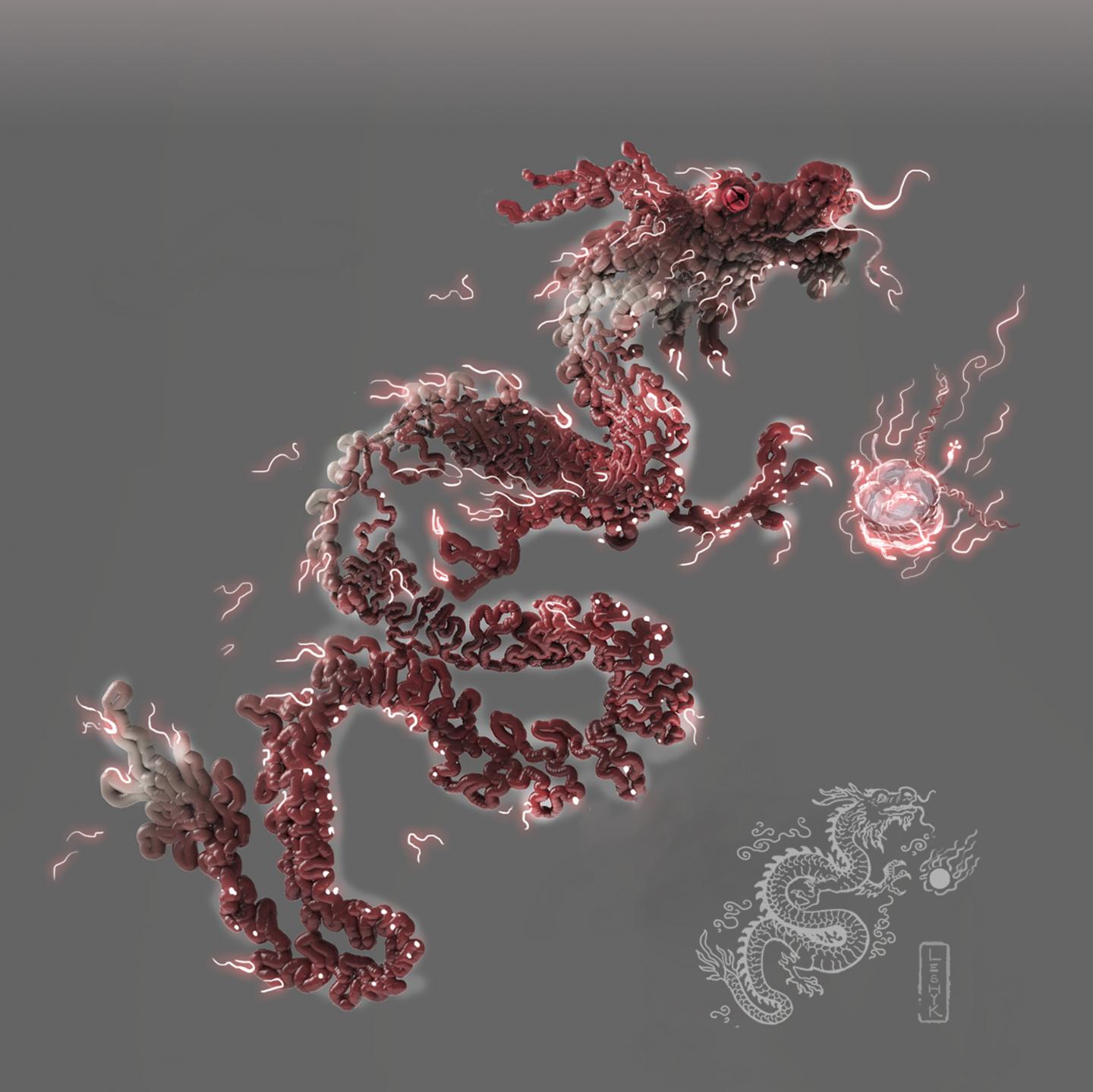
Artistic rendering of RNA-DNA interactions. A 3-D structure of tightly coiled DNA is depicted as the body of a dragon in Chinese myth. Interacting RNAs are depicted as hairs, whiskers and claws, which are essential for the dragon to function. Source: Victor O. Leshyk

Bioengineers at the University of California San Diego have developed a new tool to identify interactions between RNA and DNA molecules. The tool, called MARGI (Mapping RNA Genome Interactions), is the first technology that’s capable of providing a full account of all the RNA molecules that interact with a segment of DNA, as well as the locations of all these interactions — in just a single experiment.

RNA molecules can attach to particular DNA sequences to help control how much protein these particular genes produce within a given time, and within a given cell. And by knowing what genes produce these regulatory RNAs, researchers can start to identify new functions and instructions encoded in the genome.

“Most of the human genome sequence is now known, but we still don’t know what most of these sequences mean,” said Sheng Zhong, bioengineering professor at the UC San Diego Jacobs School of Engineering and the study’s lead author. “To better understand the functions of the genome, it would be useful to have the entire catalog of all the RNA molecules that interact with DNA, and what sequences they interact with. We’ve developed a tool that can give us that information.”

Zhong and his team published their findings in the Feb. issue of Current Biology.

Existing methods to study RNA-DNA interactions are only capable of analyzing one RNA molecule at a time, making it impossible to analyze an entire set of RNA-DNA interactions involving hundreds of RNA molecules.

“It could take years to analyze all these interactions,” said Tri Nguyen, a bioengineering Ph.D. student at UC San Diego and a co-first author of the study.

Using MARGI, an entire set of RNA-DNA interactions could be analyzed in a single experiment that takes one to two weeks.

The MARGI technique starts out with a mixture containing DNA that’s been cut into short pieces and RNA. In this mixture, a subset of RNA molecules are interacting with particular DNA pieces. A specially designed linker is then added to connect the interacting RNA-DNA pairs. Linked RNA-DNA pairs are selectively fished out, then converted into chimeric sequences that can all be read at once using high-throughput sequencing.

Zhong and his team tested the method’s accuracy by seeing if it produced false positive results. First, the researchers mixed RNA and DNA from both fruit fly and human cells, creating both “true” RNA-DNA pairs, meaning they’re either fully human or fully fruit fly, and “false” RNA-DNA pairs, meaning they’re half human and half fruit fly — these are the ones that shouldn’t be detected. The team then screened the entire mixture using MARGI. The method detected a large set of true RNA-DNA interactions, but it also detected approximately 2 percent of the false ones.

“This method is not perfect, but it’s an important step toward creating a full functional annotation of the genome,” said co-first author Bharat Sridhar, a visiting bioengineering researcher in Zhong’s group.

Related Articles Read More >

Could AI smell cancer? Science says yes
R&D World announces 2025 R&D 100 Professional Award Winners
Elsevier’s 121 million data point database is now searchable by AI
6 R&D advances this week: a quantum computer in space and a record-breaking lightning bolt
rd newsletter
EXPAND YOUR KNOWLEDGE AND STAY CONNECTED
Get the latest info on technologies, trends, and strategies in Research & Development.
RD 25 Power Index

R&D World Digital Issues

Fall 2024 issue

Browse the most current issue of R&D World and back issues in an easy to use high quality format. Clip, share and download with the leading R&D magazine today.

Research & Development World
  • Subscribe to R&D World Magazine
  • Sign up for R&D World’s newsletter
  • Contact Us
  • About Us
  • Drug Discovery & Development
  • Pharmaceutical Processing
  • Global Funding Forecast

Copyright © 2025 WTWH Media LLC. All Rights Reserved. The material on this site may not be reproduced, distributed, transmitted, cached or otherwise used, except with the prior written permission of WTWH Media
Privacy Policy | Advertising | About Us

Search R&D World

  • R&D World Home
  • Topics
    • Aerospace
    • Automotive
    • Biotech
    • Careers
    • Chemistry
    • Environment
    • Energy
    • Life Science
    • Material Science
    • R&D Management
    • Physics
  • Technology
    • 3D Printing
    • A.I./Robotics
    • Software
    • Battery Technology
    • Controlled Environments
      • Cleanrooms
      • Graphene
      • Lasers
      • Regulations/Standards
      • Sensors
    • Imaging
    • Nanotechnology
    • Scientific Computing
      • Big Data
      • HPC/Supercomputing
      • Informatics
      • Security
    • Semiconductors
  • R&D Market Pulse
  • R&D 100
    • 2025 R&D 100 Award Winners
    • 2025 Professional Award Winners
    • 2025 Special Recognition Winners
    • R&D 100 Awards Event
    • R&D 100 Submissions
    • Winner Archive
  • Resources
    • Research Reports
    • Digital Issues
    • Educational Assets
    • R&D Index
    • Subscribe
    • Video
    • Webinars
    • Content submission guidelines for R&D World
  • Global Funding Forecast
  • Top Labs
  • Advertise
  • SUBSCRIBE