Research & Development World

  • R&D World Home
  • Topics
    • Aerospace
    • Automotive
    • Biotech
    • Careers
    • Chemistry
    • Environment
    • Energy
    • Life Science
    • Material Science
    • R&D Management
    • Physics
  • Technology
    • 3D Printing
    • A.I./Robotics
    • Software
    • Battery Technology
    • Controlled Environments
      • Cleanrooms
      • Graphene
      • Lasers
      • Regulations/Standards
      • Sensors
    • Imaging
    • Nanotechnology
    • Scientific Computing
      • Big Data
      • HPC/Supercomputing
      • Informatics
      • Security
    • Semiconductors
  • R&D Market Pulse
  • R&D 100
    • 2026 R&D 100 Award Winners
    • 2026 Professional Award Winners
    • 2026 Special Recognition Winners
    • R&D 100 Awards Event
    • R&D 100 Submissions
    • Winner Archive
  • Resources
    • Research Reports
    • Digital Issues
    • Educational Assets
    • Subscribe
    • Video
    • Webinars
    • PharmSci360
    • Content submission guidelines for R&D World
  • Global Funding Forecast
  • Top Labs
  • Advertise
  • SUBSCRIBE

Department of Energy to provide $32 Million for advanced computational research in the sciences

By Heather Hall | December 15, 2020

The U.S. Department of Energy (DOE) has announced plans to provide up to $32 million to harness DOE supercomputers for advanced research in a wide range of scientific fields, including materials science, condensed matter physics, chemical sciences, geosciences and energy-related biosciences.

The effort is part of a joint program that brings together experts in key areas of science and energy research with experts in software development, applied mathematics, and computer science to take maximum advantage of high-performance computing resources at the DOE national laboratories.

“DOE’s national laboratories host some of the fastest supercomputers and most advanced mathematics and computational science capabilities in the world,” said Dr. Chris Fall, director of DOE’s Office of Science. “Harnessing these resources for advanced research in the physical sciences is critical to maintaining U.S. leadership in science and accelerating basic research in energy.”

Under the Scientific Discovery through Advanced Computing (SciDAC) program, national laboratories, universities, and industry will be eligible to apply and selected by peer review. Institutions will be encouraged to come together to form integrated multi-institutional, multidisciplinary teams to tackle challenging scientific questions, with emphasis on quantum phenomena and chemical reactions relevant to energy.

These teams will partner, in turn, with either or both of two SciDAC Institutes, led respectively by Lawrence Berkeley and Argonne National Laboratories, comprising leading experts in software development, applied mathematics and computer science.

The key to the effort, which is jointly sponsored by the Offices of Advanced Scientific Computing Research (ASCR) and Basic Energy Sciences (BES) within DOE’s Office of Science, is the marriage of scientific and computing expertise to accelerate discovery.

Projects are expected to take full advantage of emerging exascale computing capabilities at Argonne and Oak Ridge National Laboratories along with the advanced computing capabilities at Lawrence Berkeley National Laboratory.

Planned funding is expected to total up to $32 million for projects lasting four years in duration beginning in Fiscal Year 2021. Funding is contingent on congressional appropriations.

The DOE Funding Opportunity Announcement can be found on the funding opportunity pages of ASCR and BES.

 

Related Articles Read More >

How a Duke-led HPC method brought cell-scale cancer simulation to a single cloud node 
Quantum computing advance: Atom-placed silicon lattice hits 15,000 quantum dots, reveals metal-insulator transition
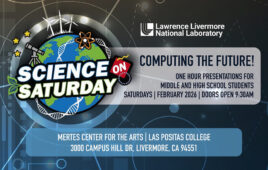
Lawrence Livermore’s “Science on Saturday” returns, linking computing research with classroom learning
Qunova’s HI-VQE quantum chemistry algorithm is now on AWS Marketplace
rd newsletter
EXPAND YOUR KNOWLEDGE AND STAY CONNECTED
Get the latest info on technologies, trends, and strategies in Research & Development.

R&D World Digital Issues

Fall 2025 issue

Browse the most current issue of R&D World and back issues in an easy to use high quality format. Clip, share and download with the leading R&D magazine today.

R&D 100 Awards
Research & Development World
  • Subscribe to R&D World Magazine
  • Sign up for R&D World’s newsletter
  • Contact Us
  • About Us
  • Drug Discovery & Development
  • Pharmaceutical Processing
  • Global Funding Forecast

Copyright © 2026 Arrowfly LLC. All Rights Reserved. The material on this site may not be reproduced, distributed, transmitted, cached or otherwise used, except with the prior written permission of Arrowfly
Privacy Policy | Advertising | About Us

Search R&D World

  • R&D World Home
  • Topics
    • Aerospace
    • Automotive
    • Biotech
    • Careers
    • Chemistry
    • Environment
    • Energy
    • Life Science
    • Material Science
    • R&D Management
    • Physics
  • Technology
    • 3D Printing
    • A.I./Robotics
    • Software
    • Battery Technology
    • Controlled Environments
      • Cleanrooms
      • Graphene
      • Lasers
      • Regulations/Standards
      • Sensors
    • Imaging
    • Nanotechnology
    • Scientific Computing
      • Big Data
      • HPC/Supercomputing
      • Informatics
      • Security
    • Semiconductors
  • R&D Market Pulse
  • R&D 100
    • 2026 R&D 100 Award Winners
    • 2026 Professional Award Winners
    • 2026 Special Recognition Winners
    • R&D 100 Awards Event
    • R&D 100 Submissions
    • Winner Archive
  • Resources
    • Research Reports
    • Digital Issues
    • Educational Assets
    • Subscribe
    • Video
    • Webinars
    • PharmSci360
    • Content submission guidelines for R&D World
  • Global Funding Forecast
  • Top Labs
  • Advertise
  • SUBSCRIBE