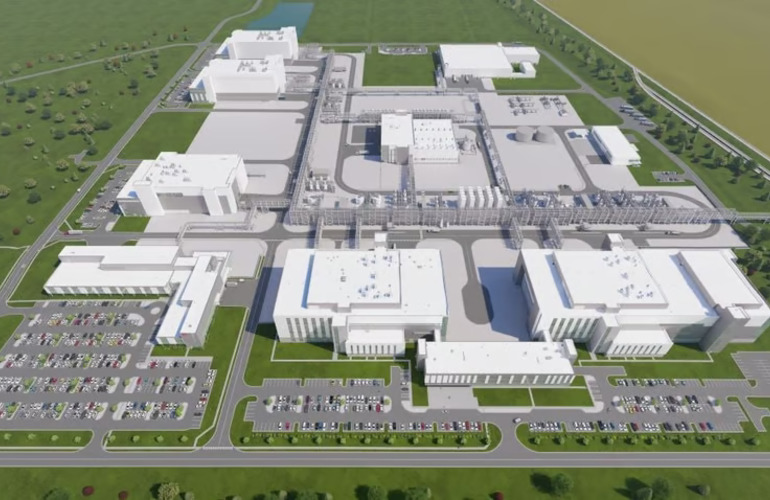
A planned Lilly site in Lebanon, Indiana
The U.S. plans to impose 100% tariffs on imported branded/patented drugs starting Oct. 1, 2025, with exemptions for manufacturers that have ‘broken ground’ or are ‘under construction’ on U.S. plants. Whether specific products are hit will depend on company-by-company status and any carve-outs the administration grants. President Trump’s Truth Social post says companies ‘building’ or that have ‘broken ground’ on U.S. manufacturing are exempt. No formal customs guidance has clarified edge cases (e.g., retrofits, CDMO builds, or whether one project covers an entire portfolio), so the criterion should be treated as administration guidance, not a codified regulation.
The tariffs could have significant stakes for pharma’s global operating model. As Chase Feiger, Co-Founder and CEO of Ostro, puts it, “Tariffs at this scale will force drug makers to rethink where and how they operate. You’ll see more pressure to localize manufacturing, but also a push to get leaner everywhere else, especially in how companies commercialize and engage doctors and patients. The winners will be the ones who adjust quickly without losing sight of access.”
Update (Sept. 30): Pfizer reached a deal with the administration: most-favored-nation Medicaid pricing and U.S. investment/reshoring commitments, in exchange for a three-year tariff exemption. That materially reduces its near-term exposure.
While Trump had threatened tariffs of up to 250%, the 100% tariffs could still have a substantial impact on the sector. The U.S. imported $212.7B in pharmaceutical products in 2024. Analysts warn consumer costs could rise without broad exemptions.
Builders like Lilly, Merck and J&J could benefit
While some degree of ambiguity remains, companies with massive, active U.S. construction projects appear better positioned for exemptions based on active U.S. construction disclosed in company releases. Lilly is building a $9B+ LEAP site in Lebanon, IN, where ground broke in 2023. Merck broke ground Apr. 29, 2025 on a $1B, 470k-sq-ft biologics center in Wilmington, DE. Johnson & Johnson broke ground Mar. 21, 2025 on an approximately $2B biologics facility in Wilson, NC. How far an exemption extends (product-specific vs. company-wide) isn’t specified in public guidance.
The timing of these projects appears fortuitous. Novo Nordisk’s $4.1B Clayton, NC project reported site prep underway mid-2024; if that satisfies ‘broken ground,’ it would likely qualify, but final determinations rest on federal enforcement. AbbVie announced a $195M API expansion with construction to begin Fall 2025; groundbreaking has now been reported in North Chicago, which would strengthen exemption eligibility.
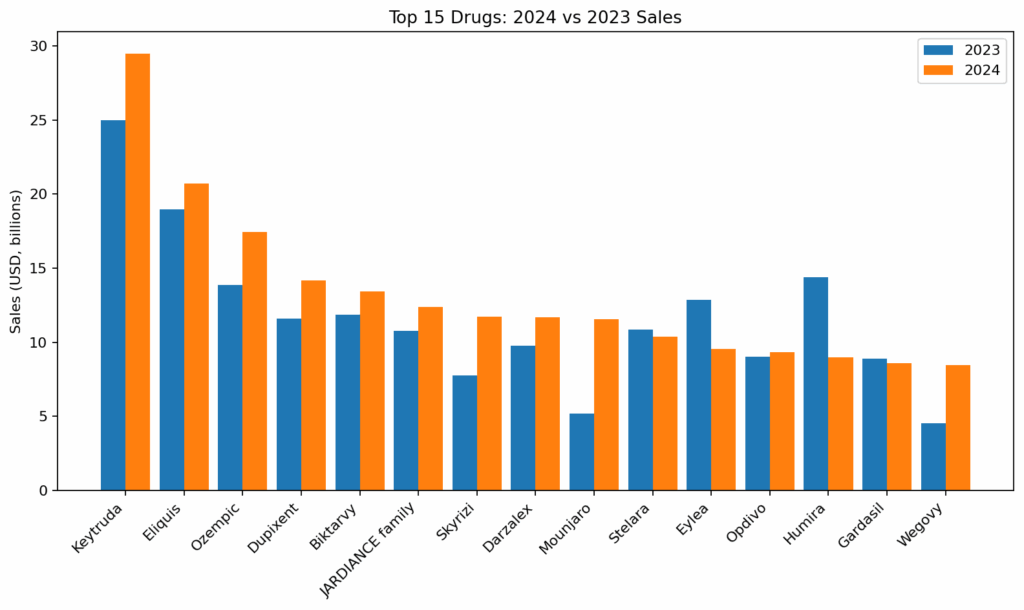 Boehringer Ingelheim and other potentially vulnerable companies
Public statements emphasize new builds or projects with ground broken; no official guidance confirms whether existing facilities, retrofits, or expansions qualify absent new construction. The policy’s silence on existing infrastructure creates significant risks for some of the industry’s biggest names.
Pharmaceutical Construction vs. Oct. 1 Tariff Deadline
Working rule: Companies with projects that have broken ground/are under construction by Oct. 1, 2025 are expected to qualify for exemptions; formal customs guidance is pending.
Industry snapshot: A majority of the 20 largest manufacturers we tracked have publicly disclosed U.S. projects that appear to meet a ‘broken-ground/under-construction’ test (as of Sept. 26, 2025).
Active construction or has clear exemption
- Eli Lilly: IN LEAP ($9B+, ground broke 2023).
- Pfizer: In exchange for most-favored-nation Medicaid pricing and U.S. investment/reshoring commitments, has a three-year tariff exemption
- Merck & Co: $1B biologics center, Wilmington DE (broke ground April 2025).
- Johnson & Johnson: ~$2B Wilson NC biologics (broke ground March 2025).
- Novo Nordisk: $4.1B Clayton NC (site prep underway June 2024).
- AbbVie: $195M IL expansion (groundbreaking reported after Fall 2025 start announced).
- Gilead: Foster City CA (broke ground Sept 2025).
- GSK: Marietta PA (up to $800M, began late 2024).
- Novartis: Indianapolis RLT facility (broke ground Sept 2024).
- Regeneron: Tarrytown NY campus ($3.6B, underway).
- Amgen: Holly Springs NC ($1B) & OH expansion ($900M).
- Roche/Genentech: Holly Springs NC expansion ($700M+)
- Vertex: Boston Seaport campus (under construction)
Gray area cases
- AstraZeneca: $4B VA facility announced July 2025; public materials don’t yet confirm a groundbreaking date.
- Takeda: $230M LA plasma expansion (tapping existing infrastructure)
- Bristol Myers Squibb: Limited MA cell therapy work
- Moderna: Retrofitting existing Marlborough facility (not new construction)
- Boehringer Ingelheim: Completed GA expansion Oct 2024; building in Germany but no U.S. projects
- Sanofi: $20B commitment through 2030 but no specific manufacturing construction projects identified, although the firm opened a new office site in Morristown, New Jersey.
- Bayer: Completed PA expansion April 2025, Berkeley, California plans exist but no timeline
Status reflects public evidence as of Sept 26, 2025. Companies without active construction must rely on existing facilities, which do not appear to qualify for exemptions under the stated criteria.
The reliance on contract manufacturers (CDMOs) for production could create vulnerabilities for some companies. There are also questions about company-wide vs. product-specific exemptions: The post says “no Tariff on these Pharmaceutical Products if construction has started,” but doesn’t define whether one project exempts a portfolio or only products tied to that site. If a CDMO is building, does that qualify the sponsor? The text implies the company must be building “their” plant. Then there’s the question of what counts as “pharmaceutical manufacturing”: API versus fill-finish versus packaging isn’t specified. Awaiting DHS/CBP or USTR guidance on how sponsor vs. contractor construction will be treated is necessary.
European companies without clear U.S. construction face stark choices. Boehringer Ingelheim, which recently invested €120 million expanding its Greek facility specifically for Jardiance production, faces higher exposure risk absent a qualifying U.S. project or an exemption similar to Pfizer’s. The company’s strategic decision to serve the U.S. market from Europe now looks costly. Similarly, companies like Bayer (for pharmaceutical operations) and some divisions of Sanofi may find themselves disadvantaged against competitors who happened to time their U.S. expansions more favorably.
In the long run, the policy could accelerate industry consolidation. If exemptions are portfolio-wide (unconfirmed), acquiring a firm with exposed imports could reduce tariff outlays materially; the impact depends on import value, product mix, and enforcement scope. Companies with active U.S. construction might view exposed European firms as attractive acquisition targets, essentially buying products at a discount given their tariff vulnerability.