Research & Development World

  • R&D World Home
  • Topics
    • Aerospace
    • Automotive
    • Biotech
    • Careers
    • Chemistry
    • Environment
    • Energy
    • Life Science
    • Material Science
    • R&D Management
    • Physics
  • Technology
    • 3D Printing
    • A.I./Robotics
    • Software
    • Battery Technology
    • Controlled Environments
      • Cleanrooms
      • Graphene
      • Lasers
      • Regulations/Standards
      • Sensors
    • Imaging
    • Nanotechnology
    • Scientific Computing
      • Big Data
      • HPC/Supercomputing
      • Informatics
      • Security
    • Semiconductors
  • R&D Market Pulse
  • R&D 100
    • 2026 R&D 100 Award Winners
    • 2026 Professional Award Winners
    • 2026 Special Recognition Winners
    • R&D 100 Awards Event
    • R&D 100 Submissions
    • Winner Archive
  • Resources
    • Research Reports
    • Digital Issues
    • Educational Assets
    • Subscribe
    • Video
    • Webinars
    • PharmSci360
    • Content submission guidelines for R&D World
  • Global Funding Forecast
  • Top Labs
  • Advertise
  • SUBSCRIBE

Montreal Researchers Explain How Your Muscles Form

By University of Montreal | November 12, 2018

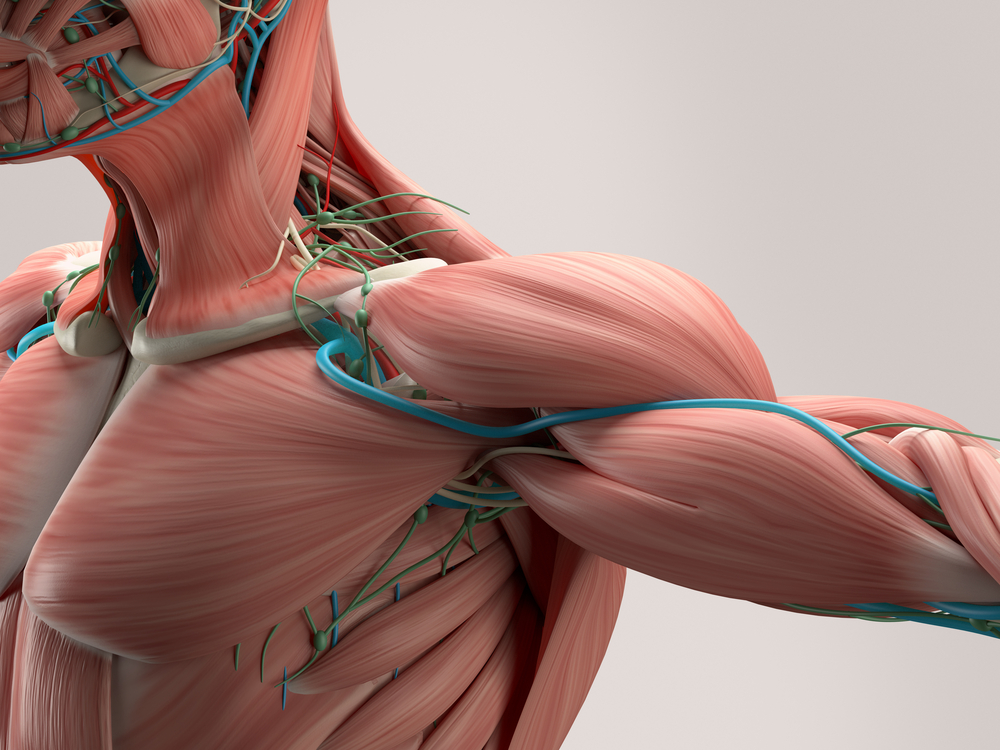
All vertebrates need muscles to function; they are the most abundant tissue in the human body and are integral to movement.

In a recent article published in Nature Communications, an international team of researchers discovered two proteins essential to the development of skeletal muscle. This research, led by Jean-François Côté, a professor at the Montreal Clinical Research Institute (IRCM) and the Faculty of Medicine at Université de Montréal, could lead to a better understanding of rare muscular diseases and the development of new treatments.

From nuclear fusion to cell fusion

Skeletal muscles are attached to our bones and enable our bodies to move. Whether in a developing embryo or a professional athlete, the same sequence leads to their formation.

“In vertebrates, cells derived from stem cells, called myoblasts, first align with each other and come so close as to eventually touch and compress their cell membranes,” explained the study’s lead author Jean-François Côté, Director of the IRCM’s Cytoskeleton Organization and Cell Migration Research Unit.

Ultimately, myoblasts merge to create one large cell. This phenomenon, called “cell fusion”, is very particular. “Cell fusion involves just a few tissues, including the development of the placenta and the remodeling of our bones,” Côté said.

The ‘dance’ of the muscle cells

To develop and also repair muscle, myoblasts have to perform their movements very carefully. No false move is permissible, otherwise there will be defects. In their study, Côté and his team describe their discovery of two proteins – ClqL4 and Stabilin-2 – that regulate this singular choreography.

Indeed, ClqL4 and Stabilin-2 ensure successful completion of this delicate sequence. They slow down and trigger cell fusion respectively at key moments. Their role is crucial: if the “metronome” of myoblasts is interrupted, the muscles will not be the right size, and their function will be affected. This is what happens in muscle diseases characterized by a weakness that makes certain movements difficult.

The discovery of the proteins is the culmination of an international collaboration between teams from Montreal, Japan, the United States and South Korea. “Our second author, Viviane Tran, one of my doctoral students, spent time in Tokyo to conduct important experiments in the lab of Michisuke Yuzaki, one of our collaborators,” Côté noted.

The IRCM researchers have already embarked on the follow-up study. They want to determine whether the results of their research could become a therapeutic target for rare muscle diseases such as myopathies and muscular dystrophies.


Related Articles Read More >

How EcoBOT’s automated plant lab knows where it’s guessing 
We are still likely years away from a hantavirus vaccine
Artemis II experiment uses organ chips to prepare for long-duration missions
New brain-computer interface allows monkeys to navigate 3D virtual reality
rd newsletter
EXPAND YOUR KNOWLEDGE AND STAY CONNECTED
Get the latest info on technologies, trends, and strategies in Research & Development.

R&D World Digital Issues

Fall 2025 issue

Browse the most current issue of R&D World and back issues in an easy to use high quality format. Clip, share and download with the leading R&D magazine today.

R&D 100 Awards
Research & Development World
  • Subscribe to R&D World Magazine
  • Sign up for R&D World’s newsletter
  • Contact Us
  • About Us
  • Drug Discovery & Development
  • Pharmaceutical Processing
  • Global Funding Forecast

Copyright © 2026 Arrowfly LLC. All Rights Reserved. The material on this site may not be reproduced, distributed, transmitted, cached or otherwise used, except with the prior written permission of Arrowfly
Privacy Policy | Advertising | About Us

Search R&D World

  • R&D World Home
  • Topics
    • Aerospace
    • Automotive
    • Biotech
    • Careers
    • Chemistry
    • Environment
    • Energy
    • Life Science
    • Material Science
    • R&D Management
    • Physics
  • Technology
    • 3D Printing
    • A.I./Robotics
    • Software
    • Battery Technology
    • Controlled Environments
      • Cleanrooms
      • Graphene
      • Lasers
      • Regulations/Standards
      • Sensors
    • Imaging
    • Nanotechnology
    • Scientific Computing
      • Big Data
      • HPC/Supercomputing
      • Informatics
      • Security
    • Semiconductors
  • R&D Market Pulse
  • R&D 100
    • 2026 R&D 100 Award Winners
    • 2026 Professional Award Winners
    • 2026 Special Recognition Winners
    • R&D 100 Awards Event
    • R&D 100 Submissions
    • Winner Archive
  • Resources
    • Research Reports
    • Digital Issues
    • Educational Assets
    • Subscribe
    • Video
    • Webinars
    • PharmSci360
    • Content submission guidelines for R&D World
  • Global Funding Forecast
  • Top Labs
  • Advertise
  • SUBSCRIBE